Introduction
The Transcaucasian Water Shrew (Neomys teres) is an elusive and fascinating mammal species that inhabits the water-rich regions of the Transcaucasian area. This small, semi-aquatic mammal belongs to the Soricidae family and is known for its remarkable adaptations to a life spent both in and out of the water. Despite its diminutive size, the Transcaucasian Water Shrew plays a significant role in its ecosystem, acting as both predator and prey. This article delves into the various aspects of this unique species, including its physical characteristics, habitat, behavior, and conservation status.
Physical Description
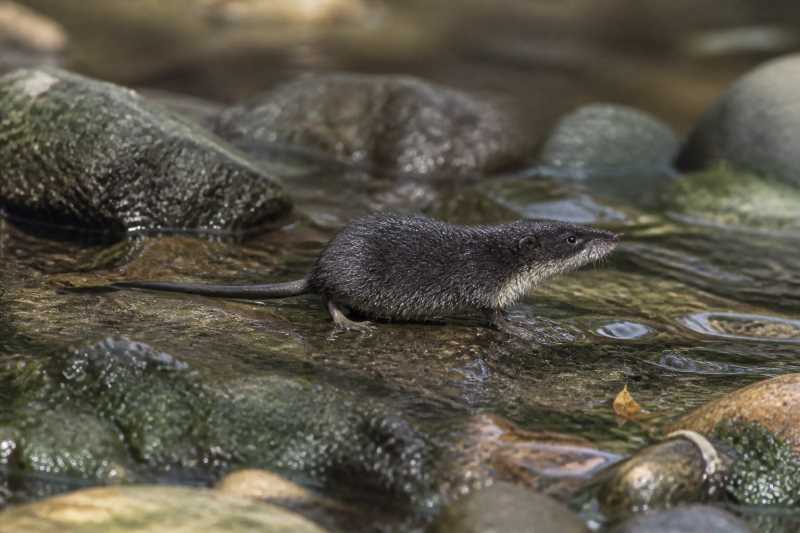
The Transcaucasian Water Shrew is a small mammal, typically measuring between 7 to 9 centimeters in body length, with a tail that adds another 6 to 8 centimeters. It has a slender, elongated body that aids in its swimming ability, and its dense, water-repellent fur is usually dark gray or brown on the dorsal side, with a lighter gray or white underbelly. This coloration provides effective camouflage against predators both in the water and on land.
One of the most distinctive features of the Transcaucasian Water Shrew is its pointed snout, which it uses to probe for prey. Its whiskers are highly sensitive, enabling it to detect vibrations in the water, while its feet are fringed with stiff hairs that assist in swimming. The shrew’s teeth are sharp and adapted for capturing and consuming a diet primarily composed of aquatic invertebrates.
Range and Habitat
The Transcaucasian Water Shrew is primarily found in the regions of Georgia, Armenia, and Azerbaijan. It inhabits a variety of freshwater environments, including streams, rivers, and marshes, where it can find an abundance of food and shelter. This shrew prefers clear, fast-flowing waters with ample vegetation along the banks, which provide cover from predators and nesting sites.
The shrew’s range is restricted to the Transcaucasian area, making it a species of particular interest to conservationists and biologists studying the unique biodiversity of this region.
Behavior and Diet
The Transcaucasian Water Shrew is a solitary and territorial animal, with individuals maintaining distinct territories that they defend vigorously from intruders. It is primarily nocturnal, spending the daylight hours in burrows or dense vegetation and emerging at night to hunt for food.
Its diet consists mainly of aquatic insects, larvae, and small crustaceans, although it may also consume small fish and amphibians when available. The shrew uses its keen sense of touch and smell to locate prey, and it is an adept swimmer, capable of diving and maneuvering underwater with ease.
The shrew’s foraging behavior is a critical component of the freshwater ecosystems it inhabits, as it helps control insect populations and serves as a food source for larger predators.
Identification Tips (Field Recognition Cues)
- Size and Shape: Look for a small, elongated mammal with a pointed snout and a relatively long tail.
- Fur Texture and Coloration: Dense, water-repellent fur that is dark gray or brown on top and lighter underneath.
- Habitat: Found near freshwater sources such as streams and rivers, often in areas with dense vegetation.
- Behavior: Active primarily at night, with a characteristic swimming style aided by fringed hairs on its feet.
- Sound: Listen for high-pitched squeaks or chirps, particularly during the breeding season.
Conservation Status (with Threats and Protections)
The conservation status of the Transcaucasian Water Shrew is currently listed as "Near Threatened" by the International Union for Conservation of Nature (IUCN). The primary threats to this species include habitat loss due to agricultural expansion, pollution of freshwater habitats, and climate change, which can alter the availability of suitable environments for the shrew.
Conservation efforts focus on protecting the shrew’s natural habitat through the establishment of protected areas and the implementation of sustainable land management practices. Additionally, monitoring programs are crucial for assessing population trends and the effectiveness of conservation strategies.
Public awareness and education campaigns are also vital for promoting the importance of freshwater ecosystems and the species that depend on them.
Frequently Asked Questions
1. What adaptations allow the Transcaucasian Water Shrew to thrive in its aquatic habitat?
The Transcaucasian Water Shrew has several adaptations for aquatic life, including dense, water-repellent fur, fringed feet for swimming, and sensitive whiskers for detecting prey underwater.
2. How does the Transcaucasian Water Shrew contribute to its ecosystem?
This shrew plays a crucial role in controlling insect populations and serves as a food source for larger predators, thereby maintaining the balance of its freshwater ecosystem.
3. What are the main threats to the survival of the Transcaucasian Water Shrew?
Habitat loss, pollution, and climate change are the primary threats to this species, affecting the availability and quality of its freshwater habitat.
4. How can conservation efforts help protect the Transcaucasian Water Shrew?
Conservation efforts can help by establishing protected areas, promoting sustainable land management, and raising public awareness about the importance of freshwater ecosystems.
5. Where is the Transcaucasian Water Shrew typically found?
This shrew is found in the Transcaucasian regions of Georgia, Armenia, and Azerbaijan, typically inhabiting freshwater environments such as streams and rivers.
Related posts