Introduction
The Kahuzi White-toothed Swamp Shrew, scientifically known as Crocidura stenocephala, is a fascinating yet elusive mammal species native to the dense and biodiverse regions of Central Africa. This small insectivorous mammal has garnered attention from biologists and conservationists due to its limited range and unique ecological role within its habitat. As a member of the Soricidae family, the Kahuzi White-toothed Swamp Shrew is part of a group known for their high metabolic rates and insect-based diets. Despite its somewhat cryptic nature, this species plays a pivotal role in the ecosystem, contributing to insect population control and serving as prey for larger predators.
Physical Description
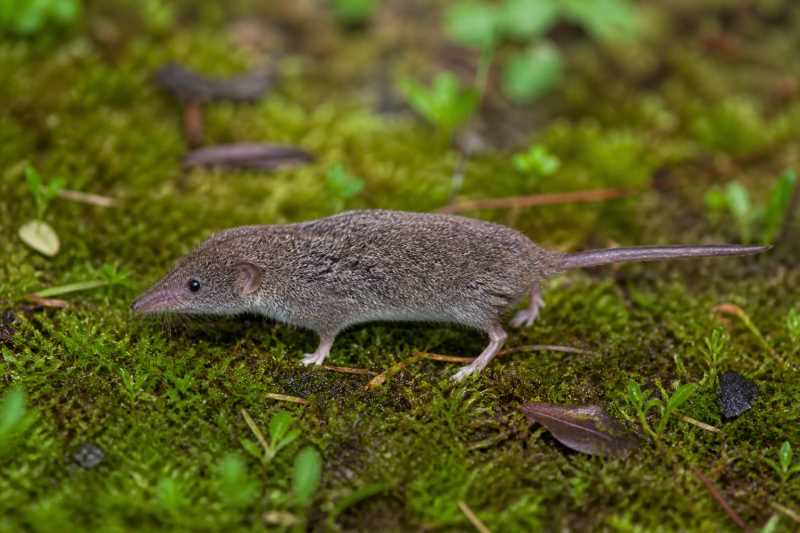
The Kahuzi White-toothed Swamp Shrew is characterized by its sleek, slender body and pointed snout. The body length of this species typically ranges from 5 to 7 centimeters, excluding the tail, which can add another 3 to 5 centimeters. Its fur is usually a dark gray or brown, providing excellent camouflage within its swampy and forested environments.
One of the most distinguishing features of the Kahuzi White-toothed Swamp Shrew is its dentition. As the name suggests, this species has white teeth, a trait that differentiates it from some other shrew species with pigmented enamel. The dental formula is adapted for an insectivorous diet, featuring sharp, pointed incisors and a set of molars designed for shearing rather than grinding.
The shrew’s limbs are relatively short, but its feet are well-adapted for traversing the moist, uneven terrain of its habitat. These adaptations not only help in locomotion but also in burrowing and foraging activities.
Range and Habitat
The Kahuzi White-toothed Swamp Shrew is primarily found in Central Africa, with its presence most notably recorded in the Kahuzi-Biéga National Park in the Democratic Republic of the Congo. This region is known for its rich biodiversity and complex ecosystems, ranging from dense forests to swampy lowlands.
This species prefers habitats that offer ample cover and abundant insect populations. Swamps, marshes, and the underbrush of forests provide the necessary conditions for feeding and shelter. The shrew’s choice of habitat is heavily influenced by the availability of food and the need for protection from predators.
While the exact range of the Kahuzi White-toothed Swamp Shrew is not fully mapped, it is considered to be highly localized, potentially making the species vulnerable to habitat disturbances and environmental changes.
Behavior and Diet
The Kahuzi White-toothed Swamp Shrew is primarily nocturnal, spending its nights foraging for food and its days resting in burrows or under dense vegetation. Its high metabolic rate necessitates frequent feeding, with its diet consisting mainly of insects and other small invertebrates. Ants, beetles, and larvae form the bulk of its diet, although the shrew is known to consume other opportunistic food sources when available.
This species exhibits solitary behavior, with individuals typically maintaining distinct territories. These territories are marked by scent and are actively defended against intruders. However, during the breeding season, male and female shrews may temporarily overlap territories.
Identification Tips (Field Recognition Cues)
Identifying the Kahuzi White-toothed Swamp Shrew in the field requires attention to several key characteristics:
- Size: Look for a small mammal, typically 5 to 7 centimeters in body length, with an additional 3 to 5 centimeters of tail.
- Fur Color: Dark gray to brown fur, which blends well with its environment.
- White Teeth: Unlike some other species with pigmented teeth, this shrew’s teeth are white, a distinctive trait visible upon closer inspection.
- Habitat: Found in swampy or forested areas, often in dense underbrush or near water sources.
- Activity Patterns: Primarily nocturnal, so sightings are more likely at night.
Conservation Status (With Threats and Protections)
The conservation status of the Kahuzi White-toothed Swamp Shrew is currently not well-documented, primarily due to its elusive nature and the challenging terrain it inhabits. However, like many species with restricted ranges, it is potentially vulnerable to habitat loss and environmental changes.
Threats to the shrew’s habitat include deforestation, illegal mining, and agricultural expansion, all of which can lead to significant ecosystem disturbances. Climate change also poses a threat by altering the availability of water and food resources.
Conservation efforts for this species are closely linked to the protection of its habitat. The Kahuzi-Biéga National Park offers a critical refuge for the shrew, providing a protected area where it can thrive. Continued efforts to maintain and expand protected areas, alongside environmental education and sustainable development initiatives, are vital for the long-term survival of this species.
Frequently Asked Questions
Why is this species unique?
The Kahuzi White-toothed Swamp Shrew is unique due to its restricted range and specialized habitat requirements. Its presence is limited to the biodiverse regions of Central Africa, making it an important part of the ecosystem. The shrew’s white teeth also set it apart from many other shrew species, highlighting its distinct evolutionary adaptations.
What role does the shrew play in its ecosystem?
As an insectivore, the Kahuzi White-toothed Swamp Shrew plays a crucial role in controlling insect populations. This helps maintain the ecological balance within its habitat. Additionally, the shrew serves as prey for larger predators, contributing to the food web’s complexity.
How can conservation efforts be improved?
Conservation efforts for the Kahuzi White-toothed Swamp Shrew can be improved by increasing research to better understand its distribution and population dynamics. Protecting its habitat through expanded conservation areas and promoting sustainable land-use practices are also vital. Engaging local communities in conservation initiatives can ensure lasting protection for this unique species.
Is the shrew endangered?
Currently, there is insufficient data to accurately determine the conservation status of the Kahuzi White-toothed Swamp Shrew. However, its limited range and potential threats from habitat destruction suggest that it could be at risk. Ongoing monitoring and habitat protection are crucial to prevent potential endangerment.
What are the main threats to its habitat?
The primary threats to the habitat of the Kahuzi White-toothed Swamp Shrew include deforestation, illegal mining, and agricultural expansion. These activities can lead to habitat fragmentation and loss, directly impacting the shrew’s survival. Climate change also poses a long-term threat by altering environmental conditions.
Related posts