Introduction
The Greater Long-tailed Pouched Rat, scientifically known as Beamys major, is a remarkable mammal species that has captured the interest of scientists and wildlife enthusiasts alike. This nocturnal rodent, belonging to the family Nesomyidae, is primarily found in various regions across East Africa. Known for its distinctive long tail and cheek pouches, this species plays a crucial role in its ecosystem. This comprehensive guide explores the unique characteristics and ecological significance of the Greater Long-tailed Pouched Rat, providing insights into its physical description, habitat, behavior, and conservation status.
Physical Description
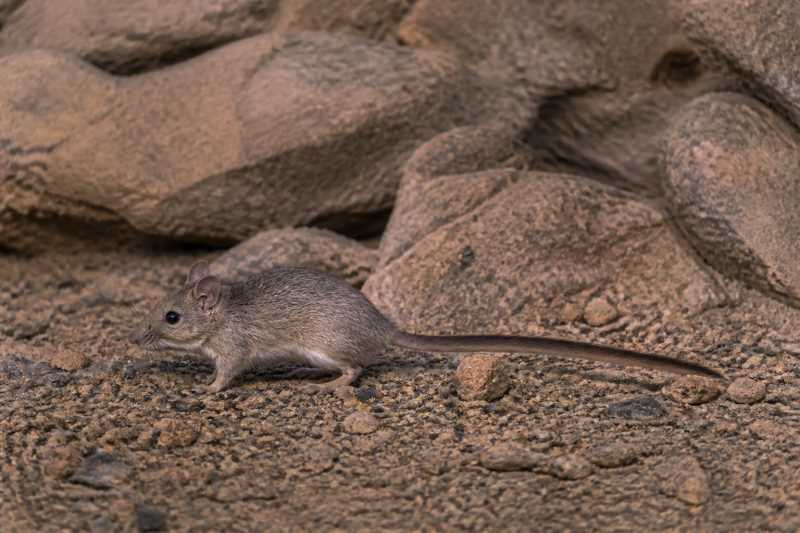
The Greater Long-tailed Pouched Rat is a medium-sized rodent with a distinctive physical appearance. As its name suggests, one of its most notable features is its long tail, which can often exceed the length of its body. The tail is covered with fine hairs and is typically used for balance and stability as the rat navigates its environment.
The body length of the Greater Long-tailed Pouched Rat ranges from 150 to 200 millimeters, while the tail can measure up to 220 millimeters. This rodent typically weighs between 100 to 150 grams. Its fur is soft and dense, with a coloration that varies from grayish-brown on the upper parts to a lighter, whitish hue on the underparts.
A defining characteristic of the Greater Long-tailed Pouched Rat is its cheek pouches, which are used to store food. These pouches are located on either side of its mouth and can expand significantly, providing an efficient means of carrying multiple food items at once.
Range and Habitat
The Greater Long-tailed Pouched Rat is endemic to East Africa, primarily inhabiting regions in Tanzania, Kenya, and Mozambique. It thrives in a variety of habitats, including moist savannas, tropical forests, and agricultural lands. This adaptability to different environments is a testament to the species’ resilience and evolutionary success.
These rodents prefer areas with dense vegetation, which offer ample cover from predators and abundant food sources. They are often found in regions with a stable climate and access to water, as hydration plays a crucial role in their survival.
Behavior and Diet
The Greater Long-tailed Pouched Rat is predominantly nocturnal, meaning it is most active during the night. This behavior helps it avoid predators and high daytime temperatures, which can be detrimental to its survival.
Socially, these rodents are known to be solitary creatures, although they may be found in small groups during breeding seasons or when food is plentiful. They are territorial animals, often marking their home ranges with scent markings to deter intruders.
The diet of the Greater Long-tailed Pouched Rat is omnivorous, consisting of a wide range of foods. They primarily feed on seeds, fruits, and insects, but they are also known to consume small vertebrates and plant matter. Their cheek pouches are particularly useful for storing food, allowing them to gather and transport nourishment back to their burrows.
Identification Tips (Field Recognition Cues)
Identifying the Greater Long-tailed Pouched Rat in the wild can be a challenge due to its nocturnal nature and elusive behavior. However, there are several key features to look for:
- Tail Length: The tail is significantly longer than the body and is a primary distinguishing feature.
- Cheek Pouches: Visible when the rat is carrying food, these expandable pouches are a unique characteristic.
- Fur Coloration: Look for the contrast between the grayish-brown upper parts and the lighter underparts.
- Size: Medium-sized with a body length ranging from 150 to 200 millimeters.
- Behavior: Active during night hours, often seen foraging alone.
Conservation Status (With Threats and Protections)
The Greater Long-tailed Pouched Rat is currently listed as a species of "Least Concern" by the International Union for Conservation of Nature (IUCN). Despite this relatively stable status, there are several threats that could impact its populations in the future.
Threats
- Habitat Loss: Deforestation and agricultural expansion are leading to the reduction of their natural habitats.
- Predation: Natural predators such as snakes, birds of prey, and larger mammals pose a constant threat.
- Human Activity: Urbanization and infrastructure development can disrupt their habitats and natural behaviors.
Protections
Efforts to conserve the Greater Long-tailed Pouched Rat include habitat protection initiatives and research programs aimed at understanding its ecological role. Conservationists advocate for sustainable land-use practices and legal frameworks that protect critical habitats from destruction.
Frequently Asked Questions
What is the typical lifespan of the Greater Long-tailed Pouched Rat?
The Greater Long-tailed Pouched Rat typically lives for about 2 to 3 years in the wild. This lifespan can vary based on environmental conditions and predation pressures.
How does the Greater Long-tailed Pouched Rat contribute to its ecosystem?
These rodents play a vital role in seed dispersion and soil aeration, contributing to the health of their ecosystems. Their foraging activities help with plant propagation and soil turnover.
Are Greater Long-tailed Pouched Rats dangerous to humans?
No, they are not considered dangerous to humans. They are generally shy and avoid direct contact with people. However, like many rodents, they can carry parasites or diseases, so it is best to observe them from a distance.
How can I help in the conservation of the Greater Long-tailed Pouched Rat?
Supporting conservation organizations, promoting habitat preservation, and advocating for sustainable land-use practices are effective ways to contribute to the conservation of this species.
What adaptations allow the Greater Long-tailed Pouched Rat to thrive in its environment?
Their long tail aids in balance, and their cheek pouches allow efficient food storage. Nocturnal habits help them avoid predators and extreme temperatures.
Related posts