Introduction
The Short-tailed Hopping Mouse (Notomys amplus) is a fascinating, albeit rare, rodent species native to Australia. Known for its distinctive hopping movement, this elusive creature is a member of the Notomys genus, often referred to as Australian hopping mice. Despite its intriguing behavior and unique adaptations, the Short-tailed Hopping Mouse has been the subject of limited research, primarily due to its critically endangered status and elusive nature. This article delves into the physical characteristics, habitat, and behaviors of the Short-tailed Hopping Mouse, emphasizing its ecological significance and the urgent need for conservation efforts.
Physical Description
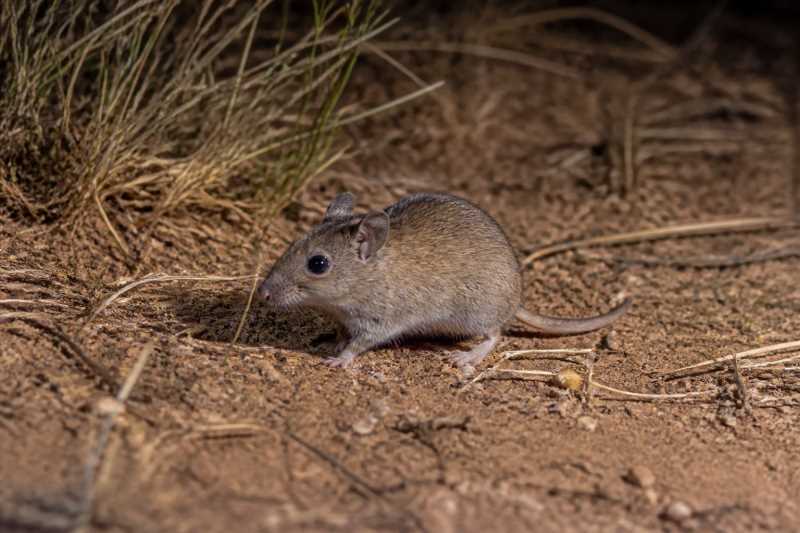
The Short-tailed Hopping Mouse is characterized by its relatively small size, with an average body length ranging between 100 to 120 mm, excluding the tail. This species is aptly named for its shorter tail, which measures about 80 to 100 mm in length, a feature that distinguishes it from other hopping mice with longer tails. The fur of the Short-tailed Hopping Mouse is typically a sandy or reddish-brown on the dorsal side, providing effective camouflage within its arid habitat, while the ventral side is paler, often white or light gray.
The species is equipped with large hind legs, adapted for jumping, which is its primary means of locomotion. This unique adaptation not only aids in swift movement across its desert environment but also in evading predators. The forelimbs, in contrast, are shorter and less robust. Notomys amplus has large, rounded ears and a pointed snout, enhancing its sensory capabilities—critical for survival in its harsh, competitive environment.
Range and Habitat
Historically, the Short-tailed Hopping Mouse was found across a broad range in central Australia, particularly in arid and semi-arid regions. However, due to various environmental and anthropogenic pressures, its current distribution has drastically reduced. The species is now believed to inhabit only isolated pockets within its former range, making sightings extremely rare.
Their preferred habitats include sandy plains, dunes, and areas with sparse vegetation. These environments provide not only the cover and resources necessary for survival but also the open spaces required for their unique mode of locomotion. The presence of shrubs and grasses is crucial, as these plants offer both food and protection from predators.
Behavior and Diet
The Short-tailed Hopping Mouse is primarily nocturnal, spending daylight hours in burrows to escape the extreme temperatures typical of its habitat. These burrows are often complex, multi-entranced structures that provide refuge from predators and harsh weather. At night, these rodents emerge to forage, relying on their acute senses to navigate and locate food.
Their diet consists mainly of seeds, fruits, and vegetation available in their arid ecosystem. They have also been known to consume insects when available, which supplements their diet with essential proteins. The species has adapted to survive on minimal water, obtaining moisture primarily from the food they consume—a critical adaptation to their desert environment.
Identification Tips
Identifying the Short-tailed Hopping Mouse in the field can be challenging due to its elusive nature and similarity to other Notomys species. However, there are several key features to look for:
- Tail Length: As the name suggests, the Short-tailed Hopping Mouse has a noticeably shorter tail than its relatives.
- Fur Color: Look for the characteristic sandy or reddish-brown fur with a paler underside.
- Jumping Behavior: Observe the distinctive hopping locomotion, which is more akin to a kangaroo than a typical rodent.
- Ear Size: The large, rounded ears are a notable feature that aids in distinguishing this species from other small rodents.
- Habitat: Being aware of the habitat can also aid in identification. These mice are typically found in arid, sandy environments.
Conservation Status
The Short-tailed Hopping Mouse is classified as Critically Endangered on the IUCN Red List. Its population has experienced a dramatic decline due to a combination of anthropogenic and natural factors. Key threats include habitat destruction and fragmentation, primarily due to agricultural expansion and mining activities that alter their natural habitat.
In addition to habitat loss, predation by introduced species such as cats and foxes poses a significant threat. These predators have drastically reduced populations of many native Australian species, including the Short-tailed Hopping Mouse.
Conservation efforts are underway, focusing on habitat protection and restoration, along with predator control programs. These initiatives aim to create secure environments where the species can thrive. Public awareness and engagement are also critical, as they foster support for conservation measures and help mitigate human impact on these fragile ecosystems.
Frequently Asked Questions
What threats does the Short-tailed Hopping Mouse face?
The primary threats include habitat destruction due to agriculture and mining, along with predation by introduced species such as cats and foxes.
How does the Short-tailed Hopping Mouse move?
The Short-tailed Hopping Mouse uses a distinctive hopping movement, facilitated by its large hind legs, which is similar to that of a kangaroo.
What does the Short-tailed Hopping Mouse eat?
Its diet mainly consists of seeds, fruits, and vegetation found in its arid habitat, supplemented by insects when available.
Why is the Short-tailed Hopping Mouse critically endangered?
The species is critically endangered due to habitat loss, fragmentation, and predation by non-native species, leading to a drastic population decline.
Where can I find the Short-tailed Hopping Mouse?
Currently, they are believed to inhabit isolated areas within central Australia’s arid regions, although sightings are extremely rare due to their elusive nature and reduced population.
Related posts