Introduction
The Least Philippine Forest Mouse, scientifically known as Apomys musculus, is a small mammal native to the Philippines. This intriguing species, part of the family Muridae, plays a significant role in its ecosystem. Despite its small size, the Least Philippine Forest Mouse is a crucial component of the forest floor’s biodiversity, contributing to seed dispersal and serving as prey for larger predators. Understanding more about this species is essential for both conservation efforts and appreciating the complex ecosystems of the Philippine forests.
Physical Description
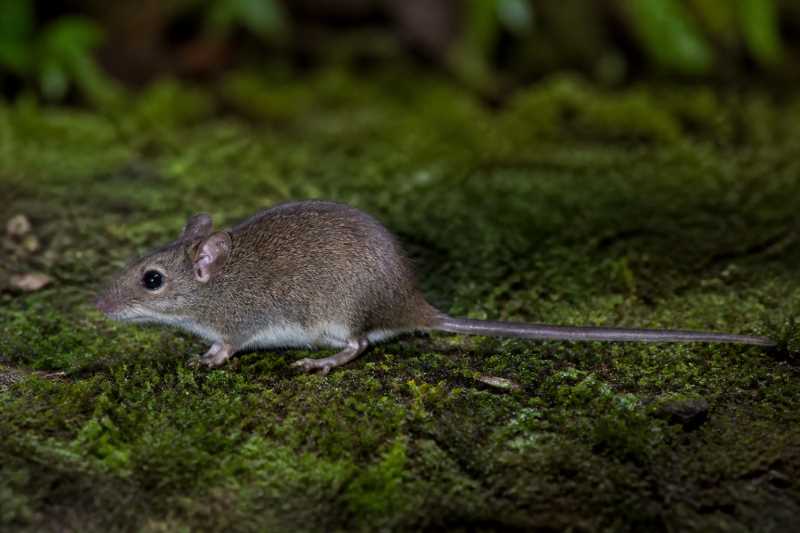
The Least Philippine Forest Mouse is characterized by its diminutive size and distinctive physical features. Typically, an adult Apomys musculus measures about 8 to 10 centimeters in body length, with a tail that extends to about the same length, providing a balanced appearance. Its fur is a blend of brown and gray, offering excellent camouflage against the forest floor. The underbelly is usually lighter, often white or pale gray. This mouse has large, rounded ears, small eyes, and a pointed snout, adaptations that support its nocturnal lifestyle. The feet are relatively large, aiding in its agility amongst the dense undergrowth.
Range and Habitat
The Least Philippine Forest Mouse is endemic to the Philippines, found predominantly in the country’s central and southern islands. It thrives in primary and secondary tropical forests, usually at elevations ranging from sea level to around 1,500 meters. The species is well-adapted to the dense, humid conditions of these habitats, often inhabiting areas with thick leaf litter and abundant ground cover. These mice are also known to venture into agricultural lands adjacent to forests, although this behavior can increase their risk of predation and habitat disturbance.
Behavior and Diet
Primarily nocturnal, the Least Philippine Forest Mouse is most active during the night when it forages for food. Its diet consists mainly of seeds, fruits, and insects, making it an omnivore. This dietary flexibility allows it to adapt to various food availabilities within its habitat. The mouse plays a vital ecological role in seed dispersal, helping to maintain the forest’s plant diversity. Socially, Apomys musculus tends to be solitary or found in small family groups. It communicates through a series of high-pitched squeaks and scent markings, establishing territories within the dense forest undergrowth.
Identification Tips (field recognition cues)
Field identification of the Least Philippine Forest Mouse can be challenging due to its small size and elusive nature. However, there are several key features to look for:
- Size and Shape: Look for a small, slender-bodied mouse with a total length (including tail) of about 16 to 20 centimeters.
- Fur Color: Note the brown and gray fur on the back with a lighter underbelly.
- Tail: Check for a tail that is roughly equal to the body length and is sparsely furred.
- Ears and Eyes: Identify the large, rounded ears and small eyes, typical of a nocturnal animal.
- Behavior: Observe activity during the night and listen for high-pitched squeaks.
Conservation Status (with threats and protections)
The conservation status of the Least Philippine Forest Mouse is currently listed as "Least Concern" by the IUCN Red List. However, this status does not imply that the species faces no threats. Habitat loss due to deforestation, agricultural expansion, and urban development poses significant risks to its population. The fragmentation of forest habitats makes it difficult for these mice to find food and mates, leading to isolated populations. Conservation efforts focus on protecting and restoring natural habitats. Protected areas in the Philippines provide some refuge, but ongoing conservation work is needed to ensure the species’ long-term survival.
Frequently Asked Questions
How can you tell the Least Philippine Forest Mouse apart from other mice? The Least Philippine Forest Mouse can be identified by its small size, brown-gray fur with a lighter belly, and a long tail that matches the body length. Its large ears and nocturnal behavior are also distinguishing features.
What does the Least Philippine Forest Mouse eat? This mouse is an omnivore, primarily consuming seeds, fruits, and insects. Its diet varies depending on food availability in its forest habitat.
Where is the Least Philippine Forest Mouse found? It is endemic to the Philippines, residing in tropical forests and occasionally in agricultural areas near forests. It is primarily found in the central and southern islands.
Is the Least Philippine Forest Mouse endangered? Currently, the species is classified as "Least Concern," but it faces threats from habitat loss and fragmentation. Conservation efforts focus on habitat protection and restoration.
What role does the Least Philippine Forest Mouse play in its ecosystem? The mouse plays a crucial role in seed dispersal, aiding in plant diversity and forest regeneration. It also serves as prey for larger predators, balancing the ecosystem dynamics.
Related posts