Introduction
The Comb-toed Jerboa, scientifically known as Paradipus ctenodactylus, is a fascinating rodent belonging to the family Dipodidae. These small, nocturnal mammals are known for their remarkable adaptations to desert environments and their distinctive locomotion, which resembles hopping more than running. This article delves into the various aspects of the Comb-toed Jerboa, covering its physical characteristics, habitat preferences, behaviors, and the conservation challenges it faces.
Physical Description
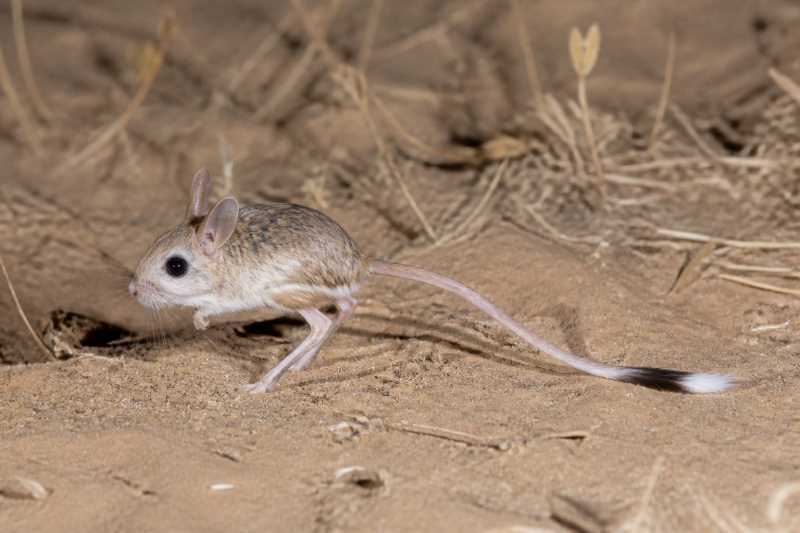
The Comb-toed Jerboa is a small rodent with a body length of around 10 to 12 centimeters, excluding its tail, which can add an additional 15 to 20 centimeters. Weighing between 30 to 70 grams, this species is easily recognizable by its long hind legs and shorter forelimbs, adaptations that facilitate its distinctive hopping motion, similar to that of a kangaroo.
The fur of the Comb-toed Jerboa is soft and silky, typically a sandy or buff color that provides excellent camouflage in its desert environment. Their large eyes are adapted for nocturnal activity, allowing them to see well in low-light conditions. One of the most unique features of the Comb-toed Jerboa is its hind feet, which have comb-like structures on the toes that aid in grooming and maintaining fur cleanliness.
Range and Habitat
The Comb-toed Jerboa is primarily found in the arid regions of Central Asia, including parts of Kazakhstan, Uzbekistan, Turkmenistan, and Iran. These rodents inhabit desert and semi-desert environments, where they can be found in areas with sparse vegetation such as shrubs and grasses.
Their habitat selection is influenced by the availability of loose sandy soils, which are essential for their burrowing lifestyle. Jerboas construct complex burrows that provide shelter from extreme temperatures and predators. These burrows usually consist of multiple entrances and chambers, serving as nesting sites and storage for food.
Behavior and Diet
Comb-toed Jerboas are primarily nocturnal creatures, venturing out of their burrows at night to forage for food. Their diet mainly consists of seeds, insects, and other small invertebrates. They are opportunistic feeders, adapting their diet based on the availability of resources in their environment.
Jerboas possess an excellent sense of hearing, which helps them detect predators and locate prey in the dark. Their bipedal locomotion is both energy-efficient and effective for navigating their sandy habitats. By hopping, they can cover large distances quickly, evading predators and searching for food.
Socially, Comb-toed Jerboas are generally solitary, coming together only during the breeding season. Breeding typically occurs in the spring, and after a gestation period of about 25 to 30 days, females give birth to a litter of two to six young. The young are born blind and hairless, relying on their mothers for nourishment and protection until they are weaned.
Identification Tips (Field Recognition Cues)
Identifying the Comb-toed Jerboa in the wild can be challenging due to its nocturnal habits and elusive nature. However, several key features can help in its identification:
- Locomotion: Look for the distinctive hopping motion, which is a hallmark of jerboas. Their movement is swift and agile, helping them navigate their desert habitats.
- Foot Structure: The comb-like structures on their hind toes are unique to this species, aiding in grooming and sand dispersal.
- Tail Length: The tail of the Comb-toed Jerboa is considerably longer than its body, often tipped with a tuft of darker fur.
- Ear Size: Their ears are relatively large in comparison to their head, an adaptation that enhances their auditory capabilities.
Conservation Status (With Threats and Protections)
Currently, the Comb-toed Jerboa is classified as Least Concern by the International Union for Conservation of Nature (IUCN). Despite this status, they face several threats that could impact their populations if not managed effectively.
Threats:
- Habitat Destruction: Human activities such as agriculture and urban development are leading to the degradation of their natural habitats.
- Climate Change: Changes in climate patterns can alter their habitats, affecting food availability and burrow conditions.
- Predation: Natural predators, including birds of prey and carnivorous mammals, pose a constant threat to jerboas.
Protections: Conservation efforts focus on habitat preservation and monitoring population trends to ensure sustainable populations. Protected areas and wildlife reserves play a critical role in safeguarding their habitats from encroachment.
Frequently Asked Questions
1. What adaptations help the Comb-toed Jerboa survive in the desert? The Comb-toed Jerboa has several adaptations for desert survival, including long hind legs for efficient hopping, nocturnal behavior to avoid daytime heat, and burrowing habits to escape extreme temperatures.
2. How does the Comb-toed Jerboa contribute to its ecosystem? As seed dispersers and insect predators, Comb-toed Jerboas play a vital role in maintaining the ecological balance of their desert habitats.
3. Are Comb-toed Jerboas social animals? No, they are generally solitary, only coming together for breeding. After mating, males and females separate, and females raise the young alone.
4. What are the primary threats to Comb-toed Jerboa populations? The main threats include habitat destruction due to human activities, climate change, and predation by natural predators.
5. How are Comb-toed Jerboas protected? Protection measures include habitat conservation through protected areas and monitoring population trends to prevent decline.
Related posts