Introduction
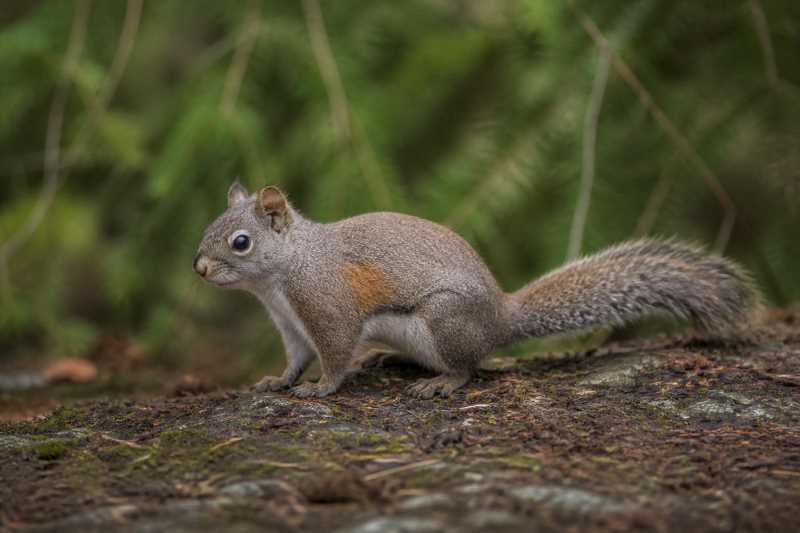
Douglas’s Squirrel (Tamiasciurus douglasii), also known as the "chickaree" or the "pine squirrel," is a small, vibrant mammal native to North America. This species is highly regarded for its energetic behavior and distinctive vocalizations, making it a fascinating subject for both wildlife enthusiasts and researchers. Known for its essential role in forest ecosystems, the Douglas’s Squirrel contributes significantly to seed dispersal and the ecological balance of its habitat.
Physical Description
The Douglas’s Squirrel is a small tree squirrel, typically measuring 11 to 14 inches in length, including its bushy tail, which accounts for nearly half of its total length. Weighing between 5 to 10 ounces, these squirrels are compact but agile. They possess a reddish-brown fur coat that can vary in shade depending on the season, with a white or cream-colored belly that offers a striking contrast. During the summer months, their fur tends to be brighter and more vibrant, while in winter, it becomes duller and thicker, providing necessary insulation against the cold.
Their ears are tufted, a characteristic feature that not only enhances their hearing capabilities but also adds to their distinctive appearance. The eyes of the Douglas’s Squirrel are large and dark, contributing to their excellent vision, which is vital for detecting predators and navigating through dense forests.
Range and Habitat
Douglas’s Squirrels are primarily found along the western coast of North America. Their range extends from the southern regions of British Columbia in Canada, through the western United States, down into northern California. These squirrels favor coniferous forests, thriving in the dense canopies of Douglas fir, ponderosa pine, and other large evergreen trees.
These forests provide both food and shelter, as Douglas’s Squirrels are adept climbers and spend most of their lives in trees. They are particularly fond of older forests where large trees and ample undergrowth offer a rich supply of food and nesting sites. However, they are also known to adapt to secondary forests and mixed woodlands, showcasing their versatility in habitat preference.
Behavior and Diet
Douglas’s Squirrels are diurnal creatures, meaning they are active during the day. They are highly territorial and can be aggressive when defending their territory, especially during the breeding season. Their vocalizations are a key aspect of their territorial behavior, with a range of calls used to warn off intruders or communicate with other squirrels.
In terms of diet, Douglas’s Squirrels are primarily granivorous, feeding on seeds and cones from coniferous trees. However, they are opportunistic feeders and will also consume fungi, fruits, and even small insects when available. Remarkably, they are known for their food caching behavior, where they store seeds in various locations throughout their territory to ensure a steady food supply during the winter months.
Identification Tips
Identifying Douglas’s Squirrel in the field can be a rewarding experience for wildlife enthusiasts. Here are some key identification tips:
- Size and Shape: Look for a small, agile squirrel with a long bushy tail.
- Coloration: Note the reddish-brown fur with a contrasting white or cream belly.
- Vocalizations: Listen for their distinctive calls, which are often described as a series of rapid, chattering sounds.
- Habitat: Observe their preference for coniferous forests, particularly older ones with dense canopies.
- Behavior: Watch for their energetic movements and territorial displays, particularly during the day.
Conservation Status
As of the latest assessments, Douglas’s Squirrel is classified as a species of "Least Concern" by the International Union for Conservation of Nature (IUCN). Despite this relatively stable status, they face several threats that could impact their populations in the future.
Threats include habitat loss due to logging and urban development, which reduces the availability of old-growth forests. Climate change poses another significant threat, potentially altering the composition of their forest habitats and affecting food availability.
Protections for Douglas’s Squirrels primarily involve habitat conservation efforts. Many of the forests they inhabit are protected under national and state parks, which help maintain the ecological integrity of these areas. Additionally, sustainable forestry practices are crucial in ensuring that their habitats remain viable for future generations.
Frequently Asked Questions
1. What do Douglas’s Squirrels eat during the winter? During the winter, Douglas’s Squirrels rely heavily on their cached stores of seeds, primarily from coniferous trees. They are adept at remembering the locations of these caches and will dig through snow to retrieve their food.
2. How do Douglas’s Squirrels communicate? Douglas’s Squirrels communicate through a variety of vocalizations, including chattering and barking sounds. These calls serve multiple purposes, such as warning off intruders, alerting other squirrels of predators, and establishing territory.
3. Are Douglas’s Squirrels endangered? Currently, Douglas’s Squirrels are not considered endangered. They are classified as "Least Concern" due to their stable population and wide distribution. However, ongoing conservation efforts are essential to address habitat loss and other environmental threats.
4. Can Douglas’s Squirrels be found in urban areas? While Douglas’s Squirrels prefer coniferous forests, they can occasionally be found in suburban or urban areas that have sufficient tree cover or are adjacent to natural forested regions.
5. What role do Douglas’s Squirrels play in their ecosystem? Douglas’s Squirrels play a crucial role in their ecosystem by aiding in seed dispersal. Their caching behavior helps propagate various tree species, contributing to forest regeneration and biodiversity.
Related posts