Introduction
The Orange Agouti (Dasyprocta croconota) is a fascinating mammal species belonging to the Dasyproctidae family. Known for its vibrant orange-red coat and agile movements, this rodent is one of the lesser-known yet ecologically significant creatures of the neotropical forests. As a seed disperser, the Orange Agouti plays a crucial role in maintaining forest dynamics and biodiversity. In this article, we delve into the various aspects of this intriguing species, from its physical characteristics to its habitat, behavior, and conservation status.
Physical Description
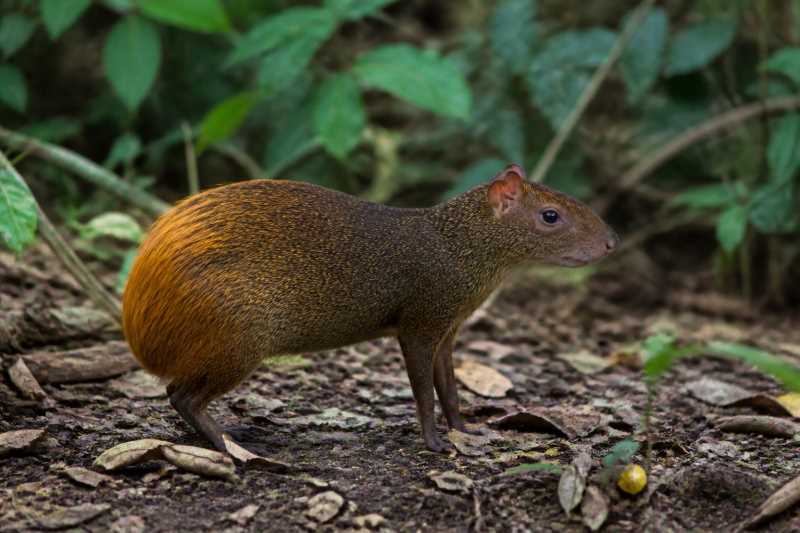
The Orange Agouti is a medium-sized rodent, typically weighing between 3 to 6 kilograms (6.6 to 13.2 pounds) and measuring around 40 to 60 centimeters (16 to 24 inches) in body length. Its most striking feature is its bright orange or reddish-brown fur, which provides excellent camouflage amidst the forest floor’s fallen leaves. The fur is dense and glossy, offering protection against the elements and predators.
Distinctly, the Orange Agouti has a small, rounded head with large, sensitive ears that help detect sounds of potential threats. Its eyes are prominent and dark, adapted for low-light conditions in dense forests. The limbs are strong and muscular, with the hind legs slightly longer than the front, facilitating swift and agile movements. The agouti’s tail is short and not as prominent as in other rodent species, contributing to its streamlined body shape.
Range and Habitat
The Orange Agouti is predominantly found in the tropical rainforests of South America, particularly in regions of the Amazon Basin across countries such as Brazil, Peru, and Colombia. This species thrives in evergreen forests, where the dense canopy and abundant undergrowth provide a rich habitat. They prefer locations near water sources like rivers and streams, which offer both hydration and a plethora of food resources.
These agoutis are also adaptable to secondary forests and disturbed habitats, where they can exploit the regrowth vegetation. However, their preference remains undisturbed, dense forests, where they can find ample cover and food. The presence of fruit-bearing trees is crucial for their sustenance, as these agoutis rely heavily on a diet of seeds and fruits.
Behavior and Diet
Orange Agoutis are diurnal, meaning they are most active during the day. They are solitary creatures, often seen foraging alone or in pairs. Highly territorial, they mark their territory using scent glands and are known to defend it aggressively against intruders.
Their diet primarily consists of seeds, fruits, and occasionally leaves and roots. As scatter-hoarders, they play a significant role in seed dispersal. Agoutis bury seeds in various locations, some of which are forgotten and eventually germinate, aiding in forest regeneration.
In the wild, Orange Agoutis have a unique feeding behavior. They use their sharp incisors to crack open hard shells of nuts and fruits, showcasing great dexterity and intelligence. This feeding strategy not only aids in their survival but also impacts the ecosystem positively by promoting plant diversity.
Identification Tips
Field recognition of the Orange Agouti can be aided by several distinctive features:
- Fur Coloration: Look for the characteristic bright orange or reddish-brown fur, which stands out against the forest backdrop.
- Size and Shape: Medium-sized rodent with a compact, streamlined body. Short tail and long hind legs are notable.
- Behavior: Observing their behavior during daytime can help in identification. They are often seen foraging on the forest floor or near fruit-bearing trees.
- Sound: Listen for their vocalizations, which include soft grunts and barks used for communication.
Conservation Status
The conservation status of the Orange Agouti is currently of least concern, according to the International Union for Conservation of Nature (IUCN). However, several threats could impact their populations in the future. Habitat destruction due to deforestation for agriculture and urban development poses a significant risk. Additionally, hunting for their meat, though not widespread, can affect local populations.
Protection efforts include the establishment of protected areas and wildlife reserves, which offer a safe haven for these creatures. Conservationists emphasize the importance of maintaining forest habitats and educating local communities about the ecological roles of agoutis. Sustainable forest management practices are crucial to ensure the survival of these animals and their habitats.
Frequently Asked Questions
What is the primary diet of the Orange Agouti?
The Orange Agouti primarily feeds on seeds, fruits, and occasionally leaves and roots. They are known for their role as seed dispersers in the forest ecosystem.
Where can the Orange Agouti be found?
This species is found in the tropical rainforests of South America, particularly in the Amazon Basin across countries like Brazil, Peru, and Colombia.
How does the Orange Agouti contribute to the ecosystem?
As scatter-hoarders, Orange Agoutis bury seeds, some of which germinate and grow into new plants, aiding in forest regeneration and promoting biodiversity.
Are Orange Agoutis social animals?
No, Orange Agoutis are generally solitary creatures. They are territorial and often seen alone or in pairs, defending their area from intruders.
What are the main threats to the Orange Agouti?
The primary threats include habitat destruction due to deforestation and hunting. Conservation efforts focus on habitat preservation and sustainable forest management.
Related posts