Introduction
The Lion-tailed Macaque (Macaca silenus), often referred to as the "Wanderoo," is one of the most distinctive and endangered primate species found in the Western Ghats of India. This Old World monkey, with its striking mane of hair resembling that of a lion, is not only a symbol of biodiversity but also a crucial part of the ecological tapestry of its habitat. Despite its charismatic appearance, the Lion-tailed Macaque faces numerous threats that have resulted in its classification as an endangered species.
Physical Description
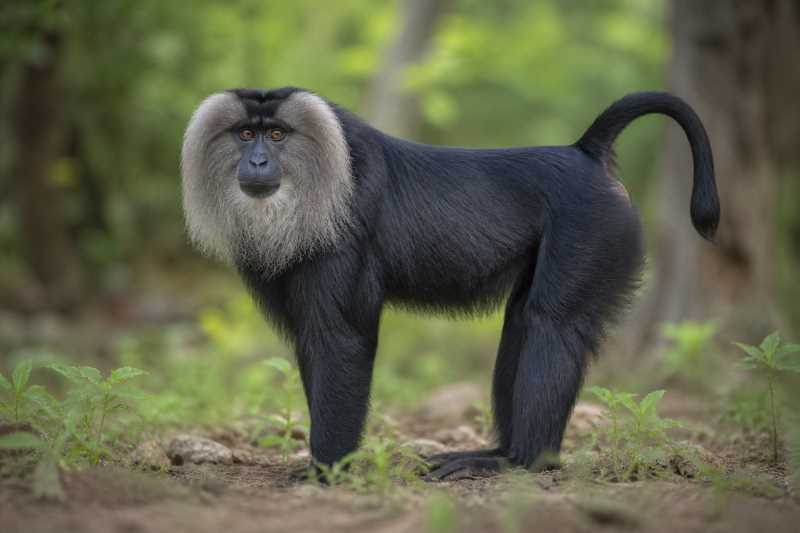
The Lion-tailed Macaque is a medium-sized primate, with adults measuring approximately 42 to 61 centimeters in body length, excluding the tail. The tail, which is tufted at the end, resembles that of a lion and adds an additional 24 to 38 centimeters. Adult males can weigh between 15 to 20 kilograms, whereas females are slightly smaller, weighing around 10 kilograms.
Its fur is predominantly black, providing stark contrast to its silver-white mane that encircles the head, giving this species its regal appearance. The face of the Lion-tailed Macaque is hairless and black, with a prominent brow ridge and deeply set brown eyes that convey intelligence and curiosity.
The distinctive mane and tufted tail are not merely ornamental but play a role in communication and social interactions within their groups. These features, along with their unique vocalizations, are crucial for maintaining group cohesion in the dense forest habitats they call home.
Range and Habitat
The Lion-tailed Macaque is endemic to the Western Ghats, a mountain range that runs parallel to the western coast of India. This region is recognized as a UNESCO World Heritage Site due to its rich biodiversity and high levels of endemism.
These primates primarily inhabit tropical rainforests, with a preference for undisturbed, primary forests. They are arboreal creatures, spending most of their lives in the upper canopy. This arboreal lifestyle helps them avoid predators and facilitates access to their varied diet.
Their distribution is highly fragmented due to habitat destruction, and they are now found only in isolated pockets across the states of Kerala, Karnataka, and Tamil Nadu. The Western Ghats provide the perfect combination of climate and vegetation that supports their diverse dietary needs and social structures.
Behavior and Diet
Lion-tailed Macaques are social animals, living in troops that typically consist of 10 to 20 individuals. These troops are matriarchal, with females forming the core of the group. Social bonds are maintained through grooming and vocal communication.
Their diet is omnivorous, consisting of fruits, leaves, insects, and small vertebrates. They are known to be selective feeders, often choosing ripe fruits and seeds, which makes them important seed dispersers in their ecosystem. Their foraging behavior is highly adapted to the rainforest canopy, where they spend the majority of their time.
Identification Tips (Field Recognition Cues)
When trying to identify Lion-tailed Macaques in the wild, look for the following key characteristics:
- Mane: The silver-white mane around the face is a distinctive feature that sets them apart from other macaque species.
- Tail: Their tail is long and tufted like a lion’s, which is unique among macaques.
- Size and Shape: Medium-sized with a robust body, black fur, and a hairless, black face.
- Vocalizations: Listen for their unique vocalizations, which include a variety of calls used for communication within the troop.
- Location: Observing them in the Western Ghats’ primary forests increases the likelihood of an accurate identification.
Conservation Status (with Threats and Protections)
The Lion-tailed Macaque is currently classified as Endangered by the International Union for the Conservation of Nature (IUCN). The primary threats to their survival include habitat destruction due to agriculture, logging, and human settlement, leading to the fragmentation of their populations.
Conservation efforts are in place to protect their remaining habitats. The establishment of protected areas and wildlife sanctuaries has been a crucial step in safeguarding these primates. Additionally, conservation programs aimed at habitat restoration and community engagement are vital for their long-term survival.
One of the most successful conservation initiatives has been the Project Lion-tailed Macaque, which focuses on research, monitoring, and creating awareness among local communities about the importance of conserving this unique species.
Frequently Asked Questions
What is the lifespan of a Lion-tailed Macaque?
Lion-tailed Macaques can live up to 20 to 30 years in the wild, with some individuals in captivity living slightly longer due to the absence of predators and consistent food supply.
How do Lion-tailed Macaques communicate?
They communicate through a variety of vocalizations, facial expressions, and body postures. Grooming is also a significant part of their social interactions, helping to strengthen bonds within the troop.
What role do Lion-tailed Macaques play in their ecosystem?
These macaques are important seed dispersers, contributing to the regeneration of the forest. Their selective feeding habits aid in maintaining the ecological balance of their habitat.
Why are Lion-tailed Macaques endangered?
The primary reasons for their endangered status include habitat destruction, fragmentation, and human-wildlife conflict. Conservation efforts are crucial to address these issues.
Where can I see Lion-tailed Macaques in the wild?
To see Lion-tailed Macaques, visit the protected areas in the Western Ghats of India, such as the Silent Valley National Park and the Anamalai Tiger Reserve.
Related posts