Chacma Baboon (Papio ursinus): The Comprehensive Guide
Introduction
Among the diverse primates of the African continent, the Chacma baboon, scientifically known as Papio ursinus, stands out for its adaptability and complex social structures. This intriguing species is one of the largest and most widespread of the baboon family, inhabiting a range of environments across Southern Africa. In this article, we delve into the fascinating world of the Chacma baboon, exploring its physical characteristics, habitat, behavior, and more, to provide a comprehensive understanding of this remarkable primate.
Physical Description
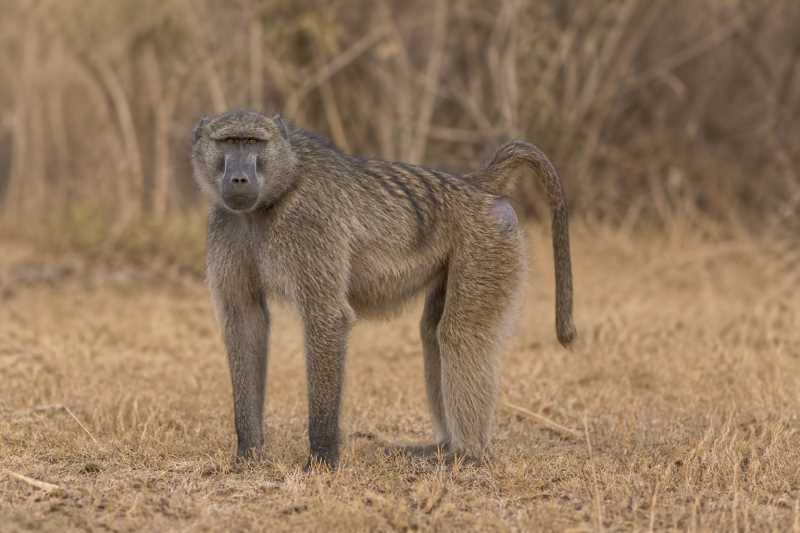
The Chacma baboon is notable for its large size and distinctive features. Adult males can weigh between 20-45 kilograms (44-99 pounds), while females are significantly smaller, ranging from 12-25 kilograms (26-55 pounds). This sexual dimorphism is typical among baboons, with males exhibiting more robust builds and larger canine teeth.
Chacma baboons have a dog-like muzzle and are covered in coarse, dark brown to light gray fur. Their tails are long and carried in a characteristic arch. The face, rump, and extremities are often darker, with a bare pink or red area around the rump, which is more pronounced in females, especially during estrus.
These baboons possess strong limbs and fingers, allowing them to climb trees and manipulate objects with ease. Their eyesight is adapted for both day and night vision, facilitating foraging across different times of the day.
Range and Habitat
The Chacma baboon is predominantly found across Southern Africa, extending from South Africa, Namibia, and Angola to Mozambique and Zambia. This species thrives in a variety of habitats, including savannas, woodlands, semi-deserts, and even mountainous regions.
They are highly adaptable and can often be found in close proximity to human settlements, where they forage for food. This adaptability to different environments is one of the key factors contributing to their widespread distribution.
Behavior and Diet
Chacma baboons are diurnal, spending their days foraging for food and socializing within their troops. These troops can range from 15 to over 100 individuals, consisting of a mix of males, females, and their offspring. The social structure is complex, with dominance hierarchies influencing mating, feeding, and grooming behaviors.
Their diet is omnivorous, predominantly consisting of fruits, seeds, and leaves, supplemented by insects, small mammals, and even birds when available. This opportunistic feeding strategy allows them to exploit a wide range of food resources, enhancing their survival in diverse environments.
Identification Tips (Field Recognition Cues)
When observing Chacma baboons in the wild, there are several key identification tips to consider:
- Size and Shape: Look for the large size and robust body, especially in males, along with the distinctive dog-like muzzle.
- Coloration: Note the dark brown to light gray fur and the darker face and extremities.
- Tail and Rump: The long, arched tail and bare, pink rump area are characteristic features.
- Behavior: Watch for social interactions such as grooming and playful behavior within troops.
- Vocalizations: Listen for their range of vocalizations, including barks, grunts, and screams, which are used for communication and alarm.
Conservation Status (With Threats and Protections)
The Chacma baboon is currently listed as Least Concern by the IUCN Red List, due to its wide distribution and large population. However, certain threats do pose challenges to their conservation.
Threats
- Habitat Loss: Agricultural expansion and urban development lead to habitat fragmentation.
- Human-Wildlife Conflict: Baboons are often perceived as pests when they raid crops and garbage, leading to retaliation by humans.
- Hunting and Poaching: In some regions, they are hunted for bushmeat or captured for the illegal pet trade.
Protections
- Protected Areas: Many populations reside within national parks and reserves, offering protection from habitat destruction.
- Conservation Programs: Efforts are underway to mitigate human-wildlife conflict and educate communities on coexistence strategies.
Frequently Asked Questions
What is the lifespan of a Chacma baboon?
Chacma baboons have a lifespan of approximately 20 to 30 years in the wild. In captivity, with proper care, they can live slightly longer, sometimes reaching up to 40 years.
How do Chacma baboons communicate?
Chacma baboons communicate through a combination of vocalizations, facial expressions, and body postures. They use barks, grunts, and screams to convey different messages such as alarm, submission, and aggression.
Are Chacma baboons dangerous to humans?
While Chacma baboons are generally not aggressive towards humans, they can become dangerous if provoked or if they associate humans with food. It is important to maintain a safe distance and avoid feeding them.
What role do Chacma baboons play in the ecosystem?
Chacma baboons play a crucial role in their ecosystems by aiding in seed dispersal and controlling insect populations. Their foraging habits also help maintain the balance of plant species in their habitats.
Can Chacma baboons be kept as pets?
Chacma baboons are wild animals and are not suitable as pets. They require complex social structures and environments that cannot be provided in a domestic setting. Keeping them as pets is illegal in many regions due to their conservation status and potential danger to humans.
Related posts