Introduction
The Central Hare Wallaby, scientifically known as Lagorchestes asomatus, is a fascinating mammal species native to Australia. Although it has been elusive to modern science, this species belongs to the Macropodidae family, which includes kangaroos and wallabies. Originally described in the early 20th century, the Central Hare Wallaby is a subject of intrigue due to its mysterious status and the limited information available about its ecology and behavior.
Physical Description
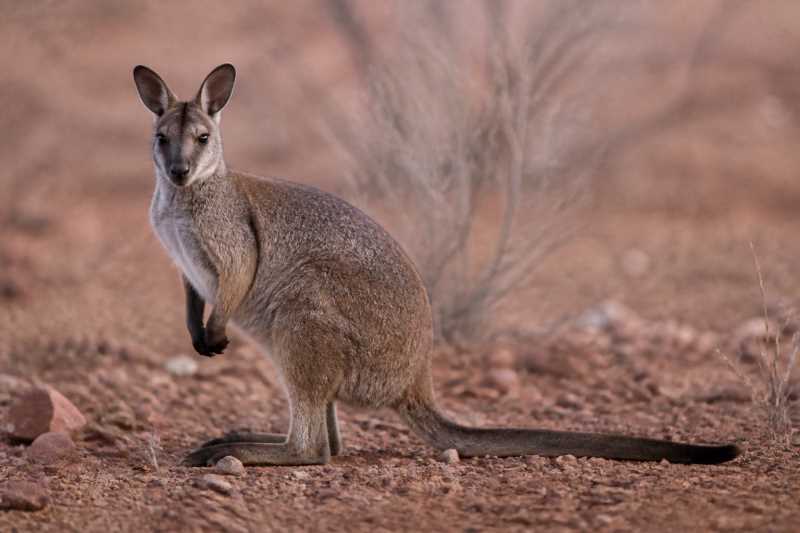
The Central Hare Wallaby is a small marsupial, distinguished by its hare-like appearance. It possesses long, slender limbs and a compact body, which facilitate swift and agile movements. The fur is typically a blend of grey and brown, providing effective camouflage in its natural habitat. Its ears are long and pointed, resembling those of a hare, which likely contribute to its acute hearing abilities. Additionally, the tail is relatively short compared to other wallabies, aiding in balance and agility.
Range and Habitat
Historically, the Central Hare Wallaby was believed to inhabit arid and semi-arid regions of central Australia. These areas are characterized by sparse vegetation, open grasslands, and scrublands. The exact range of this species remains uncertain due to the lack of recent sightings and comprehensive studies. However, it is presumed that the Central Hare Wallaby once thrived in environments where its cryptic coloration and agile movements offered protection from predators and harsh environmental conditions.
Behavior and Diet
The behavior of the Central Hare Wallaby is largely speculative, given the limited observations and data available. It is presumed to be a nocturnal forager, primarily active during the cooler hours of dusk and dawn to avoid the extreme daytime temperatures of its arid habitat. Like other wallabies, its diet likely consists of a variety of grasses, leaves, and other vegetation available in its environment. Its foraging behavior would have been adapted to efficiently exploit the sparse food resources typical of arid landscapes.
Identification Tips
Identifying the Central Hare Wallaby in the field is challenging due to its elusive nature and the scarcity of recent sightings. However, if one were to encounter this species, key recognition cues would include its small size, distinctive hare-like ears, and the unique coloration of its fur. Observers might also note its agile movements and the characteristic hopping gait common to wallabies.
Conservation Status
The conservation status of the Central Hare Wallaby is a topic of considerable concern. It is currently classified as "Extinct" by the International Union for Conservation of Nature (IUCN). The primary threats that led to its presumed extinction include habitat destruction, competition with introduced species, and predation by invasive predators such as foxes and feral cats. Conservation efforts for similar species focus on habitat restoration, predator control, and research initiatives aimed at understanding and mitigating threats to remaining wallaby populations.
Frequently Asked Questions
What is the current status of the Central Hare Wallaby?
The Central Hare Wallaby is classified as "Extinct" by the IUCN, with no confirmed sightings in recent decades.
Where was the Central Hare Wallaby originally found?
It was originally found in the arid and semi-arid regions of central Australia, particularly in open grasslands and scrublands.
What did the Central Hare Wallaby eat?
The Central Hare Wallaby’s diet likely consisted of grasses, leaves, and other vegetation, adapted to the sparse resources of its arid habitat.
Why is the Central Hare Wallaby considered extinct?
It is considered extinct due to habitat destruction, competition with introduced species, and predation by invasive predators like foxes and feral cats.
Are there any conservation efforts for the Central Hare Wallaby?
Conservation efforts focus on related species, involving habitat restoration, predator control, and research to understand and mitigate threats.
Related posts