Toolache Wallaby (Notamacropus greyi)
Introduction
The Toolache Wallaby, scientifically known as Notamacropus greyi, was a distinct species of wallaby native to Australia. This species, unfortunately, became extinct in the early 20th century. The Toolache Wallaby was renowned for its grace and beauty, and it holds a significant place in the history of Australia’s unique fauna. This article explores the various facets of the Toolache Wallaby, from its physical characteristics and natural habitat to its behavior and the tragic tale of its extinction.
Physical Description
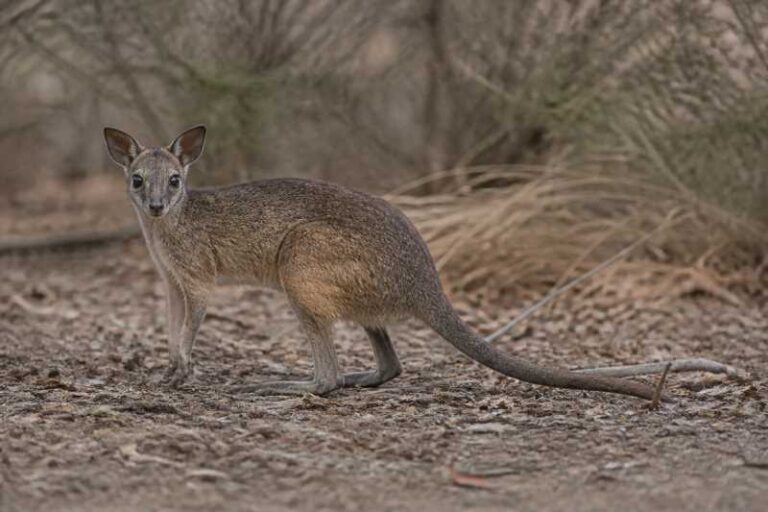
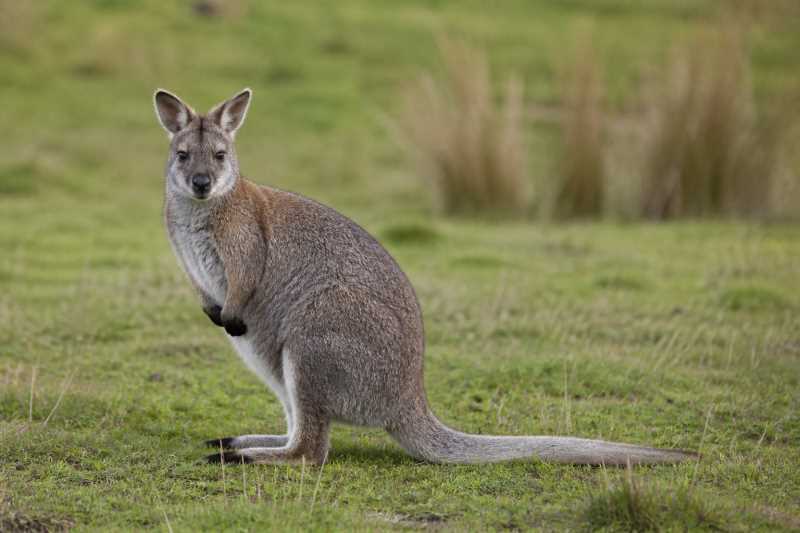
The Toolache Wallaby was a slender and elegant marsupial, notable for its striking appearance. Adults typically weighed between 7 and 10 kilograms (15 to 22 pounds) and stood approximately 60 to 70 centimeters (24 to 28 inches) tall. Their fur was a soft, sleek grey, with a lighter underbelly. A distinctive feature of the Toolache Wallaby was its long, slender limbs, which contributed to its graceful movement and ability to leap substantial distances.
Their tails were long and muscular, providing balance and aiding in swift, agile movements. The ears of the Toolache Wallaby were relatively large and rounded, enabling them to detect predators effectively in their natural habitat. The species exhibited sexual dimorphism, with males generally being larger and more robust than females.
Range and Habitat
Historically, the Toolache Wallaby inhabited the southeastern regions of Australia, particularly in South Australia and southwestern Victoria. They preferred grasslands, open woodlands, and scrubby areas, where they could graze and find cover from predators. These environments provided the ideal conditions for their herbivorous diet and allowed them to use their agility to escape threats.
The Toolache Wallaby thrived in regions with a temperate climate, where seasonal variations supported the growth of various grasses and shrubs that comprised their diet. The loss of these habitats due to agricultural expansion and land clearing significantly impacted their populations, contributing to their eventual extinction.
Behavior and Diet
The Toolache Wallaby was primarily a nocturnal creature, becoming active during the cooler evening and night hours. This behavior helped them avoid the heat of the day and reduced their visibility to predators. They were social animals, often seen in small groups or pairs, and communicated through a series of clicks and soft calls.
Their diet consisted mainly of grasses, leaves, and shoots. The Toolache Wallaby was an efficient forager, using its keen senses to locate food sources. Their digestive system was adapted to break down fibrous plant material, allowing them to extract maximum nutrients from their diet.
Identification Tips
Identifying the Toolache Wallaby in the wild today is impossible due to its extinction. However, historical descriptions and illustrations provide valuable insights into recognizing this species:
- Fur Color: A soft grey coat with a paler underbelly.
- Body Structure: Slender, with long, delicate limbs and a long tail.
- Ears: Large and rounded, aiding in acute hearing.
- Size: Smaller than the common kangaroo, with a more elegant build.
Conservation Status
The Toolache Wallaby is officially classified as extinct. Several factors contributed to its decline and eventual extinction:
- Habitat Loss: The expansion of agriculture and land clearing in their native habitats led to a significant reduction in their living space and food sources.
- Hunting: The Toolache Wallaby was hunted extensively for its fur and meat, which were highly valued.
- Predation: Introduced predators such as foxes and cats further decreased their numbers.
Conservation efforts for the Toolache Wallaby began too late to save the species. However, its story serves as a poignant reminder of the importance of early intervention and habitat preservation in protecting vulnerable species.
Frequently Asked Questions
- What did the Toolache Wallaby eat?
The Toolache Wallaby primarily consumed grasses, leaves, and shoots. Its herbivorous diet was well-suited to the grasslands and open woodlands it inhabited.
- Why did the Toolache Wallaby become extinct?
The extinction of the Toolache Wallaby resulted from habitat loss due to agricultural expansion, excessive hunting for their fur and meat, and predation by introduced species such as foxes and cats.
- Where was the Toolache Wallaby found?
The Toolache Wallaby was native to southeastern Australia, specifically in regions of South Australia and southwestern Victoria. They preferred temperate grasslands and open woodlands.
- How did the Toolache Wallaby communicate?
The Toolache Wallaby communicated using a series of clicks and soft calls. These sounds were thought to help them maintain social bonds and alert each other to potential threats.
- What is the significance of the Toolache Wallaby’s extinction?
The extinction of the Toolache Wallaby highlights the critical need for conservation efforts to protect endangered species. It underscores the impact of human activities such as habitat destruction and hunting on vulnerable wildlife.
Related posts