Introduction
Woodall’s Slender Opossum (Marmosops woodalli) is a fascinating marsupial species belonging to the Didelphidae family. This elusive creature, known for its slender physique and nocturnal habits, has garnered significant interest among mammalogists and wildlife enthusiasts. As researchers continue to explore its habits and ecological significance, understanding Marmosops woodalli offers insights into the biodiversity of neotropical forests and the delicate interplay of ecosystem dynamics.
Physical Description
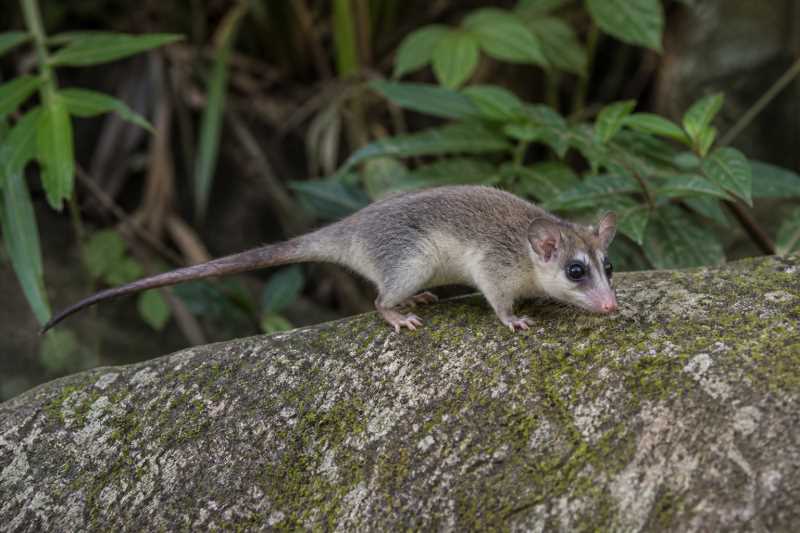
Woodall’s Slender Opossum is characterized by its small size and lightweight, slender build. Adults typically measure between 15 to 20 centimeters in body length, with an additional tail length of approximately the same size. The tail is prehensile and covered with a fine fur, aiding in arboreal navigation. The fur is generally a soft, muted grey or brown, which provides excellent camouflage in its natural habitat.
The opossum’s face is marked by a pointed snout and large, expressive eyes that are adapted for nocturnal vision. Its ears are rounded and relatively large, enhancing its ability to detect sounds in the dense forest. The feet are equipped with sharp claws and opposable thumbs, facilitating a strong grip on branches and vines.
Range and Habitat
Marmosops woodalli is predominantly found in the neotropical regions of South America, with its range extending across parts of Brazil, Venezuela, and Guyana. This species favors lowland rainforests and montane forests, thriving in areas with dense foliage and abundant undergrowth. The dense canopy and complex understory of these forests provide essential cover and foraging opportunities for the opossum.
Woodall’s Slender Opossum is arboreal, spending most of its life in the trees, where it can avoid ground-level predators. The species is known to inhabit both primary and secondary forests, demonstrating a level of adaptability to habitat changes, although it is most commonly associated with undisturbed, mature forests.
Behavior and Diet
As a nocturnal species, Woodall’s Slender Opossum is most active during the night. It exhibits solitary behavior, with individuals maintaining defined territories that they mark with scent glands. The opossum is an adept climber, using its prehensile tail and strong limbs to navigate the forest canopy.
The diet of Marmosops woodalli is omnivorous, consisting of fruits, insects, small vertebrates, and occasionally bird eggs. This varied diet plays a crucial role in seed dispersal, as the opossum consumes fruits and later excretes the seeds in different locations, contributing to forest regeneration.
Identification Tips (Field Recognition Cues)
Identifying Woodall’s Slender Opossum in the field requires careful observation of several key features:
- Body Size and Shape: Look for a small, slender body with a long, prehensile tail that is approximately equal in length to the body.
- Fur Color: Note the soft grey or brown fur that provides camouflage in forested environments.
- Facial Features: Observe the pointed snout, large eyes adapted for night vision, and rounded ears.
- Behavior: Watch for nocturnal activity and arboreal movement, as well as solitary behavior patterns.
Conservation Status (With Threats and Protections)
Currently, Woodall’s Slender Opossum is classified as "Least Concern" by the International Union for Conservation of Nature (IUCN). However, this classification does not mean the species faces no threats. Habitat destruction due to deforestation, agriculture, and urbanization poses significant risks to its populations.
Conservation efforts focus on habitat preservation, particularly the protection of primary and secondary forests where the species thrives. National parks and protected areas within its range play a crucial role in safeguarding its habitat. Continued research is necessary to monitor population trends and assess the impact of environmental changes.
Frequently Asked Questions
What is the natural habitat of Woodall’s Slender Opossum?
Woodall’s Slender Opossum primarily inhabits lowland and montane rainforests in South America, favoring areas with dense foliage and complex forest structure.
How does Woodall’s Slender Opossum contribute to its ecosystem?
As an omnivore, it helps in seed dispersal and pest control, thereby maintaining forest health and biodiversity.
Are there any conservation measures in place for Woodall’s Slender Opossum?
Yes, conservation efforts are focused on protecting its forest habitat through national parks and reserves, along with monitoring population dynamics.
How can one identify Woodall’s Slender Opossum in the wild?
Look for a small, slender marsupial with a long prehensile tail, grey or brown fur, and nocturnal, arboreal habits.
What threats does Woodall’s Slender Opossum face in its natural habitat?
The primary threats include habitat destruction due to deforestation, agricultural expansion, and urban development.
Related posts