
Introduction
Anthony’s Woolly Mouse Opossum, scientifically referred to as Marmosa perplexa, is a fascinating marsupial species native to South America. This species belongs to the family Didelphidae, which encompasses a diverse array of opossums. Despite its intriguing characteristics and ecological importance, Anthony’s Woolly Mouse Opossum remains relatively understudied, leaving much to be discovered about its habits and lifestyle.
This article aims to shed light on various aspects of this elusive mammal, including its physical description, natural habitat, behavior, diet, and conservation status. Additionally, we’ll provide identification tips for enthusiasts keen on observing this species in the wild.
Physical Description
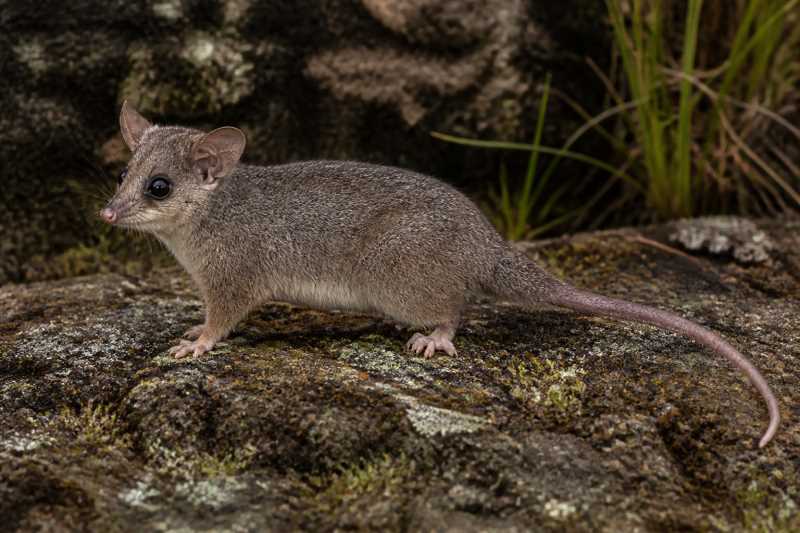
Anthony’s Woolly Mouse Opossum is characterized by its small size and distinctive woolly fur. Adult individuals typically measure between 12 to 18 centimeters in body length, with a tail that can extend up to 22 centimeters, making it longer than the body itself. This prehensile tail is a critical adaptation for maneuvering through its arboreal habitat.
The opossum’s fur is primarily a soft, greyish-brown, with a lighter underbelly. Its ears are large and rounded, enhancing its auditory capabilities—an essential trait for nocturnal living. The eyes of Marmosa perplexa are relatively large and adapted for night vision, reflecting its nocturnal nature.
Range and Habitat
Marmosa perplexa is endemic to South America, specifically found in the tropical and subtropical forests of Brazil and Peru. It thrives in dense, humid forests where it can exploit the rich biodiversity for food and shelter. This species is particularly adapted to arboreal life, spending most of its time in the forest canopy.
The opossum prefers primary and secondary forests, but it can also be found in disturbed habitats, demonstrating some level of adaptability. However, deforestation and habitat fragmentation pose significant threats to its survival, as these activities reduce the available habitat and food sources.
Behavior and Diet
Anthony’s Woolly Mouse Opossum is primarily nocturnal, engaging in most of its activities under the cover of darkness. This behavior helps it avoid predators and reduce competition for food. During the day, the opossum rests in nests constructed from leaves and twigs, usually located in tree hollows or dense foliage.
Its diet is omnivorous, consisting of fruits, insects, small vertebrates, and occasionally bird eggs. This dietary flexibility allows the opossum to exploit various food sources depending on availability, a crucial trait for survival in fluctuating environments.
Socially, Marmosa perplexa is solitary, with individuals coming together only for mating. Little is known about its reproductive habits, but like other opossums, females carry their young in pouches until they are developed enough to venture out on their own.
Identification Tips (Field Recognition Cues)
Identifying Anthony’s Woolly Mouse Opossum in the wild requires attention to specific traits:
- Tail Length: Look for a tail longer than the body, often used for gripping branches.
- Fur Texture: Notice the soft, woolly texture of the fur, which differentiates it from other opossums.
- Nocturnal Activity: Spot them at night, when they are most active.
- Ear and Eye Size: Large, rounded ears and prominent eyes are distinguishing features.
Conservation Status (With Threats and Protections)
Currently, the conservation status of Marmosa perplexa is not well-documented, largely due to a lack of comprehensive studies. However, it is believed to be under threat from habitat loss, primarily due to deforestation for agriculture and urban development.
Conservation efforts for this species are minimal, with most protections arising indirectly from initiatives aimed at preserving South American rainforests. Establishing protected areas and promoting sustainable land-use practices are essential for ensuring the survival of Anthony’s Woolly Mouse Opossum and other forest-dependent species.
Frequently Asked Questions
1. What is the primary habitat of Anthony’s Woolly Mouse Opossum?
Anthony’s Woolly Mouse Opossum primarily inhabits the tropical and subtropical forests of Brazil and Peru, thriving in dense, humid environments.
2. What do Anthony’s Woolly Mouse Opossums eat?
Their diet is omnivorous, including fruits, insects, small vertebrates, and sometimes bird eggs, allowing them flexibility in food sources.
3. How can you identify Anthony’s Woolly Mouse Opossum?
Key identification features include a long prehensile tail, woolly fur, large rounded ears, and prominent eyes adapted for nocturnal life.
4. Are Anthony’s Woolly Mouse Opossums endangered?
While specific data is lacking, they face threats from habitat loss due to deforestation, necessitating habitat protection efforts.
5. What is the behavior of Anthony’s Woolly Mouse Opossum?
They are nocturnal and solitary, with a diet that varies based on available resources, and they build nests in trees for daytime rest.
Related posts


