Hoffmann’s Titi (Plecturocebus hoffmannsi): A Comprehensive Guide
Introduction
Hoffmann’s Titi (Plecturocebus hoffmannsi) is a captivating primate species belonging to the family Pitheciidae. This medium-sized New World monkey is native to South America, specifically thriving in the dense forests of Brazil. Known for its vibrant social behaviors and unique physical characteristics, Hoffmann’s Titi plays a significant role in the biodiversity of its habitat. This article delves into the various aspects of the species, from its physical description and habitat to its behavior and conservation status.
Physical Description
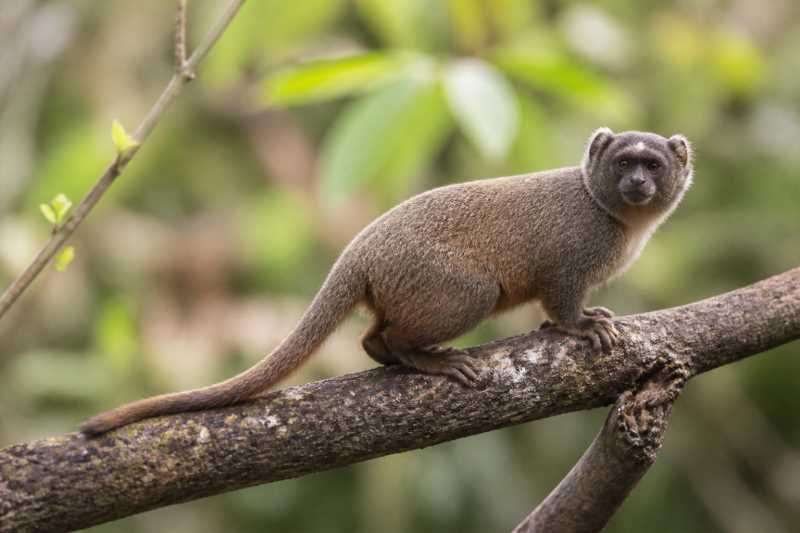
Hoffmann’s Titi monkeys possess a distinctive appearance that makes them easily recognizable. They typically measure about 30 to 45 centimeters in body length, with an additional tail length of 40 to 50 centimeters, which aids in balance and agility. These primates weigh between 1 to 1.8 kilograms, displaying a slight sexual dimorphism with males being marginally heavier than females.
The fur of Hoffmann’s Titi is predominantly a greyish-brown color, with a lighter underbelly that ranges from cream to white. Their faces are adorned with a characteristic black mask and a short, rounded snout. The eyes of Hoffmann’s Titi are large and expressive, aiding in their social interactions and communication.
One of the most striking features of Hoffmann’s Titi is its long, bushy tail. Unlike some primates, their tails are not prehensile but serve as a balancing tool when navigating through the forest canopy. Their limbs are well-adapted for climbing and leaping, with strong hind legs that allow them to cover substantial distances between trees.
Range and Habitat
Hoffmann’s Titi is endemic to the central and western regions of Brazil, with its range primarily spanning the Amazon Basin. These primates thrive in tropical and subtropical forests, favoring dense, humid environments that provide ample cover and food resources.
Their habitats are characterized by a layered canopy that offers protection from predators and access to a variety of food sources. Hoffmann’s Titi monkeys are arboreal, spending most of their lives in the trees. They prefer mid to upper-level forest strata, where they can forage and interact with other members of their social group.
The distribution of Hoffmann’s Titi is influenced by the availability of suitable habitats. They are often found in areas that are less disturbed by human activities, although habitat fragmentation due to agriculture and logging poses significant challenges to their survival.
Behavior and Diet
Hoffmann’s Titi monkeys are known for their complex social structures and interactions. They typically live in small, monogamous family groups consisting of a mated pair and their offspring. These groups are highly territorial, with individuals using vocalizations and scent markings to communicate and establish boundaries.
Vocal communication plays a crucial role in their social dynamics. Hoffmann’s Titi monkeys produce a range of sounds, including high-pitched calls and low-frequency grunts, to convey information about food sources, potential threats, and group cohesion. Grooming is another vital aspect of their social behavior, reinforcing bonds between group members.
The diet of Hoffmann’s Titi is primarily frugivorous, consisting of fruits, seeds, and occasionally flowers. They are opportunistic feeders and may also consume insects and other small invertebrates to supplement their diet. The availability of food resources influences their movement patterns and territorial range.
Identification Tips
Recognizing Hoffmann’s Titi in the field requires attention to several key characteristics. Here are some tips for identifying these primates:
- Size and Build: Look for a medium-sized monkey with a robust body and a notably long, bushy tail.
- Fur Color: Note the greyish-brown fur with a lighter underbelly. Their characteristic black facial mask is also a distinctive feature.
- Vocalizations: Listen for their unique calls, which can be a mix of high-pitched and low-frequency sounds.
- Behavior: Observe their social interactions and territorial displays, which often involve grooming and vocal communication.
- Habitat Preference: Spot them in the mid to upper levels of dense forest canopies in the Amazon Basin.
Conservation Status
Hoffmann’s Titi is currently classified as "Least Concern" by the International Union for Conservation of Nature (IUCN), but this status does not mean the species is free from threats. Habitat loss due to deforestation, agriculture, and infrastructure development is the primary concern for their survival.
Efforts to protect Hoffmann’s Titi include the establishment of protected areas and national parks in Brazil, which help preserve their natural habitat. Additionally, initiatives to promote sustainable land use practices aim to reduce habitat fragmentation and degradation.
Conservation organizations are also working to raise awareness about the importance of preserving the Amazon rainforest, which supports a vast array of biodiversity, including Hoffmann’s Titi. Research and monitoring programs are crucial for understanding population trends and implementing effective conservation strategies.
Frequently Asked Questions
What is the typical lifespan of Hoffmann’s Titi monkeys?
Hoffmann’s Titi monkeys typically live for about 12 to 20 years in the wild. In captivity, with proper care and nutrition, they may live slightly longer.
How do Hoffmann’s Titi monkeys communicate?
Hoffmann’s Titi monkeys communicate through vocalizations, scent marking, and physical interactions such as grooming. Their vocal repertoire includes various calls used for warning, mating, and maintaining group cohesion.
Are Hoffmann’s Titi monkeys endangered?
Currently, Hoffmann’s Titi is not considered endangered, but habitat destruction poses a significant threat to their populations. Conservation efforts are essential to ensure their long-term survival.
What do Hoffmann’s Titi monkeys eat?
These monkeys primarily eat fruits, seeds, and occasionally flowers. They also consume insects and small invertebrates when available.
Where can Hoffmann’s Titi monkeys be found?
Hoffmann’s Titi monkeys are found in the Amazon Basin, specifically in the central and western regions of Brazil. They inhabit tropical forests with dense canopy cover.
Related posts