The Crescent-chested Warbler: A Jewel of the Montane Forests
The Crescent-chested Warbler (Oreothlypis superciliosa) is a small passerine bird that has long captivated ornithologists and bird enthusiasts alike with its vibrant colors and distinct markings. Found predominantly in the montane forests of Central America, this species is an emblematic representation of the rich biodiversity that these habitats support.
Taxonomy and Classification
Belonging to the family Parulidae, the Crescent-chested Warbler is classified under the genus Oreothlypis, which includes several other warbler species. The scientific name, Oreothlypis superciliosa, reflects its prominent eyebrow stripe, as “superciliosa” is derived from the Latin word for eyebrow. The taxonomic classification of this bird has been subject to revisions, with molecular studies helping to refine its placement within the New World warblers.
Physical Description
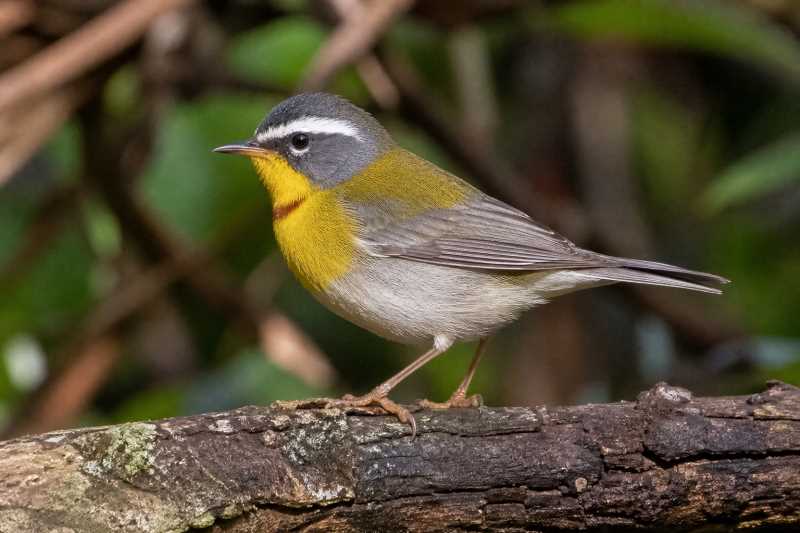
The Crescent-chested Warbler is a relatively small bird, measuring approximately 12 to 13 centimeters in length and weighing around 7 to 10 grams. It displays a striking plumage characterized by olive-green upperparts and a vibrant yellow throat and breast, which transitions into a striking crescent-shaped chest band of black. This band is a distinctive feature that aids in identification. The bird’s eye-catching appearance is further accentuated by a white supercilium, or eyebrow, that runs from the base of the beak to the back of the head.
Distribution and Habitat
This warbler is primarily found in the high-altitude forests of Mexico and Central America, ranging from southern Mexico through Guatemala, El Salvador, and Honduras, and extending into Nicaragua. It thrives in montane cloud forests, where it prefers elevations between 1,500 to 3,500 meters. These forests provide a unique ecosystem characterized by persistent cloud cover at the canopy level, creating a moist and cool environment that supports diverse flora and fauna.
Behavior and Ecology
The Crescent-chested Warbler is predominantly insectivorous, feeding on a diet rich in insects and other small invertebrates. It is an active forager, often seen flitting through the understory and mid-canopy in search of prey. Their foraging behavior involves gleaning insects from foliage, branches, and occasionally, the forest floor.
These warblers are known for their energetic and agile movements, frequently engaging in short flights between trees and bushes. Their vocalizations consist of a series of high-pitched notes, which serve as communication between individuals, especially during the breeding season.
Breeding and Reproduction
The breeding season for the Crescent-chested Warbler typically aligns with the onset of the rainy season, which varies depending on its geographical location. During this period, males become particularly vocal, using song to establish territory and attract mates. Nesting occurs in dense vegetation, where the female constructs a cup-shaped nest using grasses, leaves, and other plant materials.
The female lays a clutch of two to four eggs, which she incubates for about 12 to 14 days. Both parents are involved in feeding the hatchlings, which fledge approximately 10 to 12 days after hatching. The breeding success of this species is closely tied to environmental conditions, with favorable weather and abundant food resources playing a critical role in the survival of the young.
Conservation Status and Threats
Currently, the Crescent-chested Warbler is classified as Least Concern by the International Union for Conservation of Nature (IUCN). However, like many species dependent on montane forests, it faces ongoing threats from habitat destruction and fragmentation. Deforestation for agriculture, logging, and urban expansion are significant concerns, as they lead to the degradation of the warbler’s natural habitat.
Climate change also poses a potential threat by altering the delicate balance of the cloud forest ecosystems. Changes in temperature and precipitation patterns can impact the availability of food resources and suitable nesting sites, potentially affecting the warbler’s reproductive success and survival.
Conservation Efforts
Efforts to conserve the Crescent-chested Warbler and its habitat are crucial for ensuring the species’ long-term survival. Conservation strategies focus on habitat protection and restoration, promoting sustainable land-use practices, and raising awareness about the importance of montane forest ecosystems. Protected areas and national parks play a vital role in safeguarding these birds’ habitats, providing a refuge from the pressures of human encroachment.
Additionally, community-based conservation initiatives involving local populations can enhance the effectiveness of conservation efforts. By integrating traditional knowledge and modern conservation practices, these initiatives can create sustainable solutions that benefit both the environment and the people who depend on it.
Conclusion
The Crescent-chested Warbler stands as a vivid symbol of the montane forests’ ecological richness and complexity. Its presence in these habitats highlights the importance of preserving these unique ecosystems, not only for the warbler itself but also for the myriad of other species that share its home. Continued research and conservation efforts are essential to ensure that the enchanting song of the Crescent-chested Warbler continues to echo through the forests of Central America for generations to come.
Related posts