Introduction
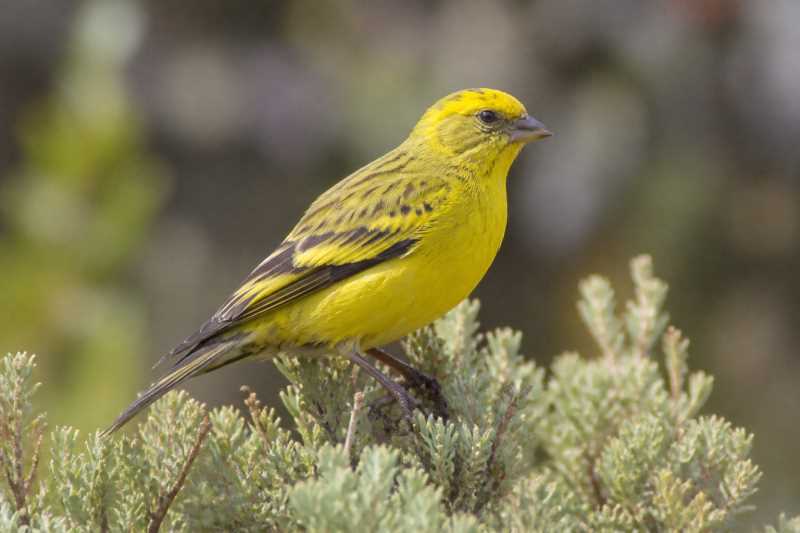
The Yellow-crowned Canary (Serinus flavivertex) is a small passerine bird belonging to the finch family, Fringillidae. This bird species, with its vibrant plumage and melodious song, has captured the interest of ornithologists and bird enthusiasts alike. Native to specific regions in Africa, the Yellow-crowned Canary is not just a visual delight but also an essential component of its ecosystem.
Taxonomy and Nomenclature
The Yellow-crowned Canary falls under the genus Serinus, which comprises several species of small passerine birds. The species name, ‘flavivertex,’ is derived from Latin, with ‘flavi’ meaning yellow and ‘vertex’ meaning crown, aptly describing the bird’s most striking feature. This species was first described by the renowned ornithologist George Ernest Shelley in 1903.
Physical Description
The Yellow-crowned Canary is a small bird, measuring about 11 to 13 centimeters in length and weighing approximately 9 to 13 grams. The most distinctive feature is its bright yellow crown, from which it derives its name. The rest of its plumage ranges from olive to greenish-yellow, with some streaking on the back and wings. The underparts are generally lighter, with a pale yellow to white hue. The bird’s beak is short and stout, adapted for seed consumption, and its legs are a pale pinkish-brown.
Distribution and Habitat
The natural habitat of the Yellow-crowned Canary spans across several African countries, including Kenya, Tanzania, Angola, and Zambia. It prefers open woodlands, grasslands, and shrublands, often found at altitudes ranging from lowlands to montane regions. These birds are highly adaptable and can thrive in both natural and altered landscapes, such as agricultural fields and gardens.
Behavior and Ecology
The Yellow-crowned Canary is primarily a seed-eater, with a diet consisting mainly of grass seeds, supplemented by small insects and fruits. Their feeding behavior is often observed in flocks, especially outside the breeding season, as they forage for food on the ground or in low vegetation.
These birds are known for their lively songs, which are a series of melodious trills and whistles. The song plays a crucial role in territory establishment and mate attraction. During the breeding season, males sing from prominent perches to declare their territory and attract females.
Breeding and Reproduction
The breeding season of the Yellow-crowned Canary varies depending on the geographical location but generally coincides with the rainy season when food resources are abundant. The male performs courtship displays, which include singing and aerial displays to attract a mate.
Once a pair bond is formed, the female constructs a cup-shaped nest using grass, twigs, and other plant materials. The nest is typically placed in a bush or tree. The female lays a clutch of 2 to 5 eggs, which she incubates for about 12 to 14 days. After hatching, both parents participate in feeding the chicks until they fledge, which occurs approximately two weeks after hatching.
Conservation Status
The International Union for Conservation of Nature (IUCN) currently lists the Yellow-crowned Canary as a species of Least Concern. This status is due to its wide distribution and stable population trends. However, like many bird species, it faces threats from habitat loss due to agricultural expansion and urbanization. Conservation efforts focus on habitat preservation and monitoring population trends to ensure the species remains unthreatened.
The Yellow-crowned Canary in Aviculture
The Yellow-crowned Canary is a popular species in aviculture due to its colorful plumage and pleasant song. These birds require spacious aviaries with access to sunlight and a varied diet to thrive in captivity. Breeding them in captivity is relatively straightforward, provided their environmental and dietary needs are met.
Conclusion
The Yellow-crowned Canary is not just a visual spectacle but also an integral part of the biodiversity of its native regions. Its adaptability to different habitats and its beautiful song make it a cherished species among birdwatchers and aviculturists. Continued conservation efforts are essential to ensure that this vibrant species continues to thrive in its natural habitat.
Understanding and appreciating the ecological role and beauty of the Yellow-crowned Canary can foster greater interest and efforts towards conserving not just this species, but also the diverse ecosystems it inhabits.
Related posts