Introduction
The Yellow-faced Myna (Mino dumontii) is a captivating bird species native to New Guinea and nearby islands. Known for its striking appearance and vibrant vocalizations, this bird is a fascinating subject for ornithologists and bird enthusiasts alike. In this article, we will explore the various aspects of the Yellow-faced Myna, including its taxonomy, physical characteristics, habitat, behavior, diet, and conservation status.
Taxonomy and Classification
The Yellow-faced Myna belongs to the family Sturnidae, which includes the starlings and mynas. It was first described by Charles Dumont in 1823, hence the species name ‘dumontii.’ This bird is part of the genus Mino, which encompasses several other myna species found in the Australasian region. The Yellow-faced Myna is closely related to the Long-tailed Myna (Mino kreffti) and the Golden Myna (Mino anais).
The scientific classification of the Yellow-faced Myna is as follows:
- Kingdom: Animalia
- Phylum: Chordata
- Class: Aves
- Order: Passeriformes
- Family: Sturnidae
- Genus: Mino
- Species: M. dumontii
Physical Characteristics
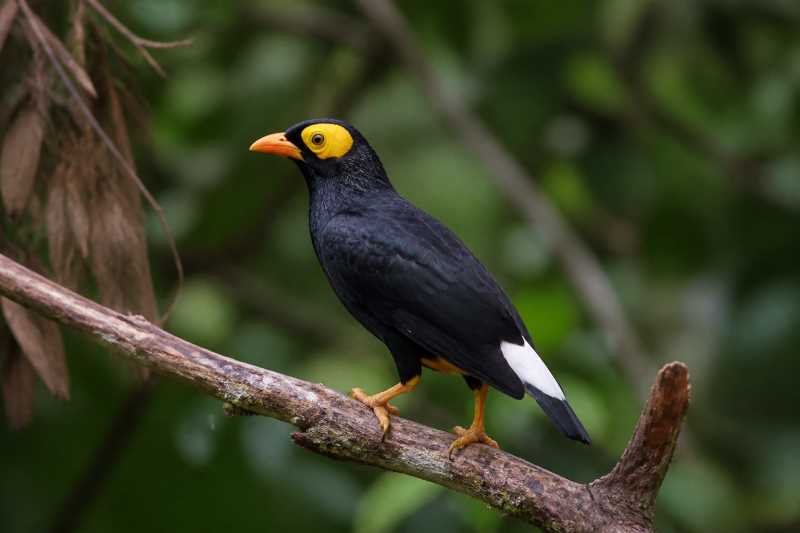
The Yellow-faced Myna is a medium-sized bird, measuring approximately 23 to 26 centimeters in length. The plumage is predominantly black with a glossy sheen, which contrasts beautifully with its vibrant yellow facial markings. These yellow patches are striking and give the bird its common name. The beak is long, robust, and slightly curved, adapted for its varied diet.
One of the most noticeable features of the Yellow-faced Myna is its bright orange-yellow eye ring, which enhances its facial expressions and adds to its charismatic appearance. The legs and feet are a pale yellow, aiding in its arboreal lifestyle.
Habitat and Distribution
The Yellow-faced Myna is predominantly found in the lowland rainforests of New Guinea and nearby islands, including the Bismarck Archipelago and the Solomon Islands. This bird prefers dense, humid forests but can also adapt to secondary growth and plantations. The abundance of fruiting trees in these areas provides ample food resources, making these habitats ideal for the myna.
These birds are typically found at elevations ranging from sea level to 1000 meters, although they are more commonly observed in the lower altitude regions. The species’ adaptability to different forest types, including disturbed and secondary forests, demonstrates its ecological flexibility.
Behavior and Social Structure
Yellow-faced Mynas are highly social birds, often seen in pairs or small flocks. They are known for their active and curious nature, frequently engaging in playful behaviors. These birds are also vocal, using a wide range of calls and songs to communicate with each other. Their vocal repertoire includes whistles, clicks, and squawks, which are often used to establish territory and maintain social bonds.
The species is diurnal, spending much of its day foraging for food and socializing. They are known to be aggressive towards other bird species, especially when defending their feeding territories. During the breeding season, which typically occurs during the wetter months, pairs become more territorial and may engage in displays and vocalizations to deter potential rivals.
Diet and Feeding Habits
The Yellow-faced Myna is an omnivore, with a diet primarily consisting of fruits, berries, and insects. They play a crucial role in their ecosystem as seed dispersers, aiding in the propagation of various plant species. The mynas are known to feed on a wide variety of fruits, including figs, palms, and other forest trees. Insects and small invertebrates are also consumed, providing essential protein and nutrients.
These birds are opportunistic feeders, often taking advantage of seasonal abundances. They are known to follow fruiting cycles closely, moving throughout their range to exploit available resources. Their feeding behavior is characterized by agility and dexterity, allowing them to access food in various parts of the forest canopy.
Breeding and Reproduction
Breeding behavior in the Yellow-faced Myna is marked by monogamous pair bonds. During the breeding season, which coincides with the rainy season, these birds engage in elaborate courtship displays. These displays include vocalizations, aerial maneuvers, and mutual preening, all designed to strengthen pair bonds and ensure reproductive success.
Nesting sites are usually located in tree cavities or dense foliage, providing protection from predators. The female typically lays two to three eggs, which she incubates while the male provides food. Both parents are involved in feeding and caring for the chicks, which fledge after approximately three weeks.
Conservation Status
The IUCN Red List currently classifies the Yellow-faced Myna as a species of Least Concern. Despite this seemingly secure status, the bird faces threats from habitat loss due to deforestation and agricultural expansion. Logging and land conversion for plantations are significant concerns in parts of its range.
Conservation efforts aimed at preserving rainforest habitats are crucial for the long-term survival of the Yellow-faced Myna. Protected areas and sustainable land-use practices can help mitigate the impact of human activities on these birds’ natural environment.
Conclusion
The Yellow-faced Myna is a remarkable bird that plays an integral role in the ecosystems of New Guinea and surrounding islands. Its striking appearance, diverse vocalizations, and ecological significance make it a fascinating subject for study and appreciation. While currently not endangered, ongoing conservation efforts are essential to ensure that this vibrant bird continues to thrive in its natural habitat.
By understanding and protecting the Yellow-faced Myna and its environment, we contribute to the preservation of biodiversity and the health of our planet’s ecosystems.
Related posts