The Enigmatic Crozet Shag: A Study of Leucocarbo melanogenis
Introduction
The Crozet Shag, scientifically known as Leucocarbo melanogenis, is an intriguing seabird species native to the subantarctic islands. This bird, a member of the cormorant family, is distinguished by its unique adaptations and behaviors that allow it to thrive in its harsh, isolated environment. The Crozet Shag is not only an integral part of the ecosystem but also a subject of interest for ornithologists and environmentalists seeking to understand the dynamics of island biodiversity.
Physical Characteristics
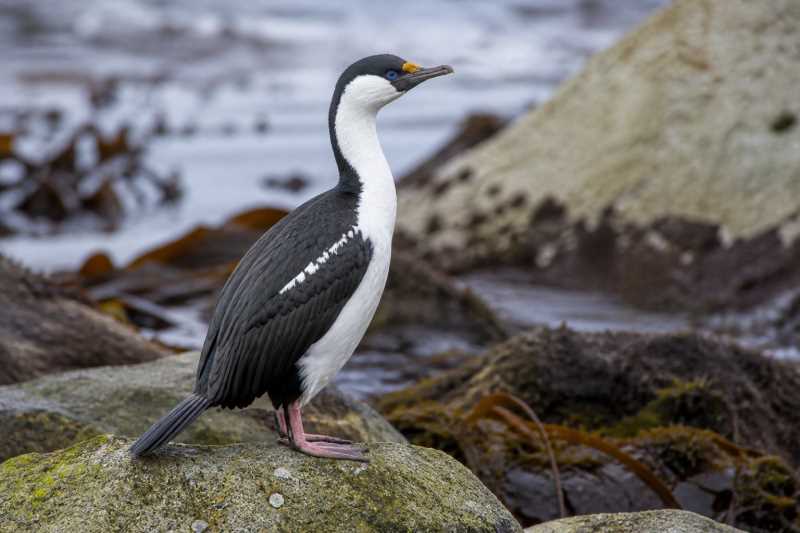
The Crozet Shag is a medium-sized bird, exhibiting a striking appearance with its glossy black plumage contrasted by a white underbelly. Its most distinguishing feature is the vivid blue and green iridescence on its feathers, which shimmers under sunlight. During the breeding season, adults develop bright red facial skin and an ornate crest, which serve as visual signals in mating rituals.
The bird’s wings are relatively short, an adaptation for its diving lifestyle. Unlike many other seabirds, the Crozet Shag has solid bones, which aid in reducing buoyancy, thus facilitating its underwater foraging activities. The species is known for its adept swimming capabilities, using its powerful webbed feet to propel itself underwater in search of prey.
Habitat and Distribution
As its name suggests, the Crozet Shag is predominantly found in the Crozet Islands, a remote archipelago located in the southern Indian Ocean. The islands provide a unique environment with their rocky coastlines and nutrient-rich waters, which are ideal for the shag’s feeding habits. These birds are also occasionally spotted on nearby islands such as the Kerguelen and Prince Edward islands, although their populations are significantly smaller there.
The Crozet Shag is a non-migratory bird, spending its entire life in the vicinity of its breeding grounds. Its preference for isolated, rugged coastlines minimizes competition with other seabird species and plays a crucial role in its survival strategy.
Diet and Foraging Behavior
The diet of the Crozet Shag primarily consists of fish and invertebrates, which it catches during its impressive diving expeditions. The bird can dive to depths of over 100 feet, relying on its excellent underwater vision and agile movements to pursue prey. Its foraging strategy is largely solitary, although groups of shags may sometimes be observed diving together in areas with abundant food resources.
The shag’s feeding behavior is closely linked to the tidal cycles, with most foraging activity occurring during low tide when prey is more accessible. The bird’s ability to adjust its diet based on seasonal availability of prey items highlights its adaptability in the face of changing environmental conditions.
Breeding and Reproduction
Breeding takes place in large colonies on the rocky cliffs of the Crozet Islands. The nesting sites are carefully chosen to provide protection from predators and harsh weather conditions. The Crozet Shag builds its nest using seaweed, grass, and other available materials, forming a sturdy structure that can withstand the island’s strong winds.
The breeding season is marked by elaborate courtship displays, where males showcase their vibrant plumage and engage in synchronized movements to attract females. Once paired, the female lays two to three eggs, which both parents incubate over a period of about a month. After hatching, the chicks are fed regurgitated food by both parents until they fledge, usually within 60 to 70 days.
Conservation Status and Challenges
Currently, the Crozet Shag is classified as "Least Concern" by the International Union for Conservation of Nature (IUCN). However, like many island species, it faces several threats that could impact its long-term survival. These include climate change, which affects ocean temperatures and food availability, and human activities such as fishing, which can lead to accidental bycatch.
Conservation efforts are focused on monitoring population trends and protecting critical habitats. The remote location of the Crozet Islands provides some natural protection, but ongoing research and international cooperation are essential to ensure the shag’s continued survival.
Conclusion
The Crozet Shag is a remarkable testament to the resilience and adaptability of seabirds in extreme environments. Its unique characteristics and behaviors offer valuable insights into the ecological dynamics of the subantarctic region. As we continue to study and protect these fascinating birds, they remind us of the intricate connections that sustain our planet’s biodiversity.
References
- Fraser, W. R., & Trivelpiece, W. Z. (1996). Factors controlling the distribution of seabirds: winter-summer heterogeneity in the distribution of Adélie penguin populations. Marine Ecology Progress Series, 132, 1-11.
- Croxall, J. P., & Prince, P. A. (1994). Dead or alive, night or day: how do albatrosses catch squid? Antarctic Science, 6(2), 155-162.
- BirdLife International. (2023). Species factsheet: Leucocarbo melanogenis. Retrieved from BirdLife International website.
Related posts