The Northern Nutcracker: A Keystone Species in Boreal and Montane Ecosystems
The Northern Nutcracker (Nucifraga caryocatactes), an intriguing member of the Corvidae family, is renowned for its intelligence and complex behaviors. This bird, inhabiting the coniferous forests of Europe and Asia, plays a crucial role in the ecosystems it inhabits, particularly through its interactions with pine trees. Its distribution, behavior, and ecological significance make the Northern Nutcracker a fascinating subject of study for ornithologists and ecologists alike.
Distribution and Habitat
The Northern Nutcracker is predominantly found across the Palearctic region, stretching from Scandinavia and Central Europe to the vast expanses of Siberia and the mountainous regions of Japan. This species thrives in boreal and montane forests, where conifers like pines, spruces, and firs dominate the landscape. The bird’s preference for these habitats is closely linked to its diet, which primarily consists of seeds from these trees.
In particular, the nuts of pine species such as the Swiss stone pine (Pinus cembra) and Siberian pine (Pinus sibirica) are critical food resources. The nutcracker’s range often coincides with these pines’ distribution, highlighting the mutual dependency between the bird and these trees. In some regions, such as the Alps and Carpathians, the Northern Nutcracker’s presence is essential for the natural regeneration of pine forests, as it plays a significant role in seed dispersal.
Physical Characteristics
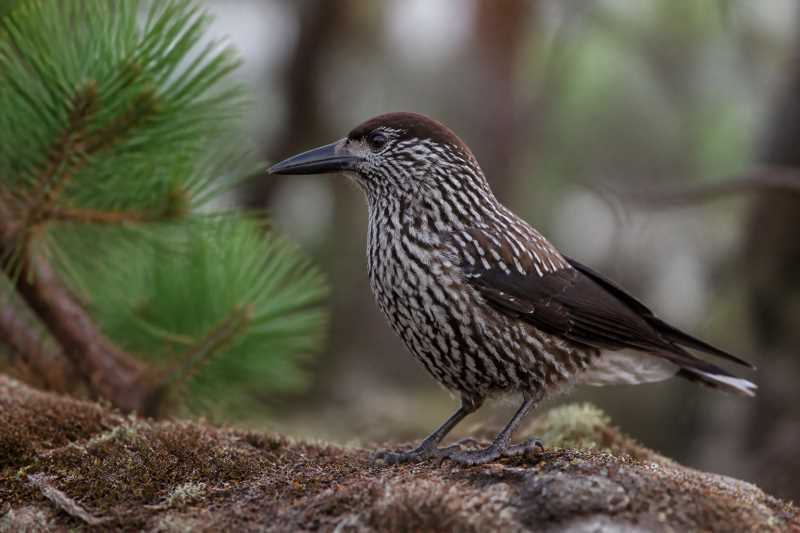
The Northern Nutcracker is a medium-sized bird, measuring about 32 to 35 centimeters in length, with a wingspan of approximately 53 to 58 centimeters. It is characterized by its robust build, strong bill, and relatively short tail. The plumage is predominantly brown with a distinctive white speckling pattern across the body, giving it a somewhat mottled appearance. The wings and tail are darker, providing a striking contrast.
One of the most notable features of the Northern Nutcracker is its powerful, chisel-like bill, adapted for cracking open the tough shells of pine nuts. This adaptation is crucial for its survival, especially during the harsh winter months when other food sources are scarce.
Behavior and Ecology
Northern Nutcrackers are known for their remarkable memory and caching behavior. They collect and store thousands of pine seeds each year, burying them in scattered locations throughout their territory. This behavior is driven by the need to ensure a reliable food supply during winter when fresh seeds are unavailable. The nutcracker’s exceptional spatial memory allows it to retrieve a significant proportion of these caches, even months later, under layers of snow.
The bird’s caching behavior is not only vital for its survival but also benefits the forest ecosystem. Many of the seeds that remain unrecovered eventually germinate, leading to the growth of new trees. This process is particularly important in high-altitude and high-latitude environments, where the conditions for seedling establishment are challenging. In this way, the Northern Nutcracker acts as a keystone species, facilitating forest regeneration and maintaining ecological balance.
Reproduction and Lifespan
Breeding typically begins in late winter to early spring, with pairs forming monogamous bonds that often last for several years. The nesting sites are usually high in trees, constructed from twigs and lined with softer materials like moss and feathers. Females lay a clutch of 2 to 4 eggs, which are incubated for about 18 days.
Both parents are heavily involved in rearing the young, feeding them a diet rich in cached seeds. The juveniles fledge approximately four weeks after hatching, but they continue to rely on parental support until they are proficient at foraging and caching.
The Northern Nutcracker’s lifespan in the wild can vary, but individuals have been known to live up to 10 years or more under favorable conditions.
Conservation Status and Challenges
Currently, the Northern Nutcracker is classified as a species of "Least Concern" by the International Union for Conservation of Nature (IUCN). However, like many other species, it faces potential threats from habitat loss and climate change. Deforestation and changes in land use can lead to the fragmentation of suitable habitats, while climate change may alter the distribution of coniferous forests, thereby affecting the availability of food resources.
Conservation efforts aimed at preserving boreal and montane forests are crucial for sustaining nutcracker populations. Protecting large tracts of forested land not only benefits these birds but also supports a wide array of other wildlife and plant species that depend on these ecosystems.
Conclusion
The Northern Nutcracker, with its fascinating behaviors and ecological importance, serves as a reminder of the intricate relationships that sustain our natural world. By ensuring the health and diversity of forest ecosystems, the nutcracker continues to play a pivotal role in maintaining the delicate balance of nature. As we face the challenges of environmental change, understanding and preserving such keystone species becomes increasingly critical.
In conclusion, the Northern Nutcracker is not just a bird of captivating beauty and intelligence but a vital component of the ecosystems it inhabits. Its story underscores the importance of conservation efforts aimed at protecting the biodiversity that enriches our planet.
Related posts