Introduction
The Moon Mountains Striped Mouse, scientifically known as Hybomys lunaris, is a captivating rodent species that has intrigued scientists and wildlife enthusiasts alike. This small mammal is part of the Muridae family, which includes other well-known rodents like mice and rats. Native to a specific region, this species is notable for its distinctive physical characteristics and its adaptation to a unique habitat. This article delves into the various aspects of the Moon Mountains Striped Mouse, providing comprehensive insights into its physical description, habitat, behavior, diet, and conservation status.
Physical Description
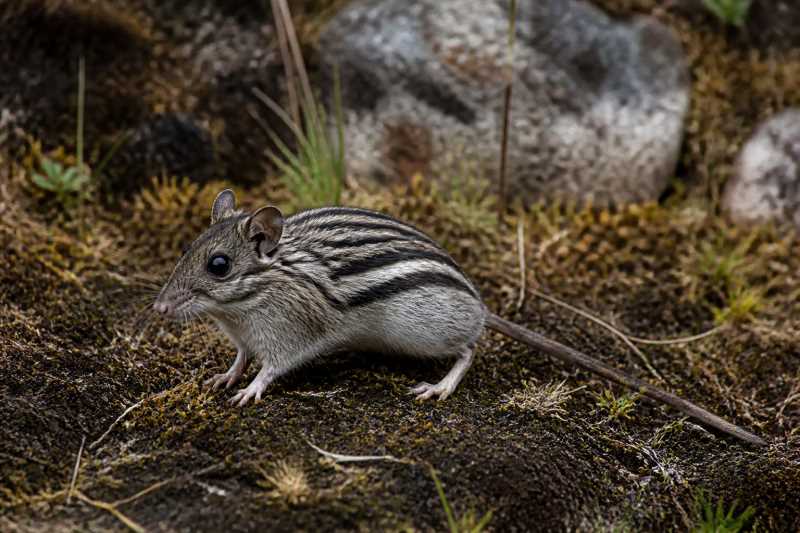
The Moon Mountains Striped Mouse is a small, agile rodent with a body length ranging from 10 to 15 centimeters, not including its tail, which adds an additional 8 to 12 centimeters. Weighing between 30 to 60 grams, this species is characterized by its striking dorsal stripes that run along its back, giving it its common name. The fur is generally a mix of brown and gray tones, providing excellent camouflage against the forest floor.
The mouse’s face is adorned with large, round eyes and a pointed snout, adapted for foraging in dimly lit environments. Its ears are proportionally large, enhancing its auditory capabilities, which are crucial for detecting predators. The limbs of the Moon Mountains Striped Mouse are slender yet muscular, enabling swift movement through its environment.
Range and Habitat
Hybomys lunaris is predominantly found in the Moon Mountains, a range that spans across parts of West and Central Africa. This species thrives in tropical and subtropical moist lowland forests, often inhabiting areas with dense undergrowth and abundant leaf litter, which provide ample cover and foraging opportunities.
The mouse’s habitat is characterized by high humidity and a relatively stable climate, with temperatures rarely dropping below 20°C. This environment supports a rich biodiversity, offering the Moon Mountains Striped Mouse a variety of food sources and shelter options. However, these habitats are increasingly under threat due to human activities such as logging and agricultural expansion.
Behavior and Diet
The Moon Mountains Striped Mouse is primarily nocturnal, emerging at dusk to forage for food. Its diet is omnivorous, consisting of seeds, fruits, insects, and occasionally small invertebrates. This dietary flexibility allows it to exploit a range of food resources, which is particularly advantageous in its fluctuating habitat.
Socially, Hybomys lunaris is relatively solitary, with individuals maintaining separate territories marked by scent. Communication among these mice is facilitated through vocalizations, pheromones, and physical gestures. The breeding season is typically aligned with periods of food abundance, ensuring that the young have a higher survival rate.
Identification Tips
Recognizing the Moon Mountains Striped Mouse in the wild requires attention to a few key features:
- Stripes: Look for the distinctive dorsal stripes that run from the head to the tail.
- Size: Note the small size, with a body length not exceeding 15 centimeters.
- Habitat: This species is usually found in dense, moist forest areas.
- Behavior: Active primarily at night, they are often seen scurrying swiftly through the underbrush.
Conservation Status
The International Union for Conservation of Nature (IUCN) currently lists the Moon Mountains Striped Mouse as a species of Least Concern. However, its population is experiencing pressures from habitat loss and fragmentation. Deforestation for timber extraction and agricultural expansion are the primary threats to its habitat.
Conservation efforts are in place to mitigate these threats, including the establishment of protected areas and the promotion of sustainable land-use practices. Continued research and monitoring are essential to ensure that this species does not move towards a more threatened category.
Frequently Asked Questions
What is the primary habitat of the Moon Mountains Striped Mouse?
The Moon Mountains Striped Mouse primarily inhabits tropical and subtropical moist lowland forests in West and Central Africa, where it finds ample cover and food sources.
How does the Moon Mountains Striped Mouse communicate?
This species communicates through a combination of vocalizations, pheromones, and physical gestures, which help in maintaining territories and social interactions.
What are the main threats to the Moon Mountains Striped Mouse?
The main threats include habitat loss and fragmentation due to deforestation and agricultural expansion, which impact its natural environment and food availability.
Is the Moon Mountains Striped Mouse a solitary animal?
Yes, the Moon Mountains Striped Mouse is primarily solitary, with individuals maintaining separate territories marked by scent.
Are there any conservation efforts for the Moon Mountains Striped Mouse?
Yes, conservation efforts include the establishment of protected areas and promoting sustainable land-use practices to mitigate habitat loss.
Related posts