Ord’s Kangaroo Rat (Dipodomys ordii)
Introduction
Ord’s Kangaroo Rat (Dipodomys ordii) is a fascinating mammal species that captivates wildlife enthusiasts and researchers alike. This small, nocturnal rodent is part of the Heteromyidae family and is primarily found in arid and semi-arid regions across North America. Named after the American zoologist George Ord, this species is known for its remarkable adaptations that allow it to thrive in harsh desert environments. Its unique locomotion, characterized by powerful hind legs and long jumps, resembles that of a kangaroo, hence its name.
Ord’s Kangaroo Rat plays a significant ecological role in its habitat, contributing to seed dispersal and providing a food source for predators. Understanding the biology, behavior, and conservation status of this species is essential for preserving the delicate balance of its native ecosystems.
Physical Description
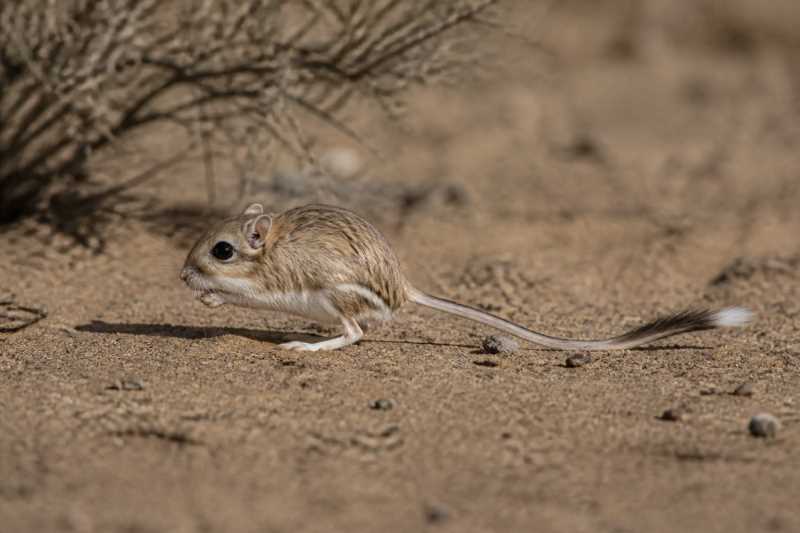
Ord’s Kangaroo Rat is a small, burrowing rodent with distinct physical features that differentiate it from other desert-dwelling mammals. Measuring about 10-16 inches in total length, including a 6- to 8-inch tail, this species weighs approximately 1.5 to 2 ounces (35 to 57 grams). Its fur is a sandy buff or tawny color, providing excellent camouflage against the desert landscape.
The most striking characteristic of Ord’s Kangaroo Rat is its large hind legs, which are significantly longer than its forelimbs. This adaptation allows the rodent to leap distances of up to 6 feet in a single bound, aiding in both foraging and escaping predators. The long tail, often tipped with a tuft of fur, helps in maintaining balance during these impressive leaps.
Another notable feature is its large, dark eyes, which enhance its night vision, and its small, rounded ears, which provide acute hearing abilities. The cheek pouches are a distinctive trait in this species, used for carrying food back to their burrows.
Range and Habitat
Ord’s Kangaroo Rat is widely distributed across North America, with a range extending from southern Canada to northern Mexico. Within the United States, it is found from the Great Plains in the east to the deserts of the west, including states such as Texas, New Mexico, Arizona, and California.
This species prefers sandy, loose soils that are conducive to burrowing. It is commonly found in habitats such as deserts, grasslands, and scrublands, where vegetation is sparse, and the ground is open. The ability to construct complex burrow systems is crucial for their survival, offering protection from extreme temperatures and predators.
Behavior and Diet
Ord’s Kangaroo Rat is primarily nocturnal, emerging from its burrow at night to forage for food. Its diet mainly consists of seeds, which it collects and stores in its cheek pouches. These pouches can hold a significant amount of food, allowing the rat to transport seeds back to its burrow for consumption during the day or harsher seasons.
In addition to seeds, Ord’s Kangaroo Rat may consume insects and green vegetation, depending on availability. It has an extraordinary ability to derive water from its food, allowing it to survive in arid environments without direct water sources.
This species is known for its solitary nature and territorial behavior. Each kangaroo rat maintains a home range marked by a series of burrows. These burrows serve as storage for food and provide shelter from predators and extreme weather conditions. Communication among individuals is typically achieved through vocalizations and foot drumming.
Identification Tips (Field Recognition Cues)
Identifying Ord’s Kangaroo Rat in the field can be challenging due to its nocturnal habits and elusive nature. However, several key features can aid in recognition:
- Large Hind Legs and Long Tail: Look for a small rodent with disproportionately large hind legs and a long tail, often used for balance during jumps.
- Coloration: Note the sandy or tawny coloration of its fur, which provides effective camouflage against desert sands.
- Cheek Pouches: These are visible as slight bulges on either side of the face, especially when the rat is transporting food.
- Habitat: Pay attention to the habitat; this species is typically found in open, sandy areas with sparse vegetation.
- Tracks and Burrows: Look for characteristic tracks in the sand and burrow entrances, which are usually plugged during the day to maintain an optimal microclimate inside.
Conservation Status (with Threats and Protections)
As of the latest assessments, Ord’s Kangaroo Rat is listed as Least Concern on the IUCN Red List. Its wide distribution and presumed large population contribute to this status. However, certain local populations are vulnerable to habitat loss and degradation due to agricultural expansion, urban development, and climate change.
Threats to this species include:
- Habitat Destruction: Conversion of natural habitats into agricultural lands or urban areas can lead to population declines.
- Climate Change: Alterations in temperature and precipitation patterns could impact food availability and suitable living conditions.
- Predation: Natural predators include owls, snakes, and carnivorous mammals, which can impact local populations.
Conservation efforts focus on habitat preservation and restoration. Protected areas and conservation programs aim to maintain the ecological integrity of regions where Ord’s Kangaroo Rat is found, ensuring that this species continues to thrive.
Frequently Asked Questions
1. What is the lifespan of Ord’s Kangaroo Rat?
Ord’s Kangaroo Rat typically lives for about two to five years in the wild, although this can vary based on environmental conditions and predation pressures.
2. How does Ord’s Kangaroo Rat survive without drinking water?
This species has adapted to extract sufficient moisture from its diet of seeds and vegetation, allowing it to survive in arid environments without direct water sources.
3. Are Ord’s Kangaroo Rats social animals?
No, Ord’s Kangaroo Rats are primarily solitary. They maintain individual home ranges and communicate with each other through vocalizations and foot drumming.
4. How can you differentiate Ord’s Kangaroo Rat from other rodents?
Key differences include its large hind legs, long tail, and cheek pouches used for transporting food. Observing its unique bipedal hopping can also aid in identification.
5. What role does Ord’s Kangaroo Rat play in its ecosystem?
This species is crucial for seed dispersal in desert ecosystems, which promotes plant diversity and provides a food source for various predators.
Related posts