Introduction
Buller’s Pocket Gopher, scientifically known as Pappogeomys bulleri, is a fascinating yet often overlooked species of rodent. Renowned for its unique adaptations to subterranean life, this gopher plays a vital role in its ecosystem, contributing to soil aeration and nutrient cycling. Native to Mexico, Buller’s Pocket Gopher is a member of the family Geomyidae and is recognized for its distinctive cheek pouches, which are used for transporting food.
Pocket gophers, including Buller’s species, are crucial for maintaining the health of their habitats. Despite their importance, they remain largely understudied, and their conservation status is of growing concern due to habitat destruction and other anthropogenic factors. This article explores the physical characteristics, habitat, behavior, and conservation status of Buller’s Pocket Gopher, equipping readers with knowledge essential for understanding and protecting this significant mammal species.
Physical Description
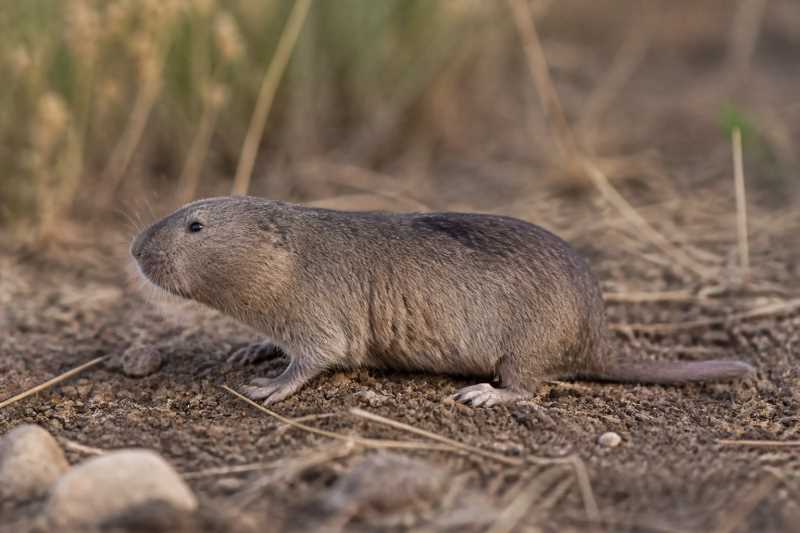
Buller’s Pocket Gopher is characterized by its stout body and robust build, typical of fossorial animals adapted for digging. Adult gophers typically measure about 20 to 30 centimeters in length, with a tail length of approximately 5 to 8 centimeters. They are covered in soft, dense fur that ranges from dark brown to nearly black, providing camouflage in their natural habitat.
One of the most distinguishing features of Buller’s Pocket Gopher is its large, clawed forelimbs, adapted for efficient burrowing. These claws are powerful tools for digging extensive tunnel systems. Another notable feature is the gopher’s cheek pouches, which are fur-lined and extend outside the mouth, used primarily for carrying food and nesting materials.
The eyes and ears of Buller’s Pocket Gopher are relatively small, adaptations that minimize the risk of debris interference while burrowing. Despite reduced vision, these gophers possess a keen sense of touch, aided by sensitive whiskers and a highly developed sense of smell, enabling them to navigate and thrive underground.
Range and Habitat
Buller’s Pocket Gopher is endemic to Mexico, with its range primarily concentrated in the central and western regions of the country. They inhabit a variety of environments, from grasslands and forests to agricultural fields, demonstrating a remarkable ability to adapt to different soil types and vegetation.
The gopher’s preference for well-drained, loose soil facilitates the construction of its extensive burrow systems, which can reach depths of over a meter. These underground networks are not only living quarters but also serve as protection from predators and extreme weather conditions.
However, the expansion of agricultural activities and urban development poses significant threats to their natural habitats. As human activities encroach on their territories, the availability of suitable habitats for Buller’s Pocket Gopher continues to decline.
Behavior and Diet
Buller’s Pocket Gopher is predominantly solitary, with interactions between individuals typically limited to mating seasons. They are primarily active during twilight and nighttime hours, avoiding the heat of the day. Their subterranean lifestyle is characterized by the construction and maintenance of complex tunnel systems, which can span several hundred meters.
The diet of Buller’s Pocket Gopher consists mainly of plant materials, including roots, tubers, and grasses. They play a crucial role in the ecosystem by aiding in the dispersal of seeds and promoting soil health. Their foraging behavior involves digging to uncover food sources, which they store in their cheek pouches for transport.
Gophers contribute significantly to soil aeration and nutrient cycling, enhancing the growth of vegetation in their habitat. However, their burrowing activity can sometimes be seen as a nuisance in agricultural areas, leading to conflicts with farmers.
Identification Tips (Field Recognition Cues)
Recognizing Buller’s Pocket Gopher in the field can be challenging due to their subterranean nature. However, several cues can aid in identification:
- Mounds of Earth: Look for characteristic crescent-shaped mounds of soil above ground, a sign of their burrowing activity.
- Cheek Pouches: If visible, their distinctive fur-lined cheek pouches can help distinguish them from other rodents.
- Fur Color: Their dark brown to black fur is a key identification marker, contrasting with the paler fur of other gopher species.
- Burrow Entrances: Typically, the entrances to their burrows are freshly disturbed, with soil that appears loose and recently excavated.
Conservation Status (with Threats and Protections)
Buller’s Pocket Gopher is currently listed as Near Threatened on the IUCN Red List, with populations declining due to habitat loss and fragmentation. The primary threats include agricultural expansion, urban development, and pesticide use, which degrade and reduce their natural habitats.
Conservation efforts are crucial to safeguarding this species. Protection of their habitats through the establishment of reserves and sustainable land management practices can help mitigate the impacts of human activities. Additionally, raising awareness about the ecological role of gophers can foster coexistence with agricultural interests.
Frequently Asked Questions
1. What is the primary diet of Buller’s Pocket Gopher? Buller’s Pocket Gopher primarily feeds on roots, tubers, and grasses. They use their cheek pouches to transport food to storage areas within their burrows.
2. How does Buller’s Pocket Gopher contribute to the ecosystem? These gophers play a vital role in soil aeration and nutrient cycling, which promotes plant growth and enhances soil health. Their burrowing activity also aids in seed dispersal.
3. What are the main threats to Buller’s Pocket Gopher? The primary threats include habitat loss due to agriculture and urbanization, as well as pesticide use that degrades their natural environment.
4. How can Buller’s Pocket Gopher be identified in the wild? Look for crescent-shaped mounds of soil, dark brown to black fur, and distinctive cheek pouches. Their burrow entrances are also a key identification feature.
5. What conservation measures are in place for Buller’s Pocket Gopher? Conservation measures include habitat protection, sustainable land management, and raising awareness about their ecological importance to foster coexistence with human activities.
Related posts