Southern Pig-tailed Macaque (Macaca nemestrina)
Introduction
The Southern Pig-tailed Macaque, scientifically known as Macaca nemestrina, is a fascinating primate species native to Southeast Asia. Renowned for their intelligence and adaptability, these macaques are a vital part of their ecosystem and a subject of interest for both researchers and wildlife enthusiasts. Despite their ecological importance, they face significant threats in the wild, making conservation efforts crucial.
Physical Description
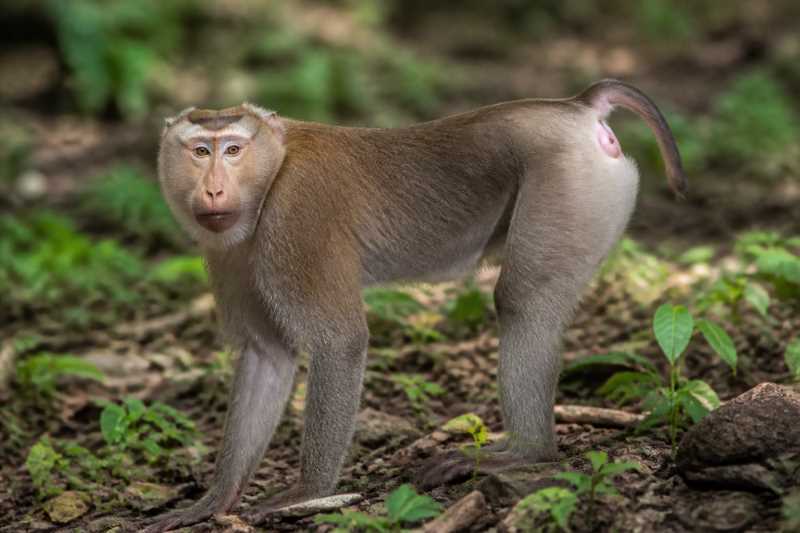
Southern Pig-tailed Macaques are medium-sized primates with a robust build. Males typically weigh between 5 to 15 kilograms (11 to 33 pounds) and are larger than females, who weigh between 3 to 8 kilograms (6.6 to 17.6 pounds). Their bodies are covered with a thick coat of fur that ranges in color from brown to yellowish-grey, providing excellent camouflage in their natural habitat.
One of the most distinctive features of these macaques is their short, pig-like tail, which measures about 15 to 25 centimeters (6 to 10 inches) in length and is often carried in an upright position. This tail is a key characteristic distinguishing them from other macaque species. Their facial structure includes a rounded, expressive face with large, forward-facing eyes, aiding in their sharp vision.
Range and Habitat
The Southern Pig-tailed Macaque is predominantly found in the rainforests of Southeast Asia, including regions in Malaysia, Thailand, Indonesia, and the island of Borneo. They prefer lowland and hill dipterocarp forests, but they are also known to inhabit mangroves and mixed deciduous forests.
These macaques are arboreal, spending a significant amount of time in the trees, although they are also comfortable on the ground. Their habitat selection is influenced by food availability, and they are often found in areas where fruiting trees are abundant.
Behavior and Diet
Southern Pig-tailed Macaques are social animals, living in groups called troops that can range from 10 to 40 individuals. These troops are organized hierarchically, with a dominant male leading the group. Social interactions within the troop are complex, involving grooming, playing, and vocal communications.
Their diet is omnivorous, consisting of fruits, seeds, leaves, insects, and small vertebrates. They play a crucial role in their ecosystem as seed dispersers, aiding in forest regeneration. Their foraging habits are diurnal, meaning they are active during the day, which is when they search for food both in the trees and on the ground.
Identification Tips (Field Recognition Cues)
Identifying Southern Pig-tailed Macaques in the wild involves observing several key features:
- Tail: Short and pig-like, carried upright, unlike the longer tails of other macaque species.
- Fur: Dense and brown to yellowish-grey, providing camouflage.
- Size: Medium-sized, with males noticeably larger than females.
- Facial Features: Rounded face with large, expressive eyes.
- Behavior: Often found in groups, active during the day, foraging both in trees and on the ground.
Conservation Status (With Threats and Protections)
The Southern Pig-tailed Macaque is currently listed as Vulnerable on the IUCN Red List. This status is due to several threats, including habitat loss from deforestation, hunting, and the illegal wildlife trade. Their habitats are increasingly being converted for agricultural use, particularly palm oil plantations, which severely impacts their populations.
Conservation efforts are in place to mitigate these threats. Protected areas have been established in several parts of their range, and initiatives to promote sustainable agriculture are ongoing. Additionally, conservation organizations are working to raise awareness about the importance of preserving these macaques and their habitats.
Frequently Asked Questions
What are the main threats to Southern Pig-tailed Macaques?
The primary threats include habitat destruction due to deforestation, hunting, and illegal wildlife trade. These factors contribute to their Vulnerable status and necessitate concerted conservation efforts.
How do Southern Pig-tailed Macaques contribute to their ecosystem?
They play a vital role as seed dispersers, which helps in forest regeneration and maintaining the biodiversity of their habitats. Their foraging habits ensure the spread of seeds across large areas.
What is the typical social structure of a Southern Pig-tailed Macaque troop?
Troops are hierarchical, led by a dominant male. Social interactions are complex, involving grooming, playing, and vocal communications, which are crucial for maintaining group cohesion and structure.
Are Southern Pig-tailed Macaques endangered?
They are classified as Vulnerable by the IUCN, meaning they are not yet endangered but face significant threats that could lead to a decline in population if not addressed.
How can we help in the conservation of Southern Pig-tailed Macaques?
Supporting conservation organizations, promoting sustainable agricultural practices, and raising awareness about the threats these macaques face are vital steps individuals can take to aid in their conservation.
Related posts