Introduction
The Brown Forest Wallaby, scientifically known as Dorcopsis muelleri, is an intriguing marsupial species native to the dense forests of Papua New Guinea. This elusive mammal is a member of the Macropodidae family, which includes kangaroos and wallabies, and is notable for its adaptability to forest environments. Despite its name, the Brown Forest Wallaby is not a true wallaby but belongs to a distinct genus, Dorcopsis, which is specialized for life in thick forest habitats.
In recent years, the Brown Forest Wallaby has gained attention from researchers and conservationists due to its unique ecological role and the increasing threats to its habitat. This article explores various aspects of this fascinating species, from its physical characteristics and behavior to its conservation status.
Physical Description
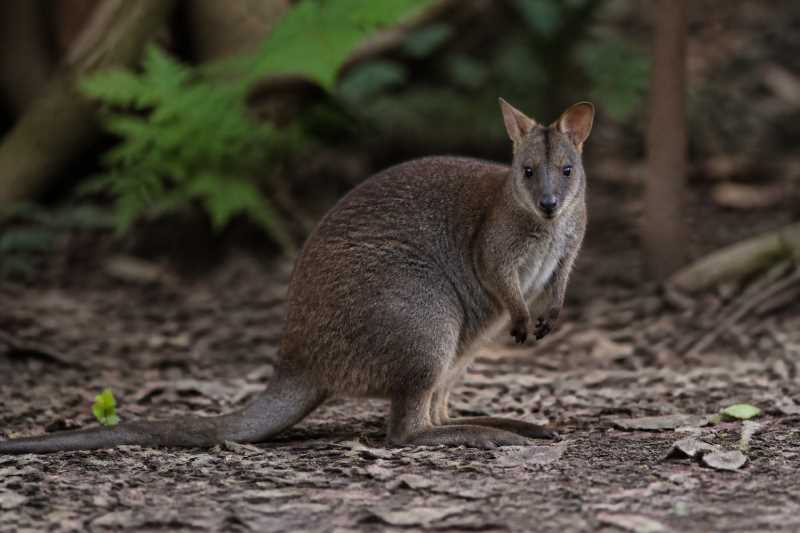
The Brown Forest Wallaby is a medium-sized marsupial with several distinctive physical features that aid its survival in forested environments. Adults typically weigh between 5 and 8 kilograms (11 to 18 pounds) and measure about 70 to 90 centimeters (28 to 35 inches) in length, including the tail. The tail itself is relatively short compared to other wallabies, helping the animal navigate the dense underbrush of its habitat.
The fur of the Brown Forest Wallaby is predominantly brown, which provides excellent camouflage against the forest floor. The coat is dense and soft, with a lighter underbelly. Some individuals may exhibit a slight reddish tinge on their back, which varies among subspecies and individuals.
A notable feature of the Brown Forest Wallaby is its strong hind legs, adapted for powerful leaps and swift movement through the forest. These legs also enable the wallaby to stand upright when scanning its surroundings for predators. The forelimbs are shorter and equipped with sharp claws, useful for grasping vegetation and climbing when necessary.
Range and Habitat
The Brown Forest Wallaby is endemic to Papua New Guinea, where it inhabits the lowland and montane forests of the island. Its range extends from sea level to elevations of about 1,200 meters (approximately 3,940 feet). The species is particularly associated with primary and secondary rainforest environments, where it finds abundant food sources and shelter.
This wallaby prefers areas with dense understory vegetation, which provides cover from predators and facilitates its foraging activities. The Brown Forest Wallaby is also known to inhabit forest edges and occasionally ventures into gardens and plantations, where it may feed on cultivated crops.
Behavior and Diet
The Brown Forest Wallaby is primarily nocturnal, being most active during the night when it forages for food. Its diet consists mainly of leaves, grasses, fruits, and occasionally fungi, making it an important part of the forest ecosystem as a seed disperser.
During the day, the wallaby rests in dense vegetation, relying on its camouflaged coat for protection. It typically leads a solitary life, although occasional sightings of small groups have been reported, likely consisting of a mother and her juvenile offspring.
Communication among Brown Forest Wallabies is limited, with occasional vocalizations used to express distress or alert others to potential threats. They are generally shy animals, retreating quickly into the forest when disturbed.
Identification Tips (Field Recognition Cues)
Identifying the Brown Forest Wallaby in the wild requires careful observation and an understanding of its key characteristics:
- Size and Shape: Look for a medium-sized marsupial with a relatively short tail compared to the body length.
- Fur Color: Note the predominantly brown fur with a lighter underbelly and possible reddish tinges on the back.
- Habitat: Focus on areas with dense forest vegetation, particularly at night, when the wallaby is most active.
- Behavior: Observe their movement patterns. The Brown Forest Wallaby moves with powerful leaps and is often seen standing upright.
Conservation Status (with Threats and Protections)
The conservation status of the Brown Forest Wallaby is currently listed as Near Threatened by the International Union for Conservation of Nature (IUCN). The primary threats to this species include habitat destruction due to logging, agriculture, and human settlement expansion.
Illegal hunting for bushmeat also poses a significant risk to the population, as the Brown Forest Wallaby is sometimes hunted by local communities for food. Additionally, predation by introduced species such as feral dogs and cats further exacerbates the challenges faced by this species.
Conservation efforts are underway to protect the Brown Forest Wallaby, including habitat preservation and community education programs to reduce hunting pressures. Protected areas and wildlife reserves in Papua New Guinea play a crucial role in safeguarding the remaining populations.
Frequently Asked Questions
1. What is the habitat of the Brown Forest Wallaby?
The Brown Forest Wallaby inhabits the lowland and montane forests of Papua New Guinea, ranging from sea level to about 1,200 meters in elevation. It prefers dense rainforest environments, where it finds food and shelter.
2. How does the Brown Forest Wallaby find food?
As a nocturnal herbivore, the Brown Forest Wallaby primarily forages for food at night. Its diet consists of leaves, grasses, fruits, and fungi, making it an essential seed disperser in its ecosystem.
3. What are the main threats to the Brown Forest Wallaby?
The primary threats to the Brown Forest Wallaby include habitat destruction due to logging and agriculture, illegal hunting for bushmeat, and predation by introduced species like feral dogs and cats.
4. How can I identify a Brown Forest Wallaby in the wild?
Look for a medium-sized marsupial with predominantly brown fur, a lighter underbelly, and a relatively short tail. They are often found in dense forest habitats and are most active at night.
5. What conservation measures are in place for the Brown Forest Wallaby?
Conservation measures include habitat preservation, community education programs to reduce hunting pressures, and the establishment of protected areas and wildlife reserves in Papua New Guinea.
Related posts