Introduction
The Olive Baboon, scientifically known as Papio anubis, is one of the most widespread primate species in Africa. Known for their adaptability and complex social structures, Olive Baboons exhibit a fascinating array of behaviors and interactions within their troops. Their resilience in various habitats and ability to coexist with human developments make them an intriguing subject for zoologists and conservationists alike. This article delves into the unique characteristics, habitat, and conservation status of the Olive Baboon, shedding light on what makes them a crucial part of Africa’s ecological tapestry.
Physical Description
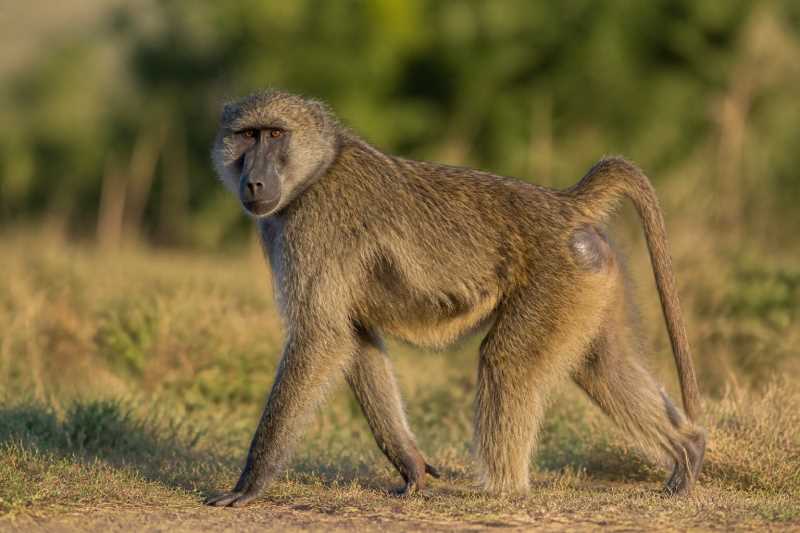
Olive Baboons are named for their greenish-grey coat, which provides excellent camouflage against the African savannah landscape. Adult males are significantly larger than females, typically weighing between 50 to 82 pounds (22 to 37 kg), while females weigh around 24 to 37 pounds (11 to 17 kg). Males can reach a length of up to 43 inches (110 cm), excluding their tail, which adds another 16 to 23 inches (40 to 60 cm).
These baboons have a pronounced sexual dimorphism, with males sporting larger body sizes and prominent canine teeth. Their faces are hairless and have a distinct, dog-like snout. Olive Baboons possess a strong, muscular build, which aids in their ability to travel long distances and climb trees when necessary.
Range and Habitat
The Olive Baboon inhabits a broad range across Africa, from Mali eastward through Ethiopia and Tanzania, down to the Zambezi River. They are incredibly versatile in terms of habitat preference, thriving in savannahs, forests, grasslands, and even semi-arid regions. This adaptability allows them to occupy a range of altitudes, from sea level to mountainous areas.
Their presence is particularly noted in national parks and wildlife reserves, but they are also found in agricultural areas and near human settlements. This proximity to humans often leads to conflicts, as Olive Baboons are known to raid crops and scavenge in urban areas, showcasing their opportunistic feeding behavior.
Behavior and Diet
Olive Baboons are social animals, living in troops that can range from 20 to over 100 individuals. These troops are structured hierarchically, with dominant males leading and protecting the group. Their social interactions are complex, involving grooming, vocalizations, and displays of dominance and submission.
These primates are omnivorous, with a diet that includes fruits, grasses, seeds, leaves, and insects. They are also known to hunt small mammals and birds when opportunities arise. Their opportunistic feeding habits enable them to adapt to changing environments and food availability, making them resilient in the face of habitat alterations.
Identification Tips (Field Recognition Cues)
Identifying an Olive Baboon in the wild involves observing several key characteristics:
- Coat Color: Look for the distinctive greenish-grey coat, which may appear olive in certain lighting conditions.
- Size and Build: Note the size difference between males and females, with males being larger and more robust.
- Facial Features: Observe the long, dog-like snout and the hairless face, typical of Olive Baboons.
- Tail: Their tails are relatively short and have a kinked appearance, often held in a raised position.
- Behavior: Watch their social interactions and hierarchical movements within a troop.
Conservation Status (With Threats and Protections)
The Olive Baboon is listed as Least Concern by the IUCN Red List, thanks to its wide distribution and large populations. However, they face several threats, primarily due to habitat loss from agricultural expansion, human encroachment, and infrastructure development.
Hunting and trapping for bushmeat and the pet trade also pose significant threats. In some regions, they are considered pests due to their crop-raiding behavior, leading to conflicts with local farmers.
Conservation efforts focus on habitat protection and mitigating human-wildlife conflict. National parks and protected areas offer some refuge, but more comprehensive strategies are needed to ensure long-term survival. Community education and sustainable agriculture practices can help reduce conflicts and promote coexistence.
Frequently Asked Questions
1. What is the lifespan of an Olive Baboon?
Olive Baboons typically live for about 20 to 30 years in the wild. In captive environments, where they are protected from predators and have consistent food supply, they can live longer, sometimes reaching up to 40 years.
2. How do Olive Baboons communicate?
Olive Baboons use a complex system of vocalizations, body postures, and facial expressions to communicate. Vocalizations can vary from grunts and barks to screams, each serving different social purposes such as alerting to danger or asserting dominance.
3. Are Olive Baboons endangered?
Currently, Olive Baboons are not considered endangered. They are categorized as Least Concern by the IUCN, but their populations are threatened by habitat destruction and hunting, necessitating ongoing conservation efforts.
4. Can Olive Baboons swim?
While not commonly known for swimming, Olive Baboons can cross rivers and water bodies if necessary. They are generally terrestrial but will use water to escape predators or reach food sources.
5. What role do Olive Baboons play in their ecosystem?
Olive Baboons are crucial for seed dispersal and help maintain the balance of their ecosystem. As both predators and prey, they occupy a vital position in the food chain, influencing the populations of various species in their habitat.
Related posts