Introduction
The spot-nosed monkey, scientifically known as Cercopithecus petaurista, is a fascinating primate species that captures the interest of researchers and wildlife enthusiasts alike. Found primarily in the dense forests of West and Central Africa, this species is recognized for its distinctive facial markings and social behavior. The spot-nosed monkey belongs to the Cercopithecidae family, which includes other well-known primates such as the vervet monkey and the colobus monkey. This article delves into the intricate details of the spot-nosed monkey, exploring its physical characteristics, habitat, behavior, and the conservation challenges it faces.
Physical Description
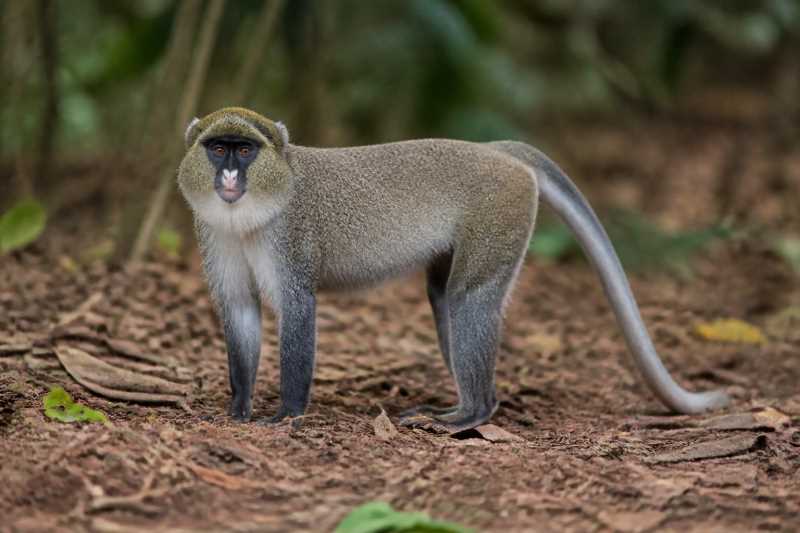
The spot-nosed monkey is a medium-sized primate, with adult males typically measuring between 40 to 60 centimeters in body length, excluding the tail, which can add an additional 50 to 75 centimeters. Females are generally smaller, reflecting a sexual dimorphism common among many primate species. The body weight of these monkeys ranges from 3 to 7 kilograms, with males being noticeably larger than females.
One of the most striking features of the spot-nosed monkey is its facial appearance. As its name suggests, it has a prominent white spot on the nose, which serves as a key identifying feature. This white spot stands out against the monkey’s otherwise dark face, which is framed by a soft, short fur of varying shades of brown and gray. The fur on their back is usually darker than on their underparts, offering a natural camouflage in their forested habitats.
The spot-nosed monkey possesses a long, slender tail that aids in balance and agility, crucial for navigating the treetops. Its limbs are well-adapted for an arboreal lifestyle, with strong, dexterous fingers that allow for efficient climbing and grasping of branches.
Range and Habitat
Spot-nosed monkeys are indigenous to the tropical rainforests of West and Central Africa. Their range extends from Sierra Leone and Ivory Coast in the west to the Democratic Republic of Congo in the east. These monkeys are highly adaptable and can also be found in secondary forests, swamp forests, and gallery forests along rivers.
The dense forest environment provides ample food resources and protection from predators. Spot-nosed monkeys are arboreal, spending most of their lives in the canopy. This preference for high-altitude living not only offers safety but also access to a rich diet of fruits, leaves, and insects.
Behavior and Diet
Spot-nosed monkeys are diurnal, meaning they are active during the day and rest at night. They are highly social animals, living in groups known as troops, which can consist of several females, their offspring, and one or more males. These groups are structured in a hierarchical manner, with dominant individuals having priority access to food and mates.
Communication among spot-nosed monkeys is complex, involving vocalizations, facial expressions, and body postures. They use a range of calls to signal danger, maintain group cohesion, and establish territorial boundaries.
The diet of spot-nosed monkeys is omnivorous, although predominantly plant-based. They feed on a variety of fruits, seeds, leaves, and flowers, supplemented by insects and small vertebrates when available. This varied diet allows them to exploit different food sources within their habitat, contributing to their adaptability.
Identification Tips (Field Recognition Cues)
For those interested in observing spot-nosed monkeys in the wild, there are several key identification tips to consider:
- Facial Marking: Look for the distinctive white spot on the nose, which is a primary feature distinguishing them from other monkey species.
- Size and Build: Note the medium size, slender build, and long tail, which are characteristic of this species.
- Vocalizations: Listen for their unique vocalizations, which include a range of chirps, whistles, and alarm calls.
- Habitat Preference: Spot-nosed monkeys are usually found high in the forest canopy, so scanning the treetops can be effective in locating them.
- Group Behavior: They often move in troops, so spotting one individual may indicate the presence of others nearby.
Conservation Status (with Threats and Protections)
The spot-nosed monkey is currently classified as Least Concern by the International Union for Conservation of Nature (IUCN). However, like many forest-dwelling species, they face significant threats from habitat destruction, primarily due to logging and agricultural expansion. Additionally, hunting for bushmeat poses a threat to their populations in certain regions.
Conservation efforts for the spot-nosed monkey include habitat protection and the establishment of protected areas where they reside. There are also community-based initiatives aimed at reducing hunting and promoting sustainable land use practices.
Frequently Asked Questions
What do spot-nosed monkeys eat?
Spot-nosed monkeys have an omnivorous diet, primarily consisting of fruits, seeds, leaves, and flowers, supplemented by insects and small animals.
How do spot-nosed monkeys communicate?
Spot-nosed monkeys communicate using a range of vocalizations, facial expressions, and body postures. They use calls to signal danger and maintain group cohesion.
Where can spot-nosed monkeys be found?
These monkeys inhabit the tropical rainforests of West and Central Africa, from Sierra Leone and Ivory Coast to the Democratic Republic of Congo.
Are spot-nosed monkeys endangered?
Spot-nosed monkeys are classified as Least Concern by the IUCN, but they face threats from habitat destruction and hunting.
How do spot-nosed monkeys adapt to their environment?
Spot-nosed monkeys are arboreal, spending most of their lives in the forest canopy, which provides safety from predators and access to food resources.
Related posts