Introduction: The Enigmatic Lemon-rumped Warbler
Among the myriad of avian species that grace the forests of South and Southeast Asia, the Lemon-rumped Warbler (Phylloscopus chloronotus) stands out with its vibrant plumage and melodious song. This small passerine bird, belonging to the family Phylloscopidae, is a fascinating subject for ornithologists and bird enthusiasts alike. Known for its distinctive lemon-yellow rump, this warbler is not just a visual delight but also an essential component of its ecosystem. In this article, we will delve into the world of the Lemon-rumped Warbler, exploring its habitat, behavior, and conservation status.
Habitat and Distribution
The Lemon-rumped Warbler is predominantly found in the temperate forests of the Himalayas, extending its range to parts of northern India, Nepal, Bhutan, and China. It thrives in forested areas rich in coniferous and broad-leaved trees, often at altitudes ranging from 1,800 to 3,600 meters. During the winter months, some populations migrate to lower altitudes and even reach the foothills, where the climate is milder.
These warblers prefer dense undergrowth and forest edges, where they can forage for insects and spiders, which form the bulk of their diet. The availability of food and suitable nesting sites are crucial factors influencing their distribution. The presence of streams and rivers in their habitat not only provides a water source but also supports a richer diversity of insects, enhancing the foraging opportunities for these birds.
Physical Characteristics
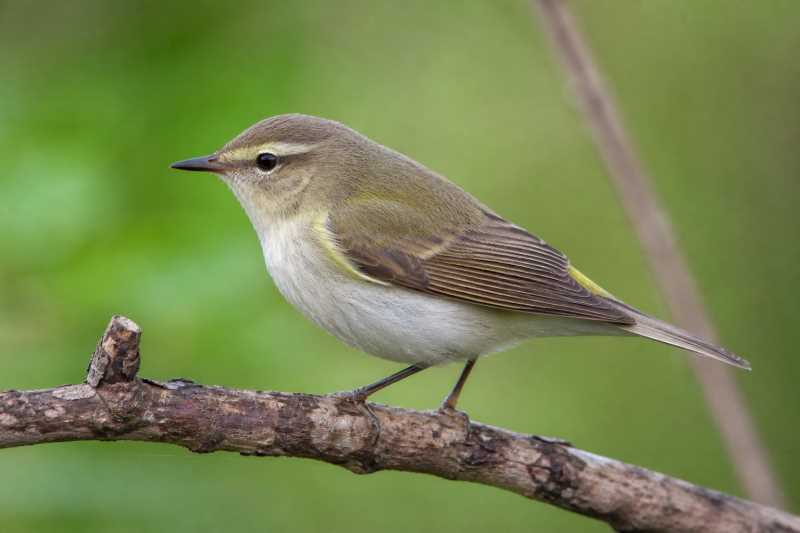
The Lemon-rumped Warbler is a small bird, measuring about 10 to 11 centimeters in length. Its most striking feature is the lemon-yellow coloration on the rump, which is particularly noticeable when the bird is in flight. The rest of its plumage is predominantly olive-green, with a paler underside. It has a distinct white supercilium (eyebrow-like stripe) and a dark eye line that adds to its distinctive appearance.
The warbler’s wings are short and rounded, adapted for quick, agile flights through dense foliage. Despite its small size, the Lemon-rumped Warbler is known for its strong and clear vocalizations, often heard before the bird is seen.
Behavior and Ecology
Lemon-rumped Warblers are active and restless by nature, constantly flitting through the foliage in search of food. They are known for their acrobatic foraging techniques, often hanging upside down to glean insects from leaves and branches. Their diet primarily consists of small insects, larvae, and spiders, which they catch with remarkable agility.
These warblers are generally solitary or found in pairs, particularly during the breeding season. However, they may join mixed-species feeding flocks outside the breeding season, which offers protection from predators and increases foraging efficiency.
Breeding occurs from May to July, coinciding with the abundance of food during the spring and early summer months. The female constructs a cup-shaped nest made of grass, moss, and feathers, usually positioned in a bush or low tree. She lays a clutch of 3 to 5 eggs, which are incubated for about 12 to 14 days. Both parents participate in feeding the chicks, which fledge after approximately two weeks.
Conservation Status
Currently, the Lemon-rumped Warbler is classified as a species of “Least Concern” by the International Union for Conservation of Nature (IUCN). This status reflects its relatively stable population and wide distribution. However, like many forest-dwelling species, it faces potential threats from habitat destruction and fragmentation, primarily due to logging and agricultural expansion.
Conservation efforts for the Lemon-rumped Warbler focus on preserving its natural habitat, particularly the protection of forested areas in the Himalayas. Sustainable forestry practices and the establishment of protected areas can help mitigate the impact of human activities on their populations.
Conclusion: Appreciating the Lemon-rumped Warbler
The Lemon-rumped Warbler is a testament to the rich biodiversity found in the temperate forests of Asia. Its vibrant appearance and lively behavior make it a favorite among bird watchers. Understanding and protecting this species is crucial, not only for its survival but also for maintaining the ecological balance in its habitat.
Efforts to conserve the Lemon-rumped Warbler highlight the broader need for sustainable environmental practices. By safeguarding the habitats of such species, we contribute to the preservation of biodiversity and the health of our planet.
In Summary
The Lemon-rumped Warbler, with its striking appearance and dynamic lifestyle, serves as a reminder of the intricate beauty and complexity of nature. As we continue to learn about and protect these birds, we reaffirm our commitment to a future where both humans and wildlife coexist harmoniously.
Related posts