Introduction
The Mountain Robin, scientifically known as Petroica bivittata, is a captivating species that inhabits the highland forests of the Australasian region. Known for its distinctive plumage and vocalizations, this bird is a subject of interest for ornithologists and bird enthusiasts alike. This article aims to delve into the various facets of the Mountain Robin’s life, including its habitat, behavior, and the conservation challenges it faces.
Habitat and Distribution
The Mountain Robin is primarily found in the mountainous regions of New Guinea and parts of eastern Indonesia. These birds favor the cool, mist-laden environments of montane forests, typically residing at altitudes ranging from 1,500 to 3,000 meters. The dense foliage provides an ideal environment for foraging and nesting, offering protection from predators and harsh weather conditions. The preference for such habitats makes the Mountain Robin a key indicator species for the health of montane forest ecosystems.
Physical Characteristics
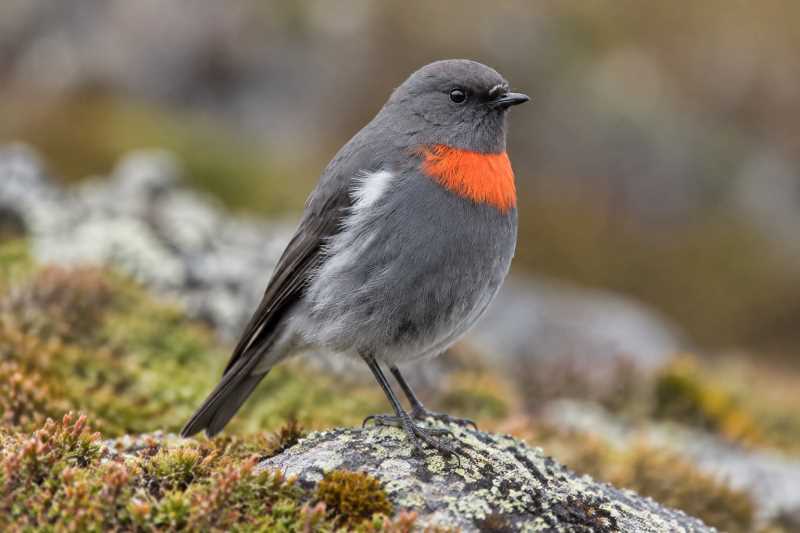
The Mountain Robin is a medium-sized bird that measures around 14–16 centimeters in length. Its striking plumage is characterized by a predominantly gray body with a vivid red breast, contrasting sharply with its white underbelly. The species exhibits sexual dimorphism, with males sporting a more vibrant coloration compared to the more subdued tones of the females. Their beady black eyes and slender legs add to their distinctive appearance.
Behavior and Diet
Mountain Robins are diurnal birds, most active during the early morning and late afternoon when they forage for food. Their diet primarily consists of insects and other small invertebrates, which they skillfully extract from the leaf litter and tree bark using their sharp beaks. Occasionally, they may supplement their diet with small fruits and berries, particularly during the breeding season when their energy requirements are higher.
These birds are known for their territorial behavior, often seen defending their patch of forest from intruders with a series of sharp calls and acrobatic flight displays. The vocal repertoire of the Mountain Robin is particularly noteworthy, as it employs a variety of whistles and trills to communicate with conspecifics, establish territory, and attract mates.
Reproduction and Lifecycle
The breeding season of the Mountain Robin typically coincides with the onset of the rainy season, which ensures an abundant supply of food for their offspring. The nest is usually constructed in a well-concealed location within dense foliage, often in the fork of a tree or shrub. Both parents are involved in the incubation of the eggs, which usually number two to three per clutch.
After an incubation period of approximately two weeks, the chicks hatch and are cared for by both parents. The fledging period lasts about three weeks, during which the chicks develop the necessary skills to survive independently. The high mortality rate among young birds is a natural selection pressure that ensures only the fittest individuals reach adulthood.
Conservation Status and Challenges
The Mountain Robin is currently classified as a species of least concern on the IUCN Red List. However, the ongoing threat of habitat loss due to deforestation and climate change poses significant challenges to their long-term survival. The destruction of montane forests for agricultural expansion and logging has led to a reduction in their natural habitat, making conservation efforts increasingly critical.
In response to these challenges, conservationists are advocating for the protection of highland forest areas and the establishment of protected reserves. Community-based conservation initiatives are also being promoted to engage local populations in preserving their natural heritage and promoting sustainable land use practices.
The Role of Citizen Science
Citizen science has emerged as a powerful tool in the conservation of the Mountain Robin. Birdwatchers and amateur ornithologists are encouraged to record sightings and behaviors of these birds, contributing valuable data to scientific research. Platforms such as eBird have facilitated the collection and analysis of large datasets, helping researchers track population trends and distribution changes over time.
Conclusion
The Mountain Robin, with its striking appearance and unique behaviors, remains an emblematic species of the Australasian montane forests. While currently not endangered, proactive measures are essential to ensure that these birds continue to thrive in their natural habitats. Through a combination of scientific research, habitat conservation, and community engagement, the future of the Mountain Robin can be secured, allowing future generations to marvel at this remarkable species.
In conclusion, the Mountain Robin is not just a bird but a vital component of its ecosystem, playing a crucial role in maintaining the ecological balance of montane forests. By understanding and protecting this species, we contribute to the broader goal of preserving biodiversity and the natural beauty of our planet.
Related posts