The Pale-edged Flycatcher: A Hidden Gem of the Andean Forests
Nestled within the lush montane forests of the Andes, the Pale-edged Flycatcher (Myiarchus cephalotes) is a bird of considerable interest to ornithologists and bird enthusiasts alike. Known for its distinctive pale edges on its wings and tail, this bird is a striking representative of the Myiarchus genus, which encompasses a variety of flycatcher species distributed across the Americas. Despite its relative obscurity compared to other avian species, the Pale-edged Flycatcher plays an essential role in its ecosystem and presents a fascinating subject for study.
Taxonomy and Distribution
Belonging to the family Tyrannidae, the Pale-edged Flycatcher shares its lineage with numerous other flycatchers, a testament to the diversity and adaptability of this avian family. Myiarchus cephalotes is endemic to the Andean regions, primarily found from Venezuela down to Bolivia. It thrives in subtropical or tropical moist montane forests, favoring altitudes ranging from 1,500 to 3,000 meters above sea level.
The species’ distribution across such a vast and varied landscape underscores its adaptability to different environmental conditions, though it remains sensitive to habitat disturbances. As deforestation and habitat fragmentation persist in these regions, the Pale-edged Flycatcher faces ongoing challenges to its habitat, thus highlighting the importance of conservation efforts.
Physical Characteristics
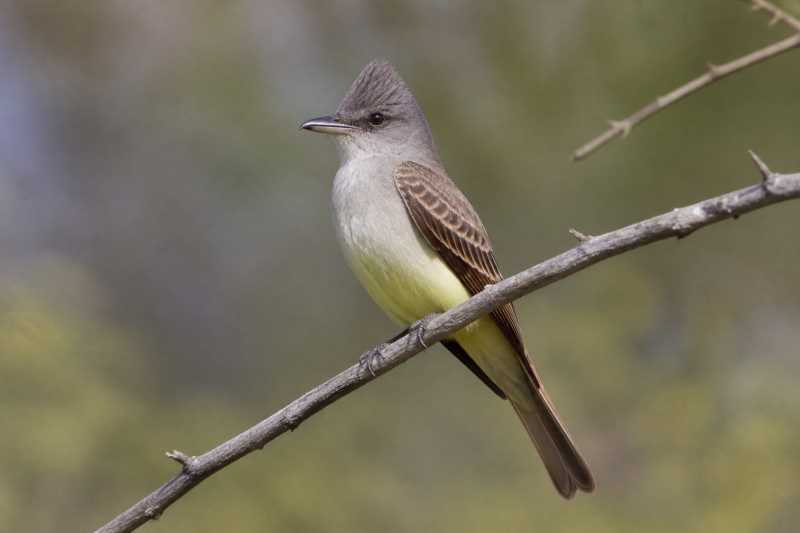
The Pale-edged Flycatcher is a medium-sized bird, measuring approximately 18-20 cm in length. It is distinguished by its olive-brown upperparts and paler, often yellowish underparts. The species derives its name from the pale-edged feathers on the wings and tail, which contrast beautifully with its otherwise muted plumage. These pale edges are more prominent in mature individuals, a feature that aids in distinguishing them from other Myiarchus species within their range.
Another characteristic feature is the bird’s crest, which it can raise when agitated or during courtship displays. The crest, coupled with its strong, slightly hooked bill, gives the Pale-edged Flycatcher a distinctive profile that is both elegant and robust.
Behavior and Diet
Myiarchus cephalotes exhibits a behavior typical of flycatchers, perching quietly before sallying forth to catch insects mid-flight. This sit-and-wait strategy is efficient and allows the bird to conserve energy while maximizing its hunting success. The diet of the Pale-edged Flycatcher consists primarily of insects, although it will occasionally consume fruits and berries, especially during the dry season when insects are less abundant.
During the breeding season, typically from March to June, the Pale-edged Flycatcher becomes more conspicuous. Males engage in vocal displays to attract mates, producing a series of melodious whistles and trills. Nesting occurs in tree cavities, often in deadwood or abandoned woodpecker nests, where the female lays a clutch of 2-4 eggs. Both parents participate in feeding the chicks, showcasing a cooperative breeding strategy.
Conservation Status
Currently, the Pale-edged Flycatcher is not listed as threatened, but it remains vulnerable to habitat loss and environmental changes. The destruction of montane forests for agriculture, logging, and urban development poses significant threats to its habitat. Conservation efforts are crucial to ensure the long-term survival of this species, with an emphasis on protecting and restoring its natural habitat.
Organizations focused on Andean conservation are actively working to preserve these montane ecosystems, which are not only home to the Pale-edged Flycatcher but also to countless other species that rely on these forests for survival. Promoting sustainable land-use practices and establishing protected areas are vital steps in safeguarding the future of the Pale-edged Flycatcher and its habitat.
Conclusion
The Pale-edged Flycatcher, with its distinctive plumage and ecological role, is a captivating subject for both scientific study and birdwatching enthusiasts. Understanding its behavior, habitat preferences, and the challenges it faces is essential for developing effective conservation strategies. As we continue to explore the biodiversity of the Andes, the Pale-edged Flycatcher serves as a reminder of the intricate connections within these ecosystems and the need to preserve them for future generations.
In celebrating the Pale-edged Flycatcher, we acknowledge the broader importance of conserving our planet’s biodiversity, ensuring that the rich tapestry of life continues to thrive in harmony.
Related posts