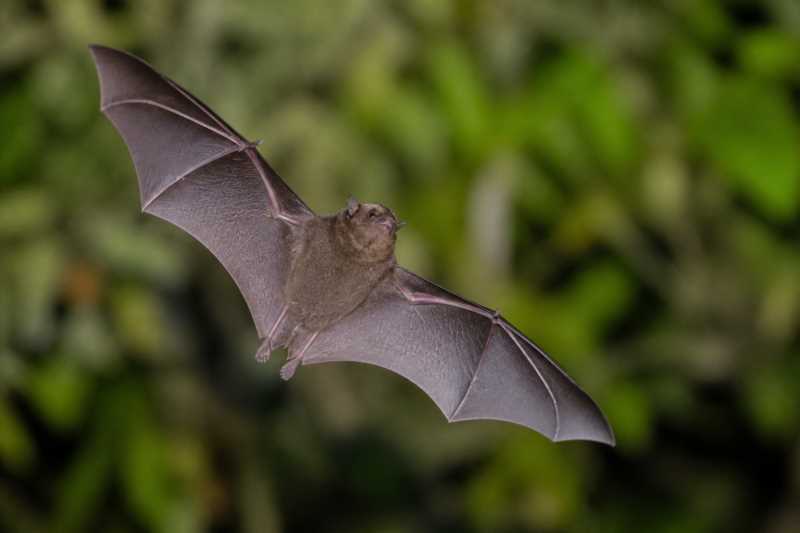
Guaraní Free-tailed Bat (Nyctinomops mbopicuare)
Introduction
The Guaraní Free-tailed Bat, scientifically known as Nyctinomops mbopicuare, is an intriguing species of bat belonging to the family Molossidae. This bat species is notable for its distinctive free-tail, which extends beyond the flight membrane, a characteristic common among free-tailed bats. As an integral part of their ecosystems, these bats play a crucial role in insect population control and pollination. Despite their ecological importance, much about their habits and life cycle remains a mystery due to their elusive nature. This article aims to shed light on the various aspects of the Guaraní Free-tailed Bat, ranging from its physical attributes to its conservation status.
Physical Description
The Guaraní Free-tailed Bat is a relatively small bat species, with a body length ranging from 9 to 11 cm (3.5 to 4.3 inches) and a wingspan of approximately 30 to 35 cm (11.8 to 13.8 inches). They possess a muscular build, which is characteristic of the Molossidae family, aiding in their swift and agile flight. Their fur is typically short and dense, varying in shades of brown, which provides excellent camouflage against tree bark and rocky surfaces.
A defining feature of the Guaraní Free-tailed Bat is its tail, which extends beyond the rear edge of the uropatagium, a membrane between the hind limbs. This free-tail is an adaptation that enhances their aerodynamics, allowing for high-speed flight and quick maneuvers. Their ears are large, with a distinctive forward tilt, which enhances their echolocation abilities by capturing sound waves more effectively.
Range and Habitat
The Guaraní Free-tailed Bat is predominantly found in South America, with a geographical range that includes countries like Paraguay, Argentina, and Brazil. These bats inhabit a variety of environments, from subtropical forests to savannas and even urban areas where they find suitable roosting sites.
Their preferred habitats include areas with abundant insect populations, as these bats are insectivorous. They are known to roost in natural crevices, tree hollows, and sometimes in man-made structures such as bridges and buildings. The adaptability of the Guaraní Free-tailed Bat to different environments demonstrates their resilience and ability to cope with habitat changes, although human-induced habitat destruction poses a significant threat to their populations.
Behavior and Diet
Guaraní Free-tailed Bats are nocturnal creatures, primarily active during the night when they embark on their foraging flights. They utilize echolocation to navigate and hunt, emitting high-frequency sound waves that bounce off objects and return to their ears, allowing them to detect the location and size of their prey.
Their diet consists mainly of insects, including moths, beetles, and other flying insects. The bats’ agility and high-speed flight capabilities enable them to catch prey mid-air with remarkable precision. This insectivorous diet makes them valuable allies to humans, as they help control pest populations naturally.
Socially, these bats are known to roost in colonies, which can range from a few individuals to several hundred. Their social structure is complex, with communication between individuals facilitated by a range of vocalizations and possibly even chemical signals.
Identification Tips (field recognition cues)
Identifying the Guaraní Free-tailed Bat in the field can be challenging due to their nocturnal nature and rapid flight. However, there are several cues to aid in their identification:
- Tail Structure: Look for the characteristic free-tail that extends beyond the wing membrane.
- Flight Pattern: Observe their fast, direct flight with occasional agile maneuvers.
- Echolocation Calls: Utilize bat detectors to pick up their high-frequency echolocation calls, which can help distinguish them from other bat species.
- Roosting Sites: Check potential roosting sites such as crevices and tree hollows, especially in areas near water bodies where insects are abundant.
Conservation Status (with threats and protections)
Currently, the conservation status of the Guaraní Free-tailed Bat is not well-documented, but like many bat species, they face several threats that could impact their populations. Habitat destruction due to deforestation and urbanization is a primary concern, as it reduces available roosting sites and food sources.
Pesticide use poses another significant threat, as it reduces insect populations and can lead to bioaccumulation of toxic substances in bats. Climate change also has the potential to alter the distribution of suitable habitats and prey availability.
Conservation efforts for the Guaraní Free-tailed Bat include habitat protection and restoration, alongside monitoring populations to gather data on their distribution and numbers. Raising awareness about the ecological importance of bats and implementing policies to reduce pesticide use can also contribute to their conservation.
Frequently Asked Questions
What is the primary diet of the Guaraní Free-tailed Bat?
The Guaraní Free-tailed Bat primarily feeds on insects, including moths, beetles, and other flying insects. Their insectivorous diet makes them important for natural pest control.
Where can Guaraní Free-tailed Bats be found?
These bats are found in South America, particularly in Paraguay, Argentina, and Brazil. They inhabit a range of environments, from subtropical forests to urban areas.
How do Guaraní Free-tailed Bats navigate in the dark?
The bats use echolocation to navigate and hunt in the dark. They emit high-frequency sound waves that bounce off objects, allowing them to determine the location and size of their prey.
What are the threats faced by the Guaraní Free-tailed Bat?
The primary threats include habitat destruction, pesticide use, and climate change. These factors can reduce their roosting sites and prey availability, impacting their populations.
How can I identify a Guaraní Free-tailed Bat in the wild?
Look for their distinctive free-tail, observe their fast and agile flight pattern, and use a bat detector to pick up their echolocation calls. Check likely roosting sites where they might be found.
Related posts