Introduction
The Dune Gerbil Mouse, scientifically known as Eligmodontia dunaris, is a fascinating small mammal that inhabits arid and semi-arid regions. This species belongs to the family Cricetidae, commonly known as the New World rats and mice family. The Dune Gerbil Mouse is adapted to life in sandy environments, where its unique physical and behavioral adaptations allow it to thrive.
Physical Description
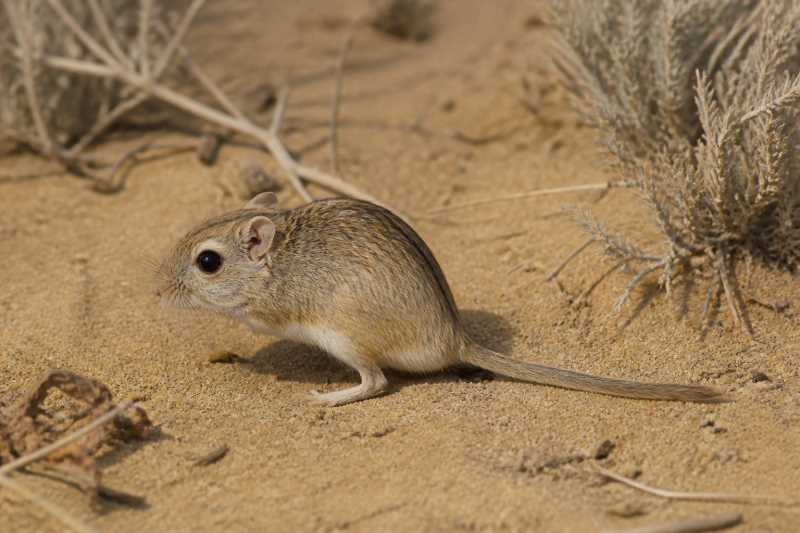
The Dune Gerbil Mouse is a small rodent characterized by its slender body and long tail, which is often longer than its head and body combined. Adult individuals typically weigh between 20 to 30 grams and measure around 10 to 12 centimeters in body length, with the tail adding an additional 12 to 15 centimeters. The fur of the Dune Gerbil Mouse is soft and dense, providing insulation against extreme temperatures. Its coloration ranges from sandy brown to grayish, helping it blend seamlessly into its desert surroundings. The underparts are usually lighter, often white or cream-colored. This species has large, prominent eyes and ears, which enhance its ability to detect predators and forage for food.
Range and Habitat
The range of the Dune Gerbil Mouse extends across several desert regions in South America, particularly in Argentina, Chile, and parts of Peru. It is primarily found in sandy dunes and rocky outcrops, where it constructs burrows to escape the intense heat of the day and the cold of the night. These burrows also serve as protection from predators. The Dune Gerbil Mouse is a nocturnal species, taking advantage of the cooler nighttime temperatures to forage for food. Its habitat is characterized by sparse vegetation, mainly consisting of grasses and shrubs adapted to dry conditions.
Behavior and Diet
The Dune Gerbil Mouse is a solitary and nocturnal creature, with most of its activities taking place at night. This behavior helps it avoid the extreme daytime temperatures of its desert habitat. The species is highly adapted to conserve water, obtaining most of its hydration from its diet, which primarily consists of seeds, grains, and the occasional insect. It has cheek pouches that it uses to transport food back to its burrow for storage. The Dune Gerbil Mouse is known for its ability to survive in harsh conditions, with physiological adaptations that allow it to minimize water loss and maximize energy efficiency.
Identification Tips (field recognition cues)
Identifying the Dune Gerbil Mouse in the field requires attention to certain key features. Look for a small rodent with a slender body and a disproportionately long tail, often with a tuft of hair at the end. The fur is typically sandy brown or grayish, providing excellent camouflage against desert sands. Large eyes and ears are distinctive, aiding in its nocturnal lifestyle. Observers may also notice its agile movements and the characteristic hopping gait it uses to navigate sandy terrain.
Conservation Status (with threats and protections)
Currently, the Dune Gerbil Mouse is not listed as a threatened species, thanks to its wide distribution and adaptability to harsh environments. However, its habitat faces threats from human activities such as agriculture, mining, and urban development, which can lead to habitat fragmentation and degradation. Climate change also poses a long-term threat by altering the desert ecosystems on which this species depends. Conservation efforts should focus on habitat protection and monitoring population trends to ensure the Dune Gerbil Mouse remains a thriving component of its ecosystem.
Frequently Asked Questions
1. What adaptations allow the Dune Gerbil Mouse to survive in desert environments? The Dune Gerbil Mouse has several adaptations for desert survival, including water-efficient kidneys, nocturnal behavior to avoid daytime heat, and fur coloration that provides camouflage against sandy terrain.
2. How does the Dune Gerbil Mouse find food in its arid habitat? This species primarily forages for seeds and grains, using its keen sense of smell and hearing to locate food at night. It has cheek pouches to transport food back to its burrow.
3. Are Dune Gerbil Mice social animals? Dune Gerbil Mice are generally solitary, with each individual maintaining its own burrow. They interact primarily during the breeding season.
4. What is the typical lifespan of a Dune Gerbil Mouse in the wild? In the wild, the Dune Gerbil Mouse can live up to 2 to 3 years, although predation and environmental factors often influence their lifespan.
5. How can habitat destruction impact the Dune Gerbil Mouse populations? Habitat destruction can lead to population decline by reducing available resources and increasing vulnerability to predators and environmental fluctuations.
Related posts