Orinocan Speckled Tree-rat (Pattonomys punctatus): A Comprehensive Guide
Introduction
The Orinocan Speckled Tree-rat, scientifically known as Pattonomys punctatus, is a fascinating yet lesser-known rodent species that inhabits the lush tropical regions of South America. This intriguing mammal is a member of the Echimyidae family, often referred to as spiny rats due to their characteristic bristly fur. Despite its elusive nature, the Orinocan Speckled Tree-rat plays a crucial role in its ecosystem, contributing to seed dispersion and serving as prey for various predators. This article delves into the distinct characteristics, habitat preferences, and conservation status of this remarkable species.
Physical Description
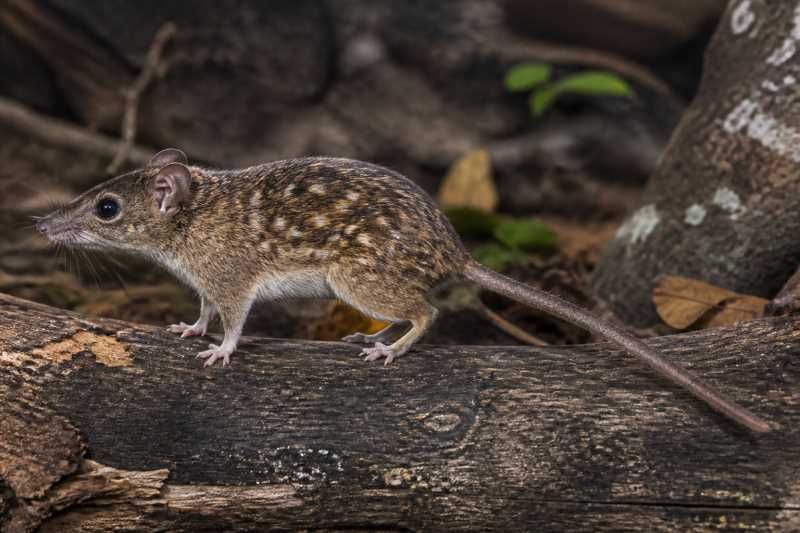
The Orinocan Speckled Tree-rat is noted for its distinctive appearance, which aids in its identification and study. Typically, adults measure between 25 to 30 centimeters in length, excluding the tail, which can add an additional 20 to 25 centimeters. The species is characterized by its dense, speckled fur, predominantly gray-brown with scattered white or light-colored speckles. This unique patterning provides effective camouflage against the forest floor and dense foliage, aiding in its survival.
The rat’s body is robust and cylindrical, with strong limbs adapted for climbing. Its forelimbs are shorter than the hind limbs, which are muscular and designed for agile movement through trees. The tail is covered with sparse hairs, providing balance during arboreal navigation. Notably, the Orinocan Speckled Tree-rat possesses sharp, ever-growing incisors, a common trait among rodents that facilitates feeding on a variety of plant materials.
Range and Habitat
The natural range of the Orinocan Speckled Tree-rat is primarily concentrated in the Orinoco River basin, extending across parts of Venezuela and Colombia. This region is characterized by its vast tropical rainforests, which offer an ideal environment for the species. The tree-rat is predominantly arboreal, favoring dense canopy cover and abundant vegetation for both food and protection.
In terms of specific habitat preferences, the Orinocan Speckled Tree-rat is most commonly found in lowland tropical forests, often at elevations below 1,000 meters. These forests are rich in biodiversity, providing a plethora of food sources and nesting sites. The species is also known to adapt to secondary forests and disturbed areas, demonstrating a degree of resilience to habitat changes.
Behavior and Diet
The Orinocan Speckled Tree-rat is primarily nocturnal, spending its nights foraging and its days resting in tree hollows or dense foliage. Its diet is omnivorous, comprising a variety of fruits, seeds, leaves, and occasionally small insects or other invertebrates. This varied diet not only supports its nutritional needs but also facilitates seed dispersal, contributing to forest regeneration.
Socially, the Orinocan Speckled Tree-rat tends to be solitary or found in small family groups. It communicates through a series of vocalizations and scent markings, which help establish territory and facilitate mating. During the breeding season, which may vary depending on environmental conditions, females give birth to litters of two to four offspring after a gestation period of approximately three months.
Identification Tips (Field Recognition Cues)
For researchers and wildlife enthusiasts, identifying the Orinocan Speckled Tree-rat in the field can be challenging due to its nocturnal habits and elusive nature. However, certain cues can aid in recognition:
- Speckled Fur Pattern: Look for the distinct gray-brown fur with white speckles, which is unique to this species.
- Tail Length and Appearance: The tail is nearly as long as the body, with sparse hair, aiding in balance and movement in trees.
- Behavioral Signs: Look for signs of nocturnal activity, such as disturbed leaf litter or visible feeding damage to fruits and seeds.
- Vocalizations: Listen for the species’ characteristic calls, which may include chattering or squeaking sounds, especially during the night.
Conservation Status (With Threats and Protections)
The conservation status of the Orinocan Speckled Tree-rat is currently assessed as Least Concern by the International Union for Conservation of Nature (IUCN). However, like many forest-dwelling species, it faces potential threats from habitat destruction and fragmentation due to logging, agriculture, and urban development.
Protection efforts for the species are primarily focused on preserving its natural habitat. This includes the establishment and maintenance of protected areas within the Orinoco basin, as well as initiatives to promote sustainable land use practices. Conservationists emphasize the importance of habitat connectivity to ensure genetic diversity and species resilience in the face of environmental changes.
Frequently Asked Questions
What does the Orinocan Speckled Tree-rat eat?
The Orinocan Speckled Tree-rat has an omnivorous diet that includes fruits, seeds, leaves, and occasionally small insects. Its feeding habits play a crucial role in seed dispersal within its habitat.
Where can the Orinocan Speckled Tree-rat be found?
This species is primarily found in the tropical rainforests of the Orinoco River basin, spanning parts of Venezuela and Colombia. It prefers lowland areas with dense canopy cover.
How does the Orinocan Speckled Tree-rat contribute to its ecosystem?
The Orinocan Speckled Tree-rat is an important seed disperser, aiding in forest regeneration. It also serves as prey for various predators, thus playing a role in the food chain.
What are the main threats to the Orinocan Speckled Tree-rat?
The main threats include habitat destruction and fragmentation due to logging, agriculture, and urban development. Conservation efforts focus on habitat preservation and sustainable land use.
How can the Orinocan Speckled Tree-rat be identified in the wild?
Identification can be achieved by observing its distinctive speckled fur, long tail, nocturnal activity patterns, and characteristic vocalizations during the night.
Related posts