Introduction
The Small Haitian Hutia, scientifically known as Plagiodontia spelaeum, is a rare mammal species indigenous to the Caribbean island of Hispaniola, which is shared by Haiti and the Dominican Republic. This elusive rodent is a part of the Capromyidae family and is known for its unique adaptations to its natural habitat. Though not widely recognized, the Small Haitian Hutia plays a crucial role in its ecosystem, contributing to seed dispersal and providing a food source for local predators. This article delves into the various aspects of the Small Haitian Hutia, including its physical characteristics, habitat, behavior, and conservation status.
Physical Description
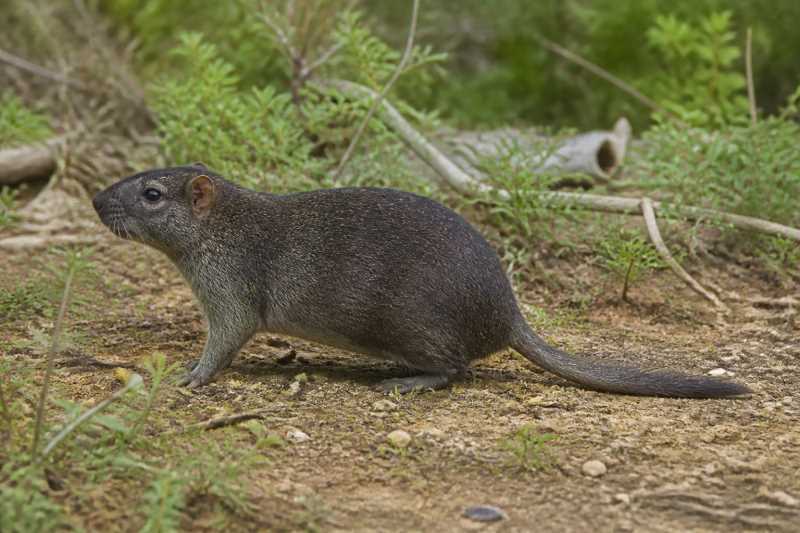
The Small Haitian Hutia is a medium-sized rodent, with an average body length ranging from 30 to 40 centimeters and a weight of approximately 1 to 2 kilograms. It possesses a robust and compact body, covered in dense, coarse fur that varies in color from dark brown to a lighter, sandy hue. The fur serves as an effective camouflage against the forest floor and rocky environments. Its head is short and broad, with small, rounded ears and large, dark eyes that provide good vision in low-light conditions. The tail is relatively short, about half the length of the body, and is often covered with sparse hair.
One of the defining features of the Small Haitian Hutia is its strong, curved claws, which are perfectly adapted for climbing and foraging. Its limbs are strong and muscular, allowing it to navigate the rocky terrains and dense vegetation of its habitat with ease. The incisors of the Small Haitian Hutia are large and continuously growing, a common trait among rodents, which they use to gnaw through tough plant materials and occasionally, to defend themselves against predators.
Range and Habitat
The Small Haitian Hutia is endemic to the island of Hispaniola, primarily found in the mountainous regions of Haiti. Its habitat includes a mix of subtropical and tropical dry forests, as well as limestone caves and rocky outcrops. These areas provide abundant cover and food resources, essential for the hutia’s survival.
Historically, the range of the Small Haitian Hutia was more extensive, but due to habitat degradation and human activities, its distribution has become fragmented. It is now primarily confined to isolated patches of forests and protected areas where conservation efforts are concentrated. The hutia is well-adapted to its environment, utilizing both arboreal and terrestrial routes to forage for food and escape predators.
Behavior and Diet
The Small Haitian Hutia is a nocturnal and solitary animal, although it may occasionally be seen in small family groups. During the day, it seeks shelter in burrows or crevices, emerging at night to forage. Its diet is herbivorous, consisting mainly of leaves, fruits, seeds, and bark. It plays a significant role in its ecosystem by aiding in seed dispersal, which helps maintain the health and diversity of its forest habitat.
The hutia is known for its cautious and shy behavior, often retreating to the safety of its hiding places when disturbed. It communicates with conspecifics through a series of vocalizations and scent markings. Its keen sense of smell aids in locating food and detecting predators, ensuring its survival in a challenging environment.
Identification Tips (Field Recognition Cues)
Identifying the Small Haitian Hutia in the wild can be challenging due to its elusive nature and excellent camouflage. However, certain cues can aid in recognition:
- Fur Color: Look for the distinctive dark brown to sandy coloration of its fur, which blends seamlessly with the forest floor.
- Size and Shape: Note its medium size and robust body, with a short tail and strong limbs.
- Habitat: Focus on rocky outcrops and forested areas during nighttime excursions, as these are its preferred habitats.
- Tracks and Signs: Look for signs of gnawing on trees or plants and small burrows or crevices in rocky areas.
- Vocalizations: Listen for soft, high-pitched calls during the night, which may indicate the presence of a hutia nearby.
Conservation Status (With Threats and Protections)
The Small Haitian Hutia is currently listed as Vulnerable on the IUCN Red List, primarily due to habitat loss and fragmentation. Deforestation, driven by agricultural expansion, logging, and urban development, poses the most significant threat to its survival. Additionally, hunting for food and as a perceived pest has further reduced its population.
Conservation efforts are underway to protect the remaining populations of Small Haitian Hutia. These include establishing protected areas and reserves, promoting reforestation projects, and raising awareness among local communities about the importance of preserving this unique species. International collaborations between conservation organizations and governments are also crucial in developing and implementing effective strategies to safeguard the future of the Small Haitian Hutia.
Frequently Asked Questions
What does the Small Haitian Hutia eat?
The Small Haitian Hutia is primarily herbivorous, feeding on a diet of leaves, fruits, seeds, and bark. It plays a vital role in seed dispersal, contributing to forest regeneration.
Where can the Small Haitian Hutia be found?
The Small Haitian Hutia is endemic to the island of Hispaniola, found mainly in the mountainous regions of Haiti within subtropical and tropical dry forests.
How does the Small Haitian Hutia contribute to its ecosystem?
The Small Haitian Hutia aids in seed dispersal, which is essential for maintaining forest health and biodiversity. It also serves as a prey species for local predators, thus supporting the food web.
What are the main threats to the Small Haitian Hutia?
The primary threats to the Small Haitian Hutia include habitat loss due to deforestation, hunting, and habitat fragmentation, which have led to its Vulnerable status.
How can we help protect the Small Haitian Hutia?
Conservation efforts such as establishing protected areas, promoting reforestation, and raising awareness about the species are vital for protecting the Small Haitian Hutia. Supporting organizations that work towards habitat conservation can also make a significant impact.
Related posts