Garnett’s Greater Galago (Otolemur garnettii): A Comprehensive Guide
Introduction
Garnett’s Greater Galago, scientifically known as Otolemur garnettii, is a fascinating primate species that thrives in the forests of East Africa. Known for their nocturnal habits and distinctive vocalizations, these animals play a crucial role in their ecosystems. Their unique adaptations make them an intriguing subject of study for primatologists and wildlife enthusiasts alike. In this article, we delve into the physical characteristics, habitat, behavior, and conservation status of Garnett’s Greater Galago, providing a complete overview of this remarkable species.
Physical Description
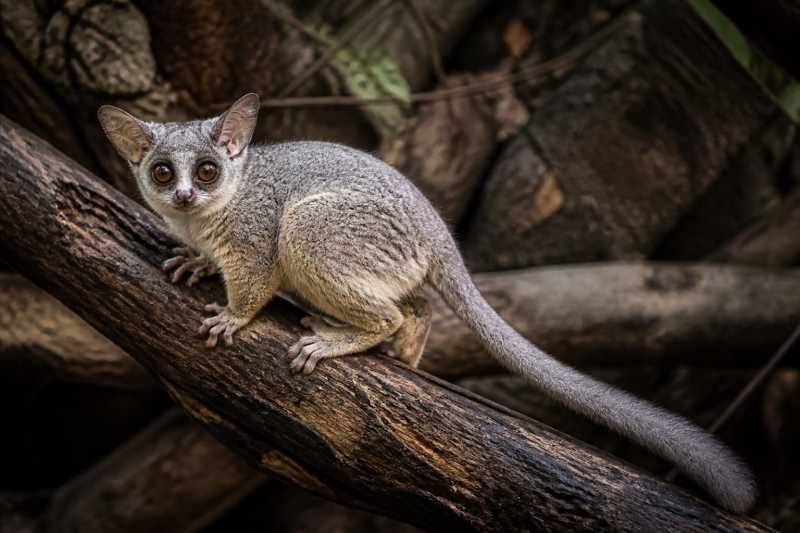
Garnett’s Greater Galago is a medium-sized nocturnal primate with distinct physical characteristics that set it apart from other species. Adult Galagos typically weigh between 800 to 1,100 grams and measure approximately 29 to 40 centimeters in body length, excluding the tail. Their tails are nearly as long as their bodies, providing balance and aiding in agile movement through the trees.
Their fur is dense and soft, usually displaying a mixture of brown and gray tones, which offers effective camouflage in their forest habitats. One of the most striking features of the Garnett’s Greater Galago is its large, forward-facing eyes, which are crucial for enhanced night vision. These eyes, coupled with large, mobile ears, enable them to detect prey and navigate through dense foliage in low light conditions.
Range and Habitat
Garnett’s Greater Galago is predominantly found in the coastal and lowland forests of East Africa, with its range extending from southern Somalia to northeastern Tanzania. They thrive in diverse habitats, including tropical and subtropical moist lowland forests, riverine forests, and sometimes even in agricultural lands that provide adequate tree cover.
These primates are highly adaptable and can survive in fragmented habitats, although they prefer areas with dense vegetation that provide ample cover and food resources. Their ability to adapt to different environments is a testament to their evolutionary success.
Behavior and Diet
The behavior of Garnett’s Greater Galago is predominantly nocturnal, with these creatures emerging from their daytime resting sites at dusk to forage throughout the night. They are arboreal animals, spending most of their time in trees where they use their powerful hind limbs to leap between branches.
Their diet is omnivorous, consisting mainly of fruits, flowers, and insects. They are also known to consume small vertebrates and bird eggs when available. The Galago’s diet is highly variable and often depends on the seasonal availability of food resources within their habitat.
Socially, Garnett’s Greater Galago is generally solitary, although they may form temporary associations during the breeding season or when foraging. Communication among these primates is facilitated by a range of vocalizations, including clicks, whistles, and screams, which serve as warnings or mating calls.
Identification Tips
Field recognition of Garnett’s Greater Galago can be challenging due to their nocturnal nature and elusive behavior. However, certain characteristics can aid in their identification:
- Large Eyes: The most prominent feature is their large, reflective eyes that shine brightly when caught in torchlight.
- Vocalizations: Listen for their distinctive calls, which can be heard over considerable distances at night.
- Leaping Movement: Observe their agile, bounding movements through the canopy, a behavior typical of the species.
- Fur Coloration: Look for their unique fur pattern, which blends shades of gray and brown.
Conservation Status
According to the International Union for Conservation of Nature (IUCN), Garnett’s Greater Galago is currently listed as "Least Concern." This status reflects their relatively stable population across their range. However, like many forest-dwelling species, they face several threats that could impact their long-term survival.
Threats
- Habitat Loss: Deforestation for agriculture, logging, and human settlement poses a significant threat to their natural habitats.
- Hunting: In some regions, they are hunted for bushmeat, although this is not widespread.
- Climate Change: Alterations in climate patterns can affect the availability of food and suitable habitats.
Protections
Conservation efforts focus on habitat preservation and the establishment of protected areas where these primates can thrive. Community-based conservation programs also play a vital role in educating local populations about the importance of preserving biodiversity.
Frequently Asked Questions
What is the lifespan of Garnett’s Greater Galago?
In the wild, Garnett’s Greater Galago can live up to 14 years, though their lifespan can be longer in captivity due to controlled conditions and the absence of predators.
How do Garnett’s Greater Galagos communicate?
These primates communicate using a variety of vocalizations, such as clicks, whistles, and screams, which serve different purposes including mating calls and territorial warnings.
Are Garnett’s Greater Galagos endangered?
Currently, Garnett’s Greater Galago is not considered endangered. They are listed as "Least Concern" by the IUCN, but ongoing habitat loss remains a potential threat to their population.
What do Garnett’s Greater Galagos eat?
Their diet is omnivorous, primarily consisting of fruits, flowers, and insects, but they may also eat small vertebrates and bird eggs when available.
Where can I find Garnett’s Greater Galago in the wild?
They are typically found in the coastal and lowland forests of East Africa, ranging from southern Somalia to northeastern Tanzania.
Related posts