Introduction
The jaguar (Panthera onca) is one of the most iconic and revered species in the animal kingdom. As the largest cat in the Americas, this powerful predator is a symbol of strength and beauty. Its presence in diverse habitats from rainforests to desert scrublands highlights its adaptability and ecological importance. This article delves into the fascinating world of the jaguar, exploring its physical characteristics, behavior, and conservation status.
Physical Description
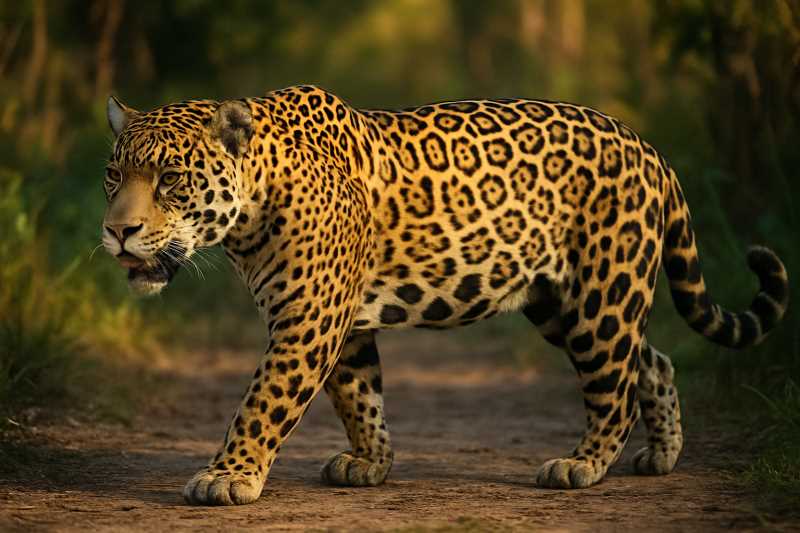
Jaguars are robust, muscular cats known for their striking coat patterns. Their fur is typically a tawny yellow with distinct black rosettes and spots, providing excellent camouflage in their natural habitats. Some jaguars are melanistic, commonly referred to as black panthers, with a dark coat where the rosettes are still visible upon close inspection.
Adult jaguars range from 1.5 to 1.8 meters (5 to 6 feet) in length, excluding their tail, which adds another 70 to 90 centimeters (28 to 35 inches). They stand approximately 63 to 76 centimeters (25 to 30 inches) at the shoulder. Males are generally larger than females, with weights ranging from 56 to 96 kilograms (123 to 212 pounds), while females weigh between 41 to 68 kilograms (90 to 150 pounds).
Their powerful limbs and broad heads are designed for a strong bite, which is a defining feature of this species. Jaguars have the most robust bite relative to body size among big cats, allowing them to pierce the skulls of their prey and even crack turtle shells.
Range and Habitat
Historically, jaguars roamed from the southwestern United States through Central America and into South America as far south as northern Argentina. Today, their range is considerably reduced due to habitat loss and fragmentation. They are primarily found in the Amazon Basin, with significant populations in Brazil, Venezuela, and Colombia.
Jaguars inhabit a variety of environments, including tropical rainforests, savannas, swamps, and dry forests. They are highly adaptable and can thrive in areas with both dense vegetation and open spaces, provided there is access to water and prey. However, they prefer dense rainforests, which offer ample cover and abundant prey.
Behavior and Diet
Jaguars are solitary animals, with males occupying territories that can overlap with those of several females. They are primarily nocturnal hunters, relying on stealth and strength to ambush their prey. Unlike other big cats, jaguars are excellent swimmers and often hunt in water, preying on fish, turtles, and caimans.
Their diet is diverse, consisting of over 85 species. Common prey includes deer, peccaries, capybaras, and tapirs. Jaguars employ a unique killing method, biting directly through the skull of their prey to deliver a fatal blow to the brain.
Social interactions are limited to mating and rearing young. After a gestation period of about 93-105 days, females give birth to 1-4 cubs, which remain dependent on their mother for up to two years.
Identification Tips (Field Recognition Cues)
Identifying a jaguar in the wild involves recognizing several key features:
- Coat Pattern: Look for the distinct rosettes with a central spot, different from the open rosettes of leopards. Melanistic jaguars can be identified by their dark coats with faint rosettes visible in sunlight.
- Size: Jaguars are stockier and more robust than similar species like leopards, with a broader head and shorter, more powerful limbs.
- Habitat and Behavior: Jaguars are often found near water sources and are more likely to be seen swimming or resting on riverbanks compared to other big cats.
- Vocalizations: They communicate through a series of roars and grunts, which can sometimes be heard at night.
Conservation Status (with Threats and Protections)
The International Union for Conservation of Nature (IUCN) lists the jaguar as Near Threatened. The primary threats to jaguar populations include habitat loss due to deforestation, human-wildlife conflict, and illegal poaching for their fur and body parts.
Conservation efforts focus on habitat preservation, anti-poaching measures, and promoting coexistence with human communities. Protected areas and wildlife corridors are crucial for maintaining genetic diversity and allowing jaguars to roam freely across their historical range.
Several organizations are actively working to protect jaguars, including Panthera’s Jaguar Corridor Initiative, which aims to connect fragmented habitats through a network of protected areas across Latin America.
Frequently Asked Questions
What do jaguars eat in the wild?
Jaguars have a varied diet consisting of over 85 prey species. They primarily hunt mammals like deer and peccaries but also prey on reptiles, birds, and fish. Their powerful bite allows them to take down larger animals and even crack the shells of turtles.
How do jaguars communicate?
Jaguars communicate through vocalizations such as roars, grunts, and meows. They also use scent markings and visual signals to establish territories and interact with other jaguars.
Are jaguars endangered?
Jaguars are classified as Near Threatened by the IUCN. While not currently endangered, they face significant threats from habitat loss, poaching, and conflict with humans. Conservation efforts are crucial to ensure their survival.
Where are jaguars found?
Jaguars are primarily found in the Amazon Basin and other parts of Central and South America. They inhabit diverse environments, including rainforests, savannas, and wetlands, but prefer areas with dense cover and access to water.
How can I help conserve jaguars?
Supporting wildlife conservation organizations, advocating for habitat protection, and promoting sustainable land use practices can all contribute to jaguar conservation. Raising awareness about the species and its ecological importance is also vital.
Related posts