Introduction
The Lowland Paca, scientifically known as Cuniculus paca, is a fascinating rodent species native to Central and South America. Recognized for its unique appearance and significant ecological role, the Lowland Paca is a nocturnal creature that plays a vital part in seed dispersal within its habitat. This article delves into the various aspects of the Lowland Paca, including its physical characteristics, habitat, behavior, and conservation status, aiming to provide a comprehensive understanding of this intriguing mammal.
Physical Description
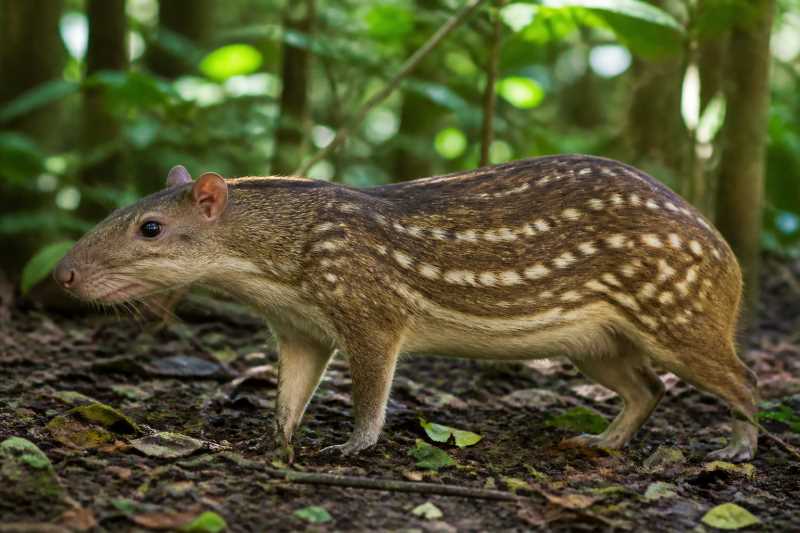
The Lowland Paca stands out due to its distinctive body structure and markings. It is a large rodent, with adults typically weighing between 6 to 12 kilograms (13 to 26 pounds) and measuring approximately 60 to 80 centimeters (24 to 31 inches) in length. The Lowland Paca has a robust build with short limbs and a large, rounded body covered in coarse fur. Its fur is predominantly brown with rows of white spots running along its flanks, which serve as a natural camouflage in its forested habitat.
One of the most notable features of the Lowland Paca is its large, powerful hind legs adapted for jumping and swimming. Its small head houses large eyes, indicative of its nocturnal nature, and a pair of long whiskers that assist in navigating through dense vegetation. The Lowland Paca’s dental structure is also remarkable, with strong incisors that grow continuously and are used for gnawing on hard seeds and vegetation.
Range and Habitat
The Lowland Paca is widely distributed across Central and South America, from southern Mexico, through Central America, and into northern Argentina. They are typically found in a variety of forested environments, including tropical rainforests, deciduous forests, and even mangrove swamps. The species prefers habitats close to water bodies such as rivers, streams, and lakes, which they use for both feeding and escaping predators.
These rodents are highly adaptable and can also be found in secondary forests and agricultural areas, provided there is adequate cover and food availability. However, their presence is often an indicator of a healthy ecosystem, as they require a stable environment to thrive.
Behavior and Diet
Lowland Pacas are primarily nocturnal, spending their nights foraging for food and their days resting in burrows or dense vegetation. They are solitary animals, with each individual maintaining a specific territory that they mark with scent glands. Pacas are excellent swimmers, using water bodies as escape routes from predators and foraging areas.
In terms of diet, Lowland Pacas are herbivorous, feeding on a variety of fruits, seeds, leaves, and tubers. They are particularly fond of fallen fruits and have a significant role in seed dispersal, as the seeds they consume are often excreted intact, facilitating the growth of new plants. This dietary preference makes them important players in maintaining the ecological balance of their habitats.
Identification Tips (Field Recognition Cues)
Identifying a Lowland Paca in the wild requires keen observation skills. Key identification tips include:
- Distinctive Spots: Look for the characteristic white spots and stripes along the sides of their body, which contrast with their brown fur.
- Body Size and Shape: Note the large, rounded body and short legs, which are typical of this species.
- Nocturnal Activity: Pacas are most active at night, so sightings are more likely during dusk or nighttime excursions.
- Habitat Preference: Search near water bodies within forested areas, as these are preferred habitats for the Lowland Paca.
- Sound: Listen for their low, grunting vocalizations, which are often heard during feeding or when they feel threatened.
Conservation Status (with Threats and Protections)
The Lowland Paca is currently listed as a species of Least Concern by the International Union for Conservation of Nature (IUCN). However, this does not mean they are free from threats. Habitat destruction due to deforestation and agricultural expansion poses a significant risk to their populations. Additionally, hunting for their meat, which is considered a delicacy in some regions, further threatens their numbers.
Conservation efforts for the Lowland Paca include habitat protection and management, as well as the establishment of protected areas where hunting is regulated. Research into their ecological role and population dynamics is also crucial for developing effective conservation strategies.
Frequently Asked Questions
How does the Lowland Paca contribute to its ecosystem?
The Lowland Paca plays a crucial role in seed dispersal, aiding in forest regeneration and plant diversity. By consuming fruits and excreting seeds intact, they help maintain the ecological balance in their habitats.
What are the main predators of the Lowland Paca?
The primary predators of the Lowland Paca include jaguars, ocelots, and large birds of prey. Their nocturnal and aquatic habits help them evade these threats.
How can you differentiate a Lowland Paca from other similar rodents?
The Lowland Paca can be distinguished by its large size, distinctive white spots along its brown body, and its preference for habitats near water bodies.
What is the breeding behavior of the Lowland Paca?
Lowland Pacas are known to have a polygynous mating system, where a male mates with multiple females. They have a gestation period of about 115 to 120 days, usually giving birth to one or two young.
Are Lowland Pacas endangered?
While currently listed as Least Concern, Lowland Pacas face threats from habitat destruction and hunting. Conservation efforts are necessary to ensure their populations remain stable.
Related posts