Silky Sifaka (Propithecus candidus): A Comprehensive Guide
Introduction
The Silky Sifaka (Propithecus candidus) is one of the most critically endangered lemurs in the world. Known for its strikingly beautiful white fur and graceful movements, this species is endemic to Madagascar, where it plays a crucial role in the biodiversity of the island’s unique ecosystems. Despite its beauty and ecological importance, the Silky Sifaka faces numerous threats that jeopardize its survival. This article delves into the physical characteristics, habitat, behavior, and conservation status of this remarkable primate, providing an in-depth understanding of its life and the challenges it faces.
Physical Description
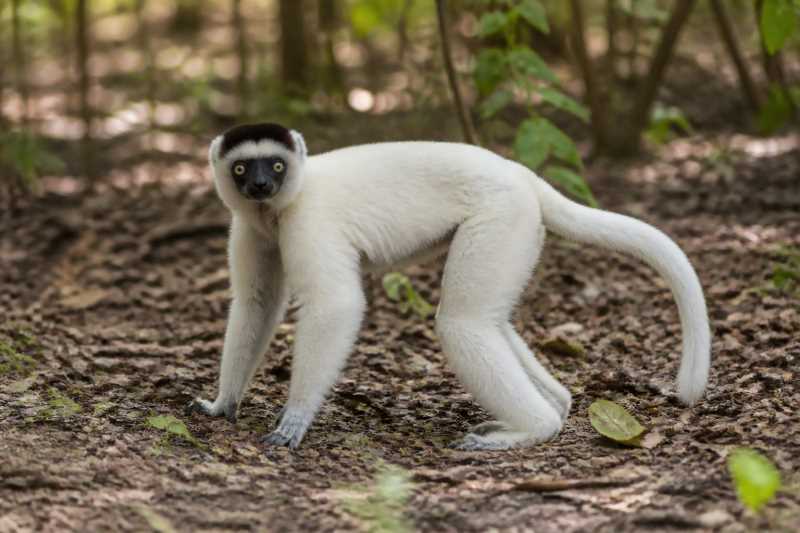
The Silky Sifaka is renowned for its striking appearance. Adults typically weigh between 5.5 to 6.5 kilograms and measure about 45 to 55 centimeters in body length, with a tail that equals or surpasses their body in length, adding an additional 45 to 55 centimeters. Their most distinctive feature is the silky, white fur that covers their bodies, which often appears silver in certain lighting conditions. This lush fur provides insulation against the cooler temperatures of their high-altitude habitats.
The face of the Silky Sifaka is black, with piercing, expressive eyes that range from a light golden to a deep amber, set against their stark white fur, creating a striking contrast. Their hands and feet are also black, which helps them grip the branches and trunks of trees as they navigate their arboreal environment. Unlike some other sifaka species, the Silky Sifaka lacks a distinct sexual dimorphism, making males and females appear quite similar in size and coloration.
Range and Habitat
The Silky Sifaka is found exclusively in the northeastern rainforests of Madagascar, specifically within the regions of Marojejy National Park and Anjanaharibe-Sud Special Reserve, as well as the Makira Natural Park. These areas are characterized by their high-altitude rainforests, which provide the cool and humid conditions that the Silky Sifaka requires.
Their range is limited to the montane and submontane forests, typically between 700 and 1,875 meters above sea level. These forests are rich with biodiversity, offering a variety of fruiting trees and vegetation that the Silky Sifaka relies on for food. However, the fragmentation of these habitats due to human activities significantly affects their population distribution and size.
Behavior and Diet
Silky Sifakas are diurnal, spending most of their active hours foraging for food and socializing. They live in groups of 2 to 9 individuals, usually consisting of both males and females, although the social structure is generally female-dominant. These groups maintain a home range that can span several hectares, with territories often overlapping with neighboring groups.
Their diet primarily consists of leaves, seeds, flowers, and fruits, with a particular preference for young leaves and seeds. This varied diet allows them to adapt to seasonal changes in food availability. The sifakas play a vital role in seed dispersal, making them essential for the health and regeneration of their forest habitats.
Silky Sifakas are known for their impressive leaping abilities, moving from tree to tree with powerful, bounding leaps that can cover distances of up to 10 meters. They use their strong hind legs to propel themselves and their long tails for balance, showcasing their adaptation to an arboreal lifestyle.
Identification Tips (Field Recognition Cues)
Identifying the Silky Sifaka in the wild can be a rewarding challenge for researchers and wildlife enthusiasts. Here are some key identification tips:
- Fur Coloration: Look for the distinctive silky, white fur that can sometimes appear silver. This is a primary identifying feature that sets them apart from other sifakas, which may have more varied fur colors.
- Movement: Observe their unique leaping gait. Silky Sifakas are known for their impressive leaps between trees, often covering large distances with graceful, bounding motions.
- Vocalizations: Listen for their distinctive calls, which include a variety of grunts, growls, and low-pitched hums used for communication within the group and to signal alarm.
- Habitat: Focus on high-altitude rainforest areas within their known range in northeastern Madagascar, particularly in protected areas like Marojejy National Park.
Conservation Status (with Threats and Protections)
The Silky Sifaka is currently classified as Critically Endangered on the IUCN Red List. The primary threats to their survival include habitat destruction due to slash-and-burn agriculture, illegal logging, and mining activities. Additionally, hunting poses a significant threat, as these lemurs are sometimes captured for bushmeat or the illegal pet trade.
Conservation efforts are underway to protect the remaining populations of the Silky Sifaka. Key strategies include:
- Protected Areas: Establishing and enforcing protected areas such as Marojejy National Park and Anjanaharibe-Sud Special Reserve.
- Community Engagement: Working with local communities to promote sustainable land use practices and reduce dependence on forest resources.
- Research and Monitoring: Conducting ongoing research to monitor populations and understand their ecological needs, which helps inform conservation strategies.
- Legislation: Strengthening and enforcing laws against illegal logging and hunting, and promoting international collaboration to combat wildlife trafficking.
Frequently Asked Questions
What is the population size of the Silky Sifaka?
The exact population size of the Silky Sifaka is difficult to determine due to their fragmented habitat and elusive nature. However, estimates suggest that fewer than 250 mature individuals remain in the wild, highlighting the urgent need for conservation efforts.
How does the Silky Sifaka contribute to its ecosystem?
The Silky Sifaka plays a crucial role in its ecosystem as a seed disperser. By feeding on a variety of fruits and seeds, they help maintain forest biodiversity and promote the regeneration of plant species, making them an integral part of their habitat’s ecological balance.
What are the main threats facing the Silky Sifaka?
The primary threats to the Silky Sifaka include habitat loss due to deforestation for agriculture and logging, as well as hunting for bushmeat and the illegal pet trade. These threats are compounded by the species’ limited range and small population size, making them highly vulnerable to extinction.
Are there any successful conservation programs for the Silky Sifaka?
Yes, several conservation programs have been implemented to protect the Silky Sifaka. These include habitat protection through national parks, community engagement initiatives to promote sustainable practices, and research projects aimed at understanding their ecological needs. Collaborative efforts between conservation organizations and local communities are critical to the success of these programs.
How can individuals help in the conservation of the Silky Sifaka?
Individuals can aid in the conservation of the Silky Sifaka by supporting organizations dedicated to protecting Madagascar’s unique wildlife, raising awareness about the species’ plight, and promoting sustainable products that do not contribute to deforestation. Eco-tourism that respects wildlife and their habitats can also provide economic incentives for local communities to preserve these remarkable creatures.
Related posts