Central American Squirrel Monkey: A Comprehensive Guide
Introduction
The Central American Squirrel Monkey, scientifically known as Saimiri oerstedii, is a captivating species that inhabits the lush tropical forests of Central America. Known for their vibrant colors and playful behavior, these primates play a crucial role in the ecosystem. This article delves into the diverse aspects of the Central American Squirrel Monkey, offering insights into their physical characteristics, habitat, behavior, and the conservation challenges they face. By understanding these dynamic creatures, we can better appreciate their place in the natural world and the importance of efforts to protect them.
Physical Description
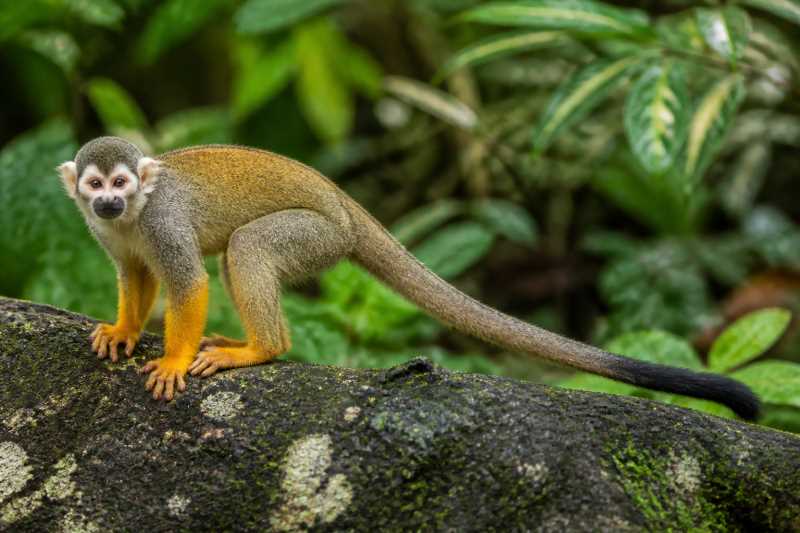
Central American Squirrel Monkeys are small yet strikingly colorful primates. Their most distinctive feature is their bright orange-red fur, which contrasts sharply with their white face and black crown, giving them a unique appearance among their Squirrel Monkey relatives. On average, they weigh about 600 to 950 grams (1.3 to 2.1 pounds) and measure from 25 to 35 centimeters (9.8 to 13.8 inches) in body length, with a tail that can extend up to 42 centimeters (16.5 inches) long.
The tail, although not prehensile, aids in balance as they navigate the forest canopy. Their limbs are long and nimble, equipped with dexterous fingers that are ideal for grasping branches and foraging for food. Their large, expressive eyes are adapted for excellent vision, essential for spotting predators and navigating through dense foliage.
Range and Habitat
The Central American Squirrel Monkey is primarily found in the Pacific lowland forests of Costa Rica and Panama. They inhabit tropical rainforests, secondary forests, and coastal areas where their preferred habitats are characterized by dense canopy cover and an abundance of fruiting trees.
Their range is limited, primarily due to habitat fragmentation and deforestation. Despite these challenges, they thrive in areas where forest corridors remain intact. Protected areas like the Manuel Antonio National Park in Costa Rica are crucial for their survival, providing a refuge from human encroachment and environmental change.
Behavior and Diet
Central American Squirrel Monkeys are diurnal and highly social animals, living in troops that can range from a few individuals to as many as 70. These troops are matriarchal, with females forming the core of the group, while males tend to disperse upon reaching maturity.
Their diet is omnivorous, consisting mainly of fruits and insects, but they also consume flowers, leaves, and small vertebrates. Foraging occurs primarily in the morning and late afternoon when they move through the forest canopy in search of food, using their keen eyesight and agile bodies.
Communication within the group is complex, involving a variety of vocalizations, body postures, and facial expressions. These signals help maintain group cohesion, signal the presence of predators, and coordinate foraging activities.
Identification Tips
To identify a Central American Squirrel Monkey in the wild, look for the following field recognition cues:
- Coloration: Note the distinct orange-red fur contrasted with a white face and black cap.
- Size and Shape: They are small and slender, with a long, non-prehensile tail used for balance.
- Movement: Agile and quick, they move in the upper canopy and are often seen leaping between branches.
- Vocalizations: Listen for their high-pitched chattering calls, which are frequently used to communicate within the troop.
Conservation Status
The Central American Squirrel Monkey is currently classified as "Vulnerable" according to the International Union for Conservation of Nature (IUCN). The primary threats to their survival include habitat loss due to deforestation, agricultural expansion, and urban development.
Conservation efforts are underway to protect their habitat and ensure the survival of these charismatic primates. Protected areas and national parks in Costa Rica and Panama offer some refuge, but stronger enforcement of conservation laws and reforestation projects are necessary to mitigate habitat loss. Public awareness campaigns and ecotourism initiatives also play a significant role in supporting conservation efforts.
Threats
- Habitat Destruction: Logging, agriculture, and urbanization continue to fragment and degrade their natural habitat.
- Climate Change: Alterations in temperature and precipitation patterns affect food availability and habitat conditions.
- Poaching and Pet Trade: Illegal capture for the pet trade and hunting pose additional threats.
Protections
- Protected Areas: National parks and wildlife refuges provide essential habitat protection.
- Legal Protections: National laws in Costa Rica and Panama aim to curb habitat destruction and illegal trade.
- Conservation Programs: Initiatives focusing on habitat restoration and public education are vital.
Frequently Asked Questions
What is the lifespan of a Central American Squirrel Monkey?
Central American Squirrel Monkeys can live up to 20 years in the wild, although their lifespan may be shorter due to threats like predation and habitat loss.
How do Central American Squirrel Monkeys communicate?
These monkeys use a range of vocalizations, body postures, and facial expressions to communicate. Their calls can convey information about food sources, predators, and social dynamics within the troop.
Are Central American Squirrel Monkeys endangered?
They are classified as "Vulnerable" by the IUCN. While not currently endangered, they face significant threats from habitat destruction and climate change, necessitating ongoing conservation efforts.
What do Central American Squirrel Monkeys eat?
Their diet is mainly composed of fruits and insects, supplemented by flowers, leaves, and small vertebrates. They are opportunistic feeders, adapting their diet based on seasonal availability.
How do Central American Squirrel Monkeys adapt to their environment?
Adaptations include their agile limbs for navigating the canopy, keen eyesight for spotting food and predators, and social structures that enhance foraging efficiency and predator awareness.
Related posts