Introduction
The Root Vole (Alexandromys oeconomus), also known as the Tundra Vole, is a fascinating small mammal that occupies a significant ecological niche in the northern hemisphere. It has adapted to some of the harshest environments on Earth, showcasing resilience and adaptability. This species is an integral part of its ecosystem, contributing to the food web, and has been the subject of various ecological and environmental studies. Understanding the Root Vole’s biology and ecology can provide insights into the functioning of cold-region ecosystems and the challenges they face.
Physical Description
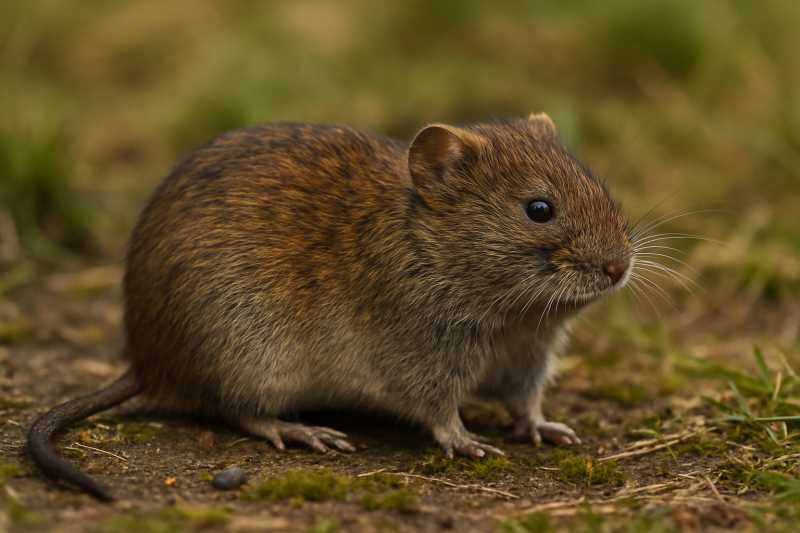
The Root Vole is a small rodent characterized by its stout body, short legs, and a relatively short tail. Adults typically measure between 12 to 20 centimeters in length, including a tail that ranges from 4 to 6 centimeters. Their weight varies from 40 to 60 grams. The vole’s fur is dense and soft, providing excellent insulation against cold climates. The coloration of their fur ranges from grayish-brown to reddish-brown on the dorsal side, while the ventral side is usually paler.
The Root Vole’s head is rounded with a blunt nose, and they possess small, rounded ears that are partially hidden by their fur, reducing heat loss. Their eyes are small but adapted for low-light conditions, which is typical for crepuscular and nocturnal animals. The vole’s incisors are sharp and continuously growing, adapted for gnawing on tough plant materials.
Range and Habitat
Root Voles have a Holarctic distribution, meaning they are found across the northern parts of North America, Europe, and Asia. In North America, their range extends from Alaska down through northern Canada. In Europe, they are prominent in Scandinavia and extend into parts of Central Europe. In Asia, their range includes Siberia and extends to the northern parts of China and Mongolia.
Their preferred habitats are moist environments such as wetlands, riverbanks, and tundra regions. These areas provide abundant vegetation for food and cover from predators. The Root Vole is highly adapted to cold environments and can be found in both alpine and Arctic tundra regions. During winter, they remain active under the snow, where they create extensive tunnel systems for foraging and nesting.
Behavior and Diet
Root Voles are primarily herbivorous, feeding on a variety of plant materials. Their diet mainly consists of grasses, sedges, and other herbaceous plants. During the summer, they consume leaves, stems, and seeds, while in the winter, they rely on the roots and bark of shrubs and trees. They have a high reproductive rate, which helps sustain their populations despite high predation rates.
Behaviorally, Root Voles are known for their burrowing activities. They construct intricate tunnel systems that provide shelter and storage for food. These tunnels also serve as a means to evade predators. Voles are mostly active during twilight and nighttime hours, aligning with their adaptations for low-light vision.
Socially, Root Voles tend to be solitary creatures, with individuals maintaining territories that they defend from others. However, during breeding seasons, males may increase their ranges to locate mates. Breeding occurs throughout the warmer months, with females capable of producing several litters per year, each consisting of 4 to 7 young.
Identification Tips
Identifying the Root Vole in the field requires attention to several key characteristics:
- Size and Shape: Look for a small, stout-bodied rodent with a short tail and legs.
- Fur Color: Notice the grayish-brown to reddish-brown fur on the back and lighter fur on the belly.
- Ears and Eyes: Small, rounded ears often hidden by fur and small, beady eyes.
- Habitat: Presence in moist environments like wetlands or tundra is a strong indicator.
- Burrows and Runways: Look for signs of their tunneling activity, such as runways through vegetation and small burrow entrances.
Conservation Status
The Root Vole is currently listed as a species of Least Concern by the International Union for Conservation of Nature (IUCN). This status reflects its wide distribution and presumably large population. However, certain threats could impact local populations in the future.
Key threats include habitat degradation and loss due to human activities such as agriculture, urban development, and climate change. Wetland drainage and changes in land use can significantly reduce available habitat for the Root Vole. Climate change poses a long-term threat, potentially altering the ecosystems they rely on and affecting food availability.
Conservation efforts for the Root Vole focus on habitat protection and restoration. Maintaining the integrity of wetlands and tundra landscapes is crucial for their survival. Legal protections for critical habitats and sustainable land-use practices can help mitigate some of the threats facing this species.
Frequently Asked Questions
1. What does the Root Vole eat? The Root Vole is primarily herbivorous, feeding on grasses, sedges, leaves, stems, seeds, roots, and bark, depending on seasonal availability.
2. Where can you find Root Voles? Root Voles inhabit the northern regions of North America, Europe, and Asia, particularly in moist environments like wetlands, riverbanks, and tundra areas.
3. How do Root Voles survive winter? They remain active under the snow, where they build extensive tunnel systems that provide insulation, protection, and access to food resources during winter.
4. Are Root Voles endangered? No, the Root Vole is listed as a species of Least Concern due to its wide distribution and large population, although localized threats exist.
5. How do you identify a Root Vole? Look for small, stout-bodied rodents with short tails, grayish-brown fur, small ears, and habitats such as wetlands or tundra with visible burrowing activity.
Related posts