Brazilian White-eared Opossum: An In-depth Look at Didelphis albiventris
Introduction
The Brazilian White-eared Opossum, scientifically known as Didelphis albiventris, is a fascinating marsupial native to South America. Known for its adaptability and distinctive appearance, this opossum is an important part of the ecosystems it inhabits. In this comprehensive article, we delve into the various aspects of the Brazilian White-eared Opossum, including its physical characteristics, habitat, behavior, diet, and conservation status. We also provide tips for identifying this species in the wild and address common questions about its lifestyle and ecological role.
Physical Description
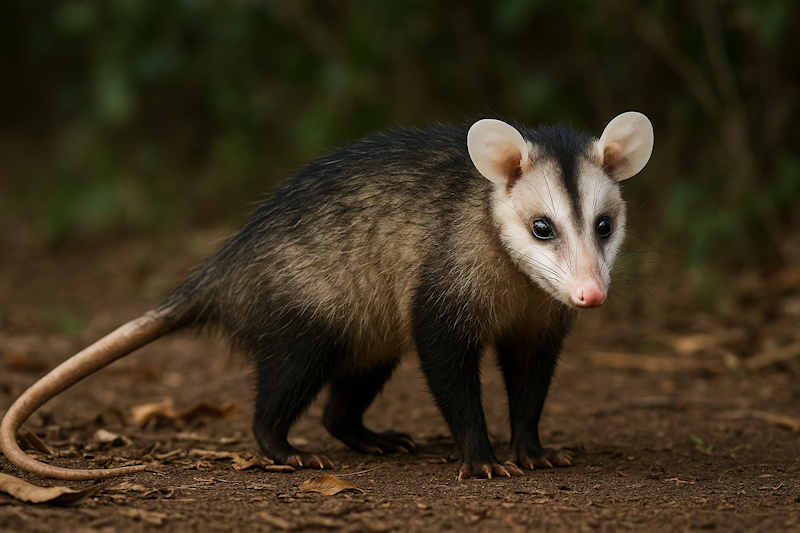
The Brazilian White-eared Opossum is a medium-sized marsupial, typically measuring between 30 to 50 centimeters in body length, with a tail nearly as long, ranging from 25 to 40 centimeters. The species is distinguished by its striking black and white facial markings, including prominent white patches around the ears, which give the species its common name. The fur is generally a mix of gray and brown, with a lighter, often white, underside. The opossum’s prehensile tail is partially furred at the base but becomes scaly towards the tip, aiding in climbing and balance.
The opossum’s limbs are relatively short but strong, equipped with sharp claws that facilitate climbing and foraging. This species exhibits sexual dimorphism, with males being slightly larger and heavier than females. Their keen sense of smell and hearing are crucial for detecting food and avoiding predators.
Range and Habitat
The Brazilian White-eared Opossum is widely distributed across South America, primarily found in Brazil, Bolivia, Paraguay, Uruguay, and Argentina. It thrives in a variety of habitats, including tropical and subtropical forests, savannas, and even urban areas. This adaptability to different environments is a testament to its opportunistic nature.
In forested areas, the opossum often takes refuge in tree hollows or dense underbrush, while in urban settings, it may occupy attics, garages, or other structures that provide shelter. Their ability to adapt to human-altered landscapes has allowed them to maintain stable populations even in the face of habitat fragmentation.
Behavior and Diet
The Brazilian White-eared Opossum is primarily nocturnal, emerging at dusk to forage for food. It is an omnivorous species, with a diet consisting of fruits, insects, small vertebrates, and carrion. This varied diet not only supports their nutritional needs but also aids in seed dispersal and pest control, underscoring their ecological importance.
Opossums are solitary creatures, with interactions typically occurring only during the breeding season. Females give birth to litters of up to 20 young, although only about half typically survive due to the limited number of teats available. The young are carried in the mother’s pouch for about two months and are weaned at around three months of age.
Identification Tips (Field Recognition Cues)
Identifying the Brazilian White-eared Opossum in the wild involves observing several key characteristics:
- Facial Markings: Look for the distinctive black and white facial pattern, particularly the white patches around the ears.
- Tail: Note the prehensile nature of the tail, with its scaly texture towards the tip.
- Size: Observe the medium body size, typical of most opossums, and the relatively short limbs.
- Behavior: Spotting them at night is more likely due to their nocturnal habits.
These cues can help differentiate the Brazilian White-eared Opossum from other similar species in the region.
Conservation Status (with Threats and Protections)
The Brazilian White-eared Opossum is currently listed as a species of Least Concern by the International Union for Conservation of Nature (IUCN). Despite this relatively secure status, the species faces threats from habitat destruction, road mortality, and hunting in some areas.
Habitat fragmentation due to agriculture and urban expansion poses significant challenges, as it reduces available territory and resources. However, this opossum’s adaptability to various environments, including urban areas, helps mitigate these threats to some extent.
Conservation efforts focus on habitat preservation and public education to reduce human-wildlife conflict. Legal protections in several countries also aim to safeguard the species from excessive hunting and habitat loss.
Frequently Asked Questions
What do Brazilian White-eared Opossums eat?
Brazilian White-eared Opossums are omnivorous, consuming a varied diet of fruits, insects, small animals, and carrion. This diet allows them to thrive in diverse environments and contributes to their role as seed dispersers and pest controllers.
Are Brazilian White-eared Opossums dangerous to humans?
Generally, Brazilian White-eared Opossums are not dangerous to humans. They are shy creatures that prefer to avoid confrontation. While they may enter human dwellings in search of food, they do not pose significant health risks and are more beneficial in controlling pests.
How can you distinguish a Brazilian White-eared Opossum from other opossums?
To distinguish a Brazilian White-eared Opossum, look for its unique black and white facial markings, particularly the white patches around the ears. Its prehensile tail and medium body size are also characteristic features.
Do Brazilian White-eared Opossums have any natural predators?
Yes, Brazilian White-eared Opossums face predation from various animals, including large birds of prey, wild cats, and snakes. Their nocturnal habits and ability to climb trees help them evade many potential threats.
How do Brazilian White-eared Opossums contribute to their ecosystem?
These opossums play a crucial ecological role by dispersing seeds through their fruit consumption and controlling insect populations. Their scavenging habits also contribute to the decomposition process in their habitats.
Related posts