Introduction
The Small-footed White-toothed Shrew, scientifically known as Crocidura parvipes, is a fascinating small mammal that garners interest due to its unique adaptations and behaviors. This diminutive creature is a member of the Soricidae family, a group known for their insectivorous diets and high metabolisms. Despite its elusive nature, the Small-footed White-toothed Shrew plays a crucial role in its ecosystem, contributing to insect population control and serving as prey for larger predators. This article delves into the detailed aspects of the Small-footed White-toothed Shrew, including its physical characteristics, habitat preferences, behavior, and conservation status.
Physical Description
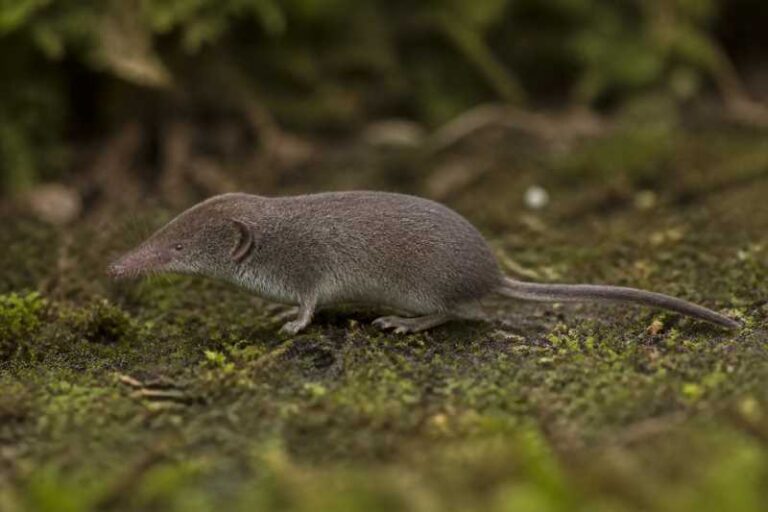
The Small-footed White-toothed Shrew is aptly named for its distinct morphological traits. It is a small mammal, with an average body length ranging from 60 to 80 millimeters, excluding the tail, which adds another 30 to 50 millimeters. The shrew’s weight typically varies between 5 to 10 grams, making it one of the lighter members of the shrew family.
Characterized by a sleek and slender body, Crocidura parvipes has a dense fur coat that ranges from grayish-brown to dark brown on the dorsal side, providing camouflage in its naturally earthy habitat. The ventral side is usually lighter, often white or light gray. One of the most defining features of the Small-footed White-toothed Shrew is its small, rounded feet, which are adapted for efficient movement through underbrush and soil.
The shrew’s name also highlights another key feature – its white teeth. Unlike many other shrews that have pigmented teeth, the teeth of C. parvipes are unpigmented, aiding in its identification. The dental formula is typical of the family, adapted for an insectivorous diet.
Range and Habitat
The Small-footed White-toothed Shrew is found across various regions in Africa, with its distribution spanning from West Africa through Central Africa, including countries such as Senegal, Nigeria, Cameroon, and the Democratic Republic of the Congo. This wide range indicates the species’ adaptability to different environmental conditions.
The habitat of Crocidura parvipes is primarily composed of savannas, forests, and grasslands. It favors areas with dense ground cover, which provides both protection from predators and a rich hunting ground for insects. The shrew is also known to inhabit agricultural fields and gardens, where it can find ample food resources.
Behavior and Diet
The Small-footed White-toothed Shrew is predominantly nocturnal, spending its nights actively foraging and hunting. Its high metabolic rate requires the shrew to consume large quantities of food relative to its body size, often ingesting insects equal to or greater than its own weight daily.
Its diet consists mainly of small insects, spiders, and other invertebrates. The shrew employs a keen sense of smell and acute hearing to locate prey, using its quick reflexes to capture them. The Small-footed White-toothed Shrew has also been observed to eat small amounts of plant material, although this is not a significant portion of its diet.
Socially, the shrew is largely solitary, except during the breeding season when males and females come together to mate. Little is known about their reproductive behavior, but it is assumed to be similar to that of other shrews, with multiple litters per year and a gestation period of around 3 weeks.
Identification Tips (Field Recognition Cues)
Identifying the Small-footed White-toothed Shrew in the field can be challenging due to its small size and elusive nature. However, several characteristics can aid in its recognition:
- Size and Shape: Look for a small, slender mammal with a body length of 60 to 80 millimeters and a tail that is approximately half the body length.
- Coloration: Note the grayish-brown to dark brown fur on the back and lighter, often white, fur on the belly.
- Feet: The shrew’s small, rounded feet are a distinctive feature, aiding movement through its habitat.
- Teeth: If observed closely, the white, unpigmented teeth are a key identification marker.
Conservation Status (with Threats and Protections)
The conservation status of the Small-footed White-toothed Shrew is currently classified as Least Concern by the International Union for Conservation of Nature (IUCN). This classification is due to its wide distribution and presumably large population.
However, like many species, it faces threats from habitat destruction and fragmentation, primarily due to agricultural expansion and urban development. Pesticide use in agricultural areas can also pose a significant threat by reducing prey availability and introducing toxic substances into the shrew’s food chain.
Conservation efforts are essential to ensure that populations remain stable. Protecting natural habitats and implementing sustainable agricultural practices are crucial steps in safeguarding the future of this species.
Frequently Asked Questions
What do Small-footed White-toothed Shrews eat?
Small-footed White-toothed Shrews primarily eat insects, spiders, and other small invertebrates. They have a high metabolic rate, requiring them to consume large amounts of food relative to their body weight.
Where can you find Small-footed White-toothed Shrews?
These shrews are found across West and Central Africa, in countries such as Senegal, Nigeria, and Cameroon. They inhabit savannas, forests, and grasslands with dense ground cover.
How do Small-footed White-toothed Shrews contribute to the ecosystem?
They play a vital role in controlling insect populations and serve as prey for larger predators, thus maintaining the ecological balance in their habitats.
Are Small-footed White-toothed Shrews endangered?
No, they are currently classified as Least Concern by the IUCN, but they face threats from habitat destruction and pesticide use.
How can you identify a Small-footed White-toothed Shrew?
Look for a small, slender mammal with grayish-brown fur, white teeth, and small, rounded feet. Their body length ranges from 60 to 80 millimeters.
Related posts