Introduction
The Long-eared Gymnure, scientifically known as Otohylomys megalotis, is a fascinating small mammal that belongs to the family Erinaceidae, which also includes hedgehogs. Native to Southeast Asia, this elusive creature is often mistaken for a type of rodent due to its appearance, but it is more closely related to hedgehogs. Despite its intriguing nature, the Long-eared Gymnure remains relatively understudied, leaving many aspects of its biology and ecology shrouded in mystery.
Physical Description
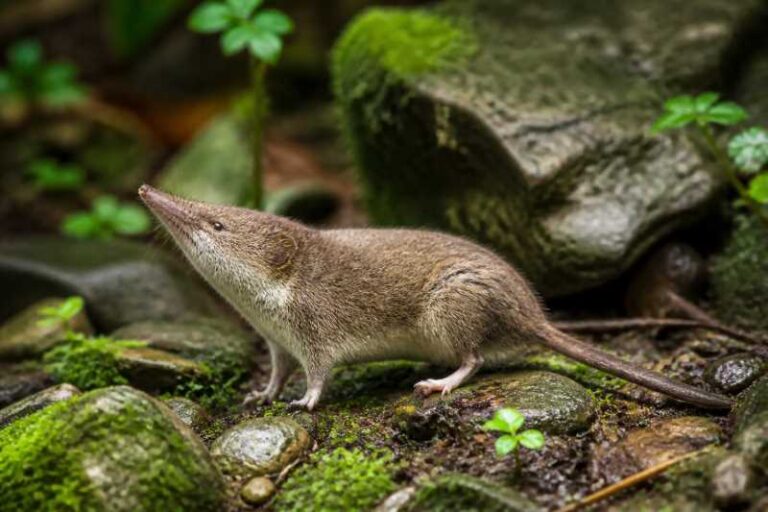
The Long-eared Gymnure earns its name from its distinctively large ears, which are notably larger in proportion to its head compared to other gymnures. These ears are not only a defining characteristic but also play a crucial role in its sensory perception, aiding in detecting predators and prey. It has a slender, elongated body covered in short, coarse fur that is typically a mottled brown or gray, providing excellent camouflage in its natural habitat. The gymnure’s snout is pointed, resembling that of a shrew, and it possesses small, sharp teeth adapted for its omnivorous diet.
Range and Habitat
Otohylomys megalotis is predominantly found in the dense, humid forests of Southeast Asia, particularly in regions of Vietnam, Laos, and Cambodia. These areas provide the ideal environment with ample cover and rich biodiversity, supporting the gymnure’s need for a varied diet. The species is primarily terrestrial, preferring the forest floor where it can forage for food and seek shelter among the leaf litter and underbrush. Its habitat selection is closely tied to the availability of food resources and the presence of adequate cover to avoid predators.
Behavior and Diet
Although much about the Long-eared Gymnure’s behavior remains unknown, it is believed to be primarily nocturnal, emerging under the cover of darkness to forage for food. Its diet is omnivorous, consisting of insects, small invertebrates, fruits, and seeds. The gymnure uses its acute sense of smell and hearing to locate prey and navigate its environment. Social behavior in this species is not well documented, but it is thought to be solitary, like many of its relatives. Breeding habits are also not well understood, and more research is needed to uncover these aspects of its life history.
Identification Tips (field recognition cues)
Identifying the Long-eared Gymnure in the field can be challenging due to its elusive nature and the dense habitats it occupies. However, there are a few key characteristics to look for:
- Large Ears: The most distinctive feature, which can be seen from a distance with binoculars.
- Short, Coarse Fur: Typically brown or gray with a mottled pattern, providing camouflage.
- Pointed Snout: Similar to a shrew, aiding in distinguishing it from rodents.
- Body Size: Smaller and more slender than a hedgehog, with a more elongated body.
Conservation Status (with threats and protections)
As of the latest assessments, the conservation status of Otohylomys megalotis is not well defined due to the scarcity of data. However, its habitat is under threat from deforestation, agricultural expansion, and human encroachment. Efforts to protect its forest habitat are crucial for its survival. Conservation measures in the region, including protected areas and sustainable land management practices, are vital to ensure the gymnure’s continued existence. Further research is needed to better understand its population dynamics and ecological needs, which will inform targeted conservation strategies.
Frequently Asked Questions
- What is the Long-eared Gymnure’s primary habitat?
The Long-eared Gymnure primarily inhabits dense, humid forests in Southeast Asia, particularly in Vietnam, Laos, and Cambodia.
- How can I identify a Long-eared Gymnure in the wild?
Look for its large ears, short coarse fur, and pointed snout. Its small, slender body distinguishes it from similar species.
- Is the Long-eared Gymnure endangered?
The conservation status is not well defined, but it faces threats from habitat loss due to deforestation and agriculture.
- What does the Long-eared Gymnure eat?
It has an omnivorous diet, feeding on insects, small invertebrates, fruits, and seeds.
- Are Long-eared Gymnures social animals?
They are believed to be primarily solitary, although specific social behaviors are not well documented.
Related posts