Introduction
The Northern Brown Bandicoot (Isoodon macrourus) is a fascinating marsupial native to Australia, known for its adaptability and resilience in various environments. As a member of the Peramelidae family, this small, nocturnal mammal plays a crucial role in its ecosystem by aiding in soil aeration and seed dispersal. Despite facing certain environmental threats, the Northern Brown Bandicoot continues to be a subject of interest for ecologists and wildlife enthusiasts alike.
Physical Description
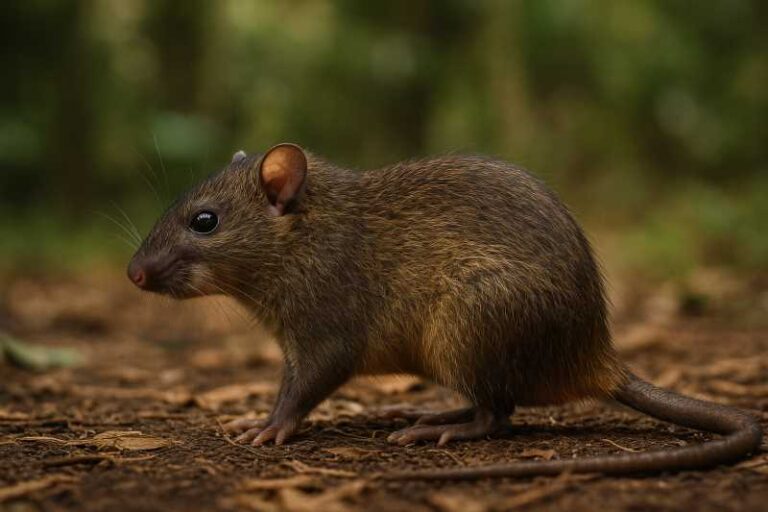
The Northern Brown Bandicoot is a medium-sized marsupial characterized by its robust build and coarse fur. Adults typically range from 28 to 47 centimeters in body length, with an additional tail length of 9 to 21 centimeters. This bandicoot’s fur is predominantly a dull brown, interspersed with black and grey, providing effective camouflage against the earthy tones of its habitat.
Its most distinguishing physical feature is its pointed snout, which is adept at foraging for food. The ears are relatively short and rounded, contrasting with the elongated body and strong hind legs that enable rapid movement. The forelimbs are equipped with sharp claws, perfectly adapted for digging.
Range and Habitat
The Northern Brown Bandicoot is primarily found in northern and eastern Australia, extending from the tropical regions of Queensland and the Northern Territory down to New South Wales. Its habitat is diverse, ranging from rainforests and woodlands to grasslands and even urban areas. This adaptability to various environments is a testament to its resilience, although it prefers regions with ample ground cover for protection from predators.
In urban settings, these bandicoots have been known to inhabit gardens and parks, taking advantage of the abundant food resources and shelter opportunities. However, they are more commonly associated with areas that offer dense vegetation and soft soil.
Behavior and Diet
Northern Brown Bandicoots are nocturnal creatures, spending the daylight hours in nests made of grass and leaves, hidden in the underbrush. At night, they emerge to forage, relying on their keen sense of smell to locate food. Their diet is omnivorous, consisting of insects, earthworms, tubers, seeds, and fruits. This varied diet not only provides them with necessary nutrients but also aids in the dispersal of seeds, contributing to the health of their ecosystem.
Bandicoots are solitary animals, coming together only for breeding. Females have a short gestation period of about 12 days, one of the shortest among mammals, and can produce several litters a year under favorable conditions. The young are born underdeveloped and continue to grow in the mother’s pouch for several weeks before being weaned.
Identification Tips (Field Recognition Cues)
Identifying a Northern Brown Bandicoot in the wild can be challenging due to their nocturnal and elusive nature. However, a few key characteristics can aid in their recognition:
- Size and Shape: Look for a medium-sized marsupial with a robust body and short tail.
- Fur Color: Observe the coarse, brown fur with black and grey flecks.
- Snout: Note the distinctive pointed snout used for foraging.
- Tracks and Diggings: Look for small conical diggings in the soil, a telltale sign of bandicoot activity.
Conservation Status (With Threats and Protections)
The Northern Brown Bandicoot is currently listed as Least Concern by the IUCN Red List. However, it faces several threats that could impact its population if left unchecked. Habitat loss due to agricultural expansion, urban development, and invasive species like feral cats and foxes are significant concerns.
Conservation efforts are focused on habitat preservation and management, as well as controlling predator populations. In urban areas, creating bandicoot-friendly environments and reducing roadkill through the implementation of wildlife corridors are also crucial steps in ensuring the survival of this species.
Frequently Asked Questions
1. What do Northern Brown Bandicoots eat?
Northern Brown Bandicoots have an omnivorous diet that includes insects, earthworms, tubers, seeds, and fruits. This varied diet helps them survive in diverse environments and contributes to seed dispersal within their ecosystem.
2. Where can Northern Brown Bandicoots be found?
These bandicoots are found in northern and eastern Australia, from the tropical regions of Queensland and the Northern Territory to New South Wales. They inhabit environments ranging from rainforests and woodlands to urban gardens.
3. Are Northern Brown Bandicoots endangered?
Currently, the Northern Brown Bandicoot is listed as Least Concern by the IUCN. However, they face threats such as habitat loss and predation by invasive species. Conservation efforts focus on habitat protection and predator control.
4. How do Northern Brown Bandicoots contribute to their ecosystem?
They play a vital role in soil aeration and seed dispersal, which helps maintain the health of their ecosystems. Their foraging behavior also aids in the control of insect populations.
5. How can you identify a Northern Brown Bandicoot?
Look for a medium-sized, robust marsupial with a pointed snout and coarse brown fur. Their presence is often indicated by small conical diggings in the soil.
Related posts