Introduction
The Saiga antelope (Saiga tatarica) is a remarkable and ancient mammal species that roams the vast and varied landscapes of Eurasia. Known for its distinctive appearance and unique adaptations, the Saiga has fascinated scientists and wildlife enthusiasts alike. This article delves into the various aspects of the Saiga’s life, from its physical characteristics to its conservation status, providing a comprehensive look at one of nature’s most intriguing creatures.
Physical Description
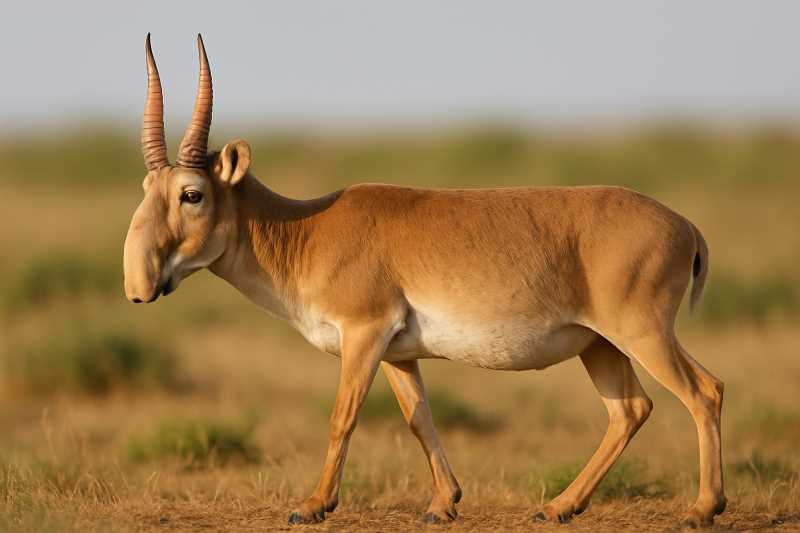
The Saiga antelope is easily recognizable due to its unique and somewhat peculiar appearance. Adult Saigas measure between 100 to 140 centimeters in length and stand about 60 to 80 centimeters tall at the shoulder, with males being slightly larger than females. Their weight ranges from 26 to 69 kilograms.
One of the most striking features of the Saiga is its oversized, bulbous nose, which serves various functions, including filtering dust and regulating body temperature. This fleshy proboscis also plays a crucial role in vocal communication among Saigas, particularly during the mating season.
The Saiga’s coat changes with the seasons, ranging from a reddish-yellow hue in the summer to a thick, pale gray in the winter, providing excellent camouflage against the steppes and semi-desert landscapes they inhabit. Males are distinguished by their lyre-shaped, translucent horns, which can grow up to 30 centimeters long and are used in displays of dominance during the rutting season.
Range and Habitat
Historically, the Saiga antelope’s range extended across vast areas of the Eurasian steppe, from the foothills of the Carpathian Mountains to Mongolia. Today, their range has significantly diminished, with key populations found in fragmented regions across Kazakhstan, Mongolia, southern Russia, and Uzbekistan.
Saigas are highly adapted to their harsh environments, preferring semi-arid areas such as open dry steppes, grasslands, and semi-deserts. These regions provide the low vegetation they need for grazing, as well as the vast open spaces necessary for their migratory lifestyle.
Behavior and Diet
Saigas are highly social animals, forming large herds that can number in the hundreds or even thousands, particularly during migrations. These migrations are often triggered by seasonal changes, as Saigas move to find fresh grazing grounds and avoid harsh weather conditions.
Their diet consists mainly of a variety of grasses, herbs, and shrubs. Saigas are ruminants, meaning they have a specialized stomach that allows them to efficiently process these fibrous plant materials. During the harsh winter months, they rely on their ability to dig through snow to reach the vegetation beneath.
The breeding season, or rut, occurs in late autumn, during which males become highly territorial and engage in fierce battles for mating rights. After a gestation period of around five months, females give birth to one or two calves in late spring. The young are able to stand and walk within hours of birth, a crucial adaptation for survival in their predator-rich environments.
Identification Tips
Recognizing a Saiga in the field can be an awe-inspiring experience. Here are some tips to help you identify this unique species:
- Nose: The Saiga’s large, flexible nose is its most distinctive feature, easily distinguishing it from other antelope species.
- Horns: Males possess striking, ridged horns that are lyre-shaped, while females lack horns altogether.
- Coat: Observe the Saiga’s seasonal coat changes—lighter and reddish in summer, denser and grayer in winter.
- Gait: Saigas have a distinctive gallop and can run at high speeds, which is often accompanied by their characteristic nasal snorting.
Conservation Status
The Saiga antelope is currently classified as Critically Endangered on the IUCN Red List, facing numerous threats that have drastically reduced its population over the last few decades.
Threats
- Poaching: The Saiga is heavily targeted for its horns, which are highly valued in traditional medicine, as well as for its meat and hides.
- Habitat Loss: Agricultural expansion, infrastructure development, and industrial activities have led to significant habitat fragmentation.
- Disease: Outbreaks of diseases, such as pasteurellosis, have decimated entire herds within a short period.
- Climate Change: Changing weather patterns disrupt migration routes and affect the availability of food resources.
Protections
Conservation efforts are underway to protect the remaining Saiga populations. These include:
- Anti-poaching Measures: Strengthening law enforcement and increasing patrols in key habitats.
- Habitat Restoration: Initiatives aimed at restoring and preserving critical Saiga habitats.
- Research and Monitoring: Ongoing studies to better understand the species’ ecology and improve conservation strategies.
- Community Engagement: Raising awareness and involving local communities in conservation efforts.
Frequently Asked Questions
What adaptations help the Saiga survive in its environment?
The Saiga’s large nose serves as a filter for dust and helps regulate body temperature, while its seasonal coat and migratory behavior allow it to adapt to harsh climates and find food across vast distances.
Why are Saiga antelopes endangered?
Saigas face threats from poaching, habitat loss, disease, and climate change, leading to a drastic decline in their populations and their classification as Critically Endangered.
How can we help conserve the Saiga antelope?
Supporting conservation organizations, advocating for stronger wildlife protection laws, and spreading awareness about the Saiga’s plight can contribute to its conservation.
What is the Saiga’s role in its ecosystem?
As grazers, Saigas play a vital role in maintaining the health of grassland ecosystems, promoting plant diversity, and providing prey for predators.
How do Saiga antelopes communicate?
Saigas communicate through vocalizations, facilitated by their unique nasal structure, and through body language, especially during the breeding season.
Related posts