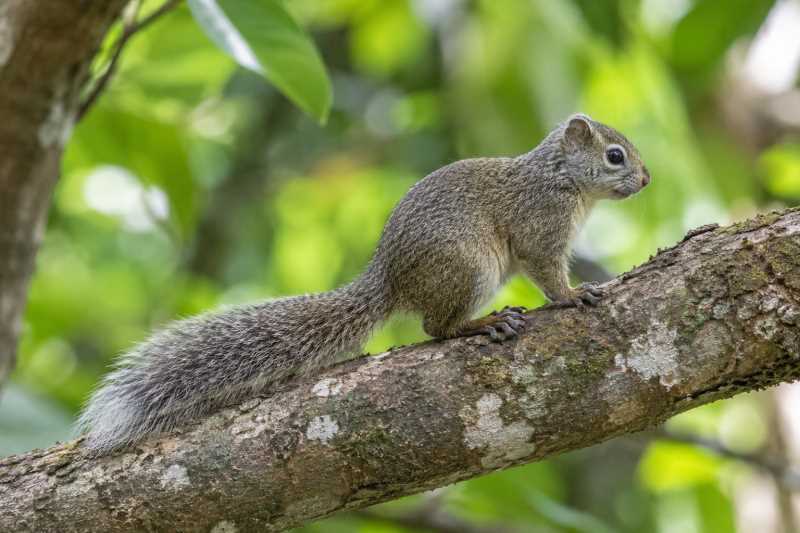
Whitish Dwarf Squirrel (Prosciurillus leucomus)
Introduction
The Whitish Dwarf Squirrel (Prosciurillus leucomus) is a fascinating species of rodent endemic to the lush tropical forests of Sulawesi, Indonesia. This small mammal, known for its distinctive coloration and diminutive size, is a crucial part of its ecosystem, playing a vital role in seed dispersal and forest health. Despite its importance, the Whitish Dwarf Squirrel remains relatively understudied, partly due to its elusive nature and the remote habitats it occupies. This article delves into the various aspects of this intriguing species, from its physical characteristics and behavior to its conservation status and the threats it faces.
Physical Description
The Whitish Dwarf Squirrel is aptly named for its small size and pale coloration. Adults typically measure between 15 to 20 centimeters in body length, with a bushy tail adding an additional 10 to 15 centimeters. The fur is primarily a pale, creamy white, which provides effective camouflage against the backdrop of sun-dappled forest floors. This coloration is particularly advantageous in avoiding predators. The Whitish Dwarf Squirrel’s eyes are large relative to its head size, an adaptation that enhances its vision in the dim light of the forest understorey.
Their ears are small and rounded, closely hugging the head, which aids in maneuverability through dense foliage. The limbs are strong and agile, equipped with sharp claws that are ideal for climbing and grasping onto tree bark. The species is sexually dimorphic, with males slightly larger than females, although both sexes share similar coloration and physical features.
Range and Habitat
The Whitish Dwarf Squirrel is endemic to the island of Sulawesi, with its range largely confined to the central and northern parts of the island. Sulawesi’s unique geological history has resulted in a diverse range of habitats, from lowland rainforests to montane regions, providing an ideal environment for this adaptable species.
These squirrels typically inhabit primary and secondary forests, showing a preference for areas with dense undergrowth and abundant food sources. They are arboreal by nature, spending much of their time in the trees, though they can occasionally be found foraging on the ground. The species’ presence is often an indicator of healthy forest ecosystems, as they rely on a diverse array of tree species for food and shelter.
Behavior and Diet
The Whitish Dwarf Squirrel is primarily diurnal, with peak activity during the early morning and late afternoon. This pattern helps them avoid the midday heat and reduces the risk of predation. They are solitary creatures, although they may occasionally be observed in small family groups, particularly during the breeding season.
Their diet is omnivorous but predominantly consists of seeds, nuts, fruits, and insects. They play a significant role in seed dispersal, as they often carry seeds away from the parent tree before consuming them. This behavior not only aids in forest regeneration but also supports biodiversity.
Foraging occurs both in the trees and on the ground, and the squirrels are known for their acrobatic abilities, which allow them to access food sources that are otherwise out of reach. The species has a keen sense of smell that helps them locate food hidden beneath the leaf litter.
Identification Tips (Field Recognition Cues)
Identifying the Whitish Dwarf Squirrel in the field requires a keen eye and attention to specific cues:
- Coloration: Look for the distinctive pale, creamy white fur, which stands out against the darker forest backdrop.
- Size: Note the small size of the squirrel, with a total length (including tail) of approximately 25 to 35 centimeters.
- Behavior: Observe their acrobatic movements in the trees and their tendency to forage on the forest floor.
- Vocalizations: Listen for their high-pitched chirps and whistles, which are used for communication and alarm signals.
Conservation Status (with Threats and Protections)
The Whitish Dwarf Squirrel is currently listed as "Near Threatened" on the IUCN Red List of Threatened Species. The primary threats to their survival include habitat loss due to deforestation, agricultural expansion, and illegal logging. These activities have led to significant fragmentation of their natural habitat, posing a threat to their long-term viability.
Conservation efforts are focused on habitat protection and restoration. The establishment of protected areas and national parks in Sulawesi is crucial for preserving these squirrels’ habitats. In addition, local and international conservation organizations are working to raise awareness about the importance of maintaining biodiversity and protecting endemic species like the Whitish Dwarf Squirrel.
Frequently Asked Questions
- What is the typical lifespan of a Whitish Dwarf Squirrel?
Whitish Dwarf Squirrels typically live for about 5 to 7 years in the wild. However, their lifespan can be shorter due to predation and habitat disturbances. In captivity, where threats are minimized, they can live slightly longer, up to 10 years.
- How does the Whitish Dwarf Squirrel contribute to its ecosystem?
The Whitish Dwarf Squirrel plays a vital role in seed dispersal, which is essential for forest regeneration and biodiversity. By carrying seeds away from parent trees, they help maintain healthy and diverse forest ecosystems.
- Are there any specific conservation programs for this species?
Yes, several conservation programs focus on habitat preservation and restoration in Sulawesi. These initiatives aim to protect the natural environments of the Whitish Dwarf Squirrel and other endemic species by establishing protected areas and promoting sustainable land-use practices.
- How can one spot a Whitish Dwarf Squirrel in its natural habitat?
To spot a Whitish Dwarf Squirrel, visit dense forests in central and northern Sulawesi. Look for their distinctive pale fur and listen for their vocalizations during early morning or late afternoon, when they are most active.
- What are the main threats facing the Whitish Dwarf Squirrel?
The primary threats include habitat destruction due to logging and agricultural activities. These actions result in habitat fragmentation, posing significant challenges to the species’ survival.
Related posts