Introduction
The Peruvian Woolly Mouse Opossum, scientifically known as Marmosa parda, is a fascinating yet underappreciated member of the marsupial family. Known for its distinctive appearance and intriguing behaviors, this small mammal is native to South America, specifically the diverse ecosystems of Peru. Despite its name, the Peruvian Woolly Mouse Opossum is not a mouse but a marsupial, which means it is more closely related to kangaroos and koalas than to rodents.
In this article, we delve deep into the world of the Peruvian Woolly Mouse Opossum, exploring its physical characteristics, habitat preferences, behavioral patterns, and the current state of its conservation. Our aim is to shed light on this elusive creature, providing a comprehensive resource for researchers, wildlife enthusiasts, and anyone interested in the rich biodiversity of South America.
Physical Description
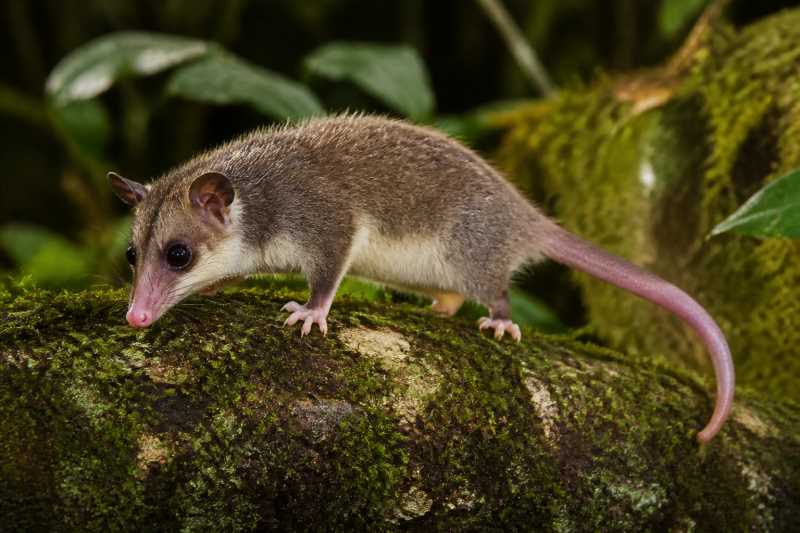
The Peruvian Woolly Mouse Opossum is a small marsupial, typically measuring around 10 to 15 centimeters in body length, with a tail that can extend an additional 15 centimeters. Despite its diminutive size, this opossum is known for its distinctive and dense woolly fur, which gives it a plush appearance. The fur is generally a muted brown or gray, which provides excellent camouflage against the forest floor and dense foliage of its natural habitat.
One of the key physical features of the Marmosa parda is its large, protruding eyes, which are adapted for its nocturnal lifestyle. These eyes enable the opossum to have enhanced night vision, allowing it to navigate and forage effectively in the dark. The ears are relatively large and rounded, contributing to its acute sense of hearing, which is crucial for detecting predators and prey.
The tail of the Peruvian Woolly Mouse Opossum is prehensile, aiding in balance and climbing. This adaptation is especially beneficial in the arboreal environments the opossum often inhabits. The feet are equipped with sharp claws that provide a firm grip on tree branches and other surfaces.
Range and Habitat
Marmosa parda is predominantly found in the tropical and subtropical regions of Peru. Its range extends across various types of forested areas, including lowland rainforests, montane forests, and cloud forests. These habitats are characterized by high humidity, dense vegetation, and a rich diversity of plant and animal life, providing ample food and shelter for the opossum.
The Peruvian Woolly Mouse Opossum is highly adaptable and can be found at varying altitudes, from sea level to mountainous regions. However, it shows a preference for areas with dense understory vegetation, which offers protection from predators and harsh weather conditions.
These opossums are generally arboreal, spending a significant amount of their time in the trees. They construct nests or utilize abandoned nests of other animals, often in tree hollows or dense thickets. This arboreal lifestyle minimizes ground-based threats and allows them to exploit food resources that are not accessible to terrestrial animals.
Behavior and Diet
The Peruvian Woolly Mouse Opossum is primarily nocturnal, meaning it is most active during the night. This behavior helps it avoid many diurnal predators and take advantage of the cooler nighttime temperatures. During the day, the opossum rests in its nest, conserving energy for its nighttime activities.
The diet of Marmosa parda is omnivorous, consisting of a variety of food items. It feeds on fruits, insects, small vertebrates, and occasionally eggs. This opportunistic feeding behavior ensures that the opossum can sustain itself even when preferred food sources are scarce. Its role as both predator and prey in the ecosystem highlights its importance in maintaining ecological balance.
Socially, the Peruvian Woolly Mouse Opossum is solitary, with interactions between individuals typically limited to the breeding season. During this time, males and females come together to mate, after which the female raises the young alone. As a marsupial, the female carries her undeveloped young in a pouch until they are mature enough to survive independently.
Identification Tips (Field Recognition Cues)
For those interested in observing the Peruvian Woolly Mouse Opossum in the wild, there are several identification cues to keep in mind:
- Fur Texture and Color: Look for a small creature with dense, woolly fur that is typically brown or gray in color. This helps it blend into the forest environment.
- Size and Shape: Note its small size, with a body length of about 10-15 cm and a tail length of around 15 cm.
- Eye and Ear Characteristics: Large, protruding eyes and rounded ears are key features that aid in night vision and hearing.
- Tail Use: Watch for the use of a prehensile tail, especially when the animal is climbing or balancing among branches.
These characteristics, combined with its nocturnal activity, make the Peruvian Woolly Mouse Opossum a unique creature to spot in the wild.
Conservation Status (With Threats and Protections)
The conservation status of the Peruvian Woolly Mouse Opossum is not well-documented, primarily due to its elusive nature and the limited research conducted on this species. However, habitat destruction poses a significant threat to its population. Deforestation for agriculture, logging, and urban expansion reduces the availability of suitable habitats, thereby impacting its population.
Despite these threats, some areas of its range are protected under national and regional conservation efforts, which aim to preserve the rich biodiversity of Peruvian forests. These protected areas offer a refuge for the opossum and other wildlife, helping to mitigate the impacts of human activities.
Conservationists advocate for more research to better understand the species’ needs and population dynamics. Increased awareness and targeted conservation strategies are crucial for ensuring the long-term survival of the Peruvian Woolly Mouse Opossum.
Frequently Asked Questions
1. What is the primary diet of the Peruvian Woolly Mouse Opossum?
The Peruvian Woolly Mouse Opossum has an omnivorous diet, feeding on fruits, insects, small vertebrates, and occasionally eggs. This varied diet allows it to adapt to different food availabilities in its habitat.
2. Where can the Peruvian Woolly Mouse Opossum be found?
This opossum is predominantly found in the tropical and subtropical forests of Peru, including lowland rainforests and montane forests. It is highly adaptable to different forested environments.
3. How does the Peruvian Woolly Mouse Opossum protect itself from predators?
Its nocturnal lifestyle, coupled with its camouflaged woolly fur, helps the opossum avoid predators. Additionally, its arboreal habits keep it away from many ground-based threats.
4. Is the Peruvian Woolly Mouse Opossum endangered?
The precise conservation status is not well-documented, but habitat destruction poses a significant threat. Conservation efforts in protected areas help mitigate some of these impacts.
5. How does the Peruvian Woolly Mouse Opossum reproduce?
The species is solitary, with interactions occurring mainly during the breeding season. After mating, the female carries the young in her pouch until they are ready to survive independently.
Related posts