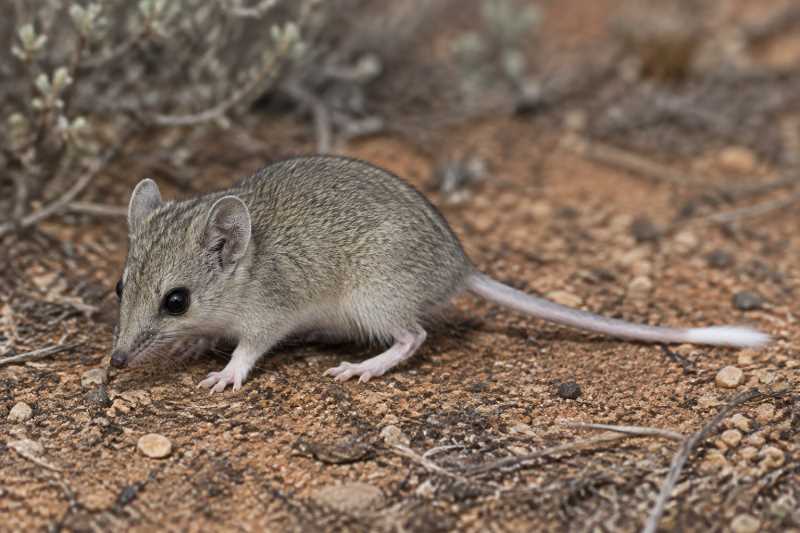
White-tailed Dunnart (Sminthopsis granulipes)
Introduction
The White-tailed Dunnart, scientifically known as Sminthopsis granulipes, is an intriguing marsupial belonging to the family Dasyuridae. This small carnivorous mammal is native to Australia and is known for its distinctive white-tipped tail and agile nature. Dunnarts are nocturnal creatures, playing a vital role in the ecosystem as insectivores. Despite their small size, they are a subject of interest for researchers and wildlife enthusiasts due to their unique adaptations and behaviors.
Physical Description
The White-tailed Dunnart possesses a slender body, typically measuring between 12 to 16 centimeters in length, with an additional tail length of around 9 to 11 centimeters. As its name suggests, this species is distinguished by the white tip at the end of its otherwise grayish-brown tail. The fur on its body is soft and smooth, with a coloration that provides excellent camouflage in its natural habitat.
This dunnart has a pointed snout, large ears, and bright eyes, indicative of its nocturnal lifestyle. The limbs are equipped with sharp claws, which aid in climbing and digging. The overall weight of a White-tailed Dunnart ranges from 20 to 40 grams, with males generally being larger than females.
Range and Habitat
The White-tailed Dunnart is predominantly found in the southwestern region of Australia, particularly in areas with sandy soils and dense shrubland. Its range includes the semi-arid and arid zones, where it inhabits heathlands, eucalyptus woodlands, and mallee scrub.
These mammals are adapted to survive in harsh environments with extreme temperature variations. They often seek shelter in burrows or beneath leaf litter to avoid the heat of the day and emerge at night to forage. Their habitat selection is closely tied to the availability of prey and cover, making them sensitive to habitat alterations.
Behavior and Diet
White-tailed Dunnarts are solitary animals, with each individual maintaining a home range that they defend against intruders. They are primarily nocturnal, using the cover of darkness to hunt and avoid predators. Their diet consists mainly of insects and other small invertebrates, including beetles, spiders, and centipedes.
These agile hunters rely on their keen sense of smell and hearing to locate prey in the dark. They are also known to consume small vertebrates and occasionally plant material, making them opportunistic feeders. The dunnart’s ability to enter torpor—a state of reduced metabolic rate and body temperature—allows it to conserve energy during periods of food scarcity.
Identification Tips
Field identification of the White-tailed Dunnart can be challenging due to its nocturnal habits and elusive nature. However, certain characteristics can aid in recognition:
- Tail Tip: Look for the distinctive white tip on its tail, which is a key feature that sets it apart from other dunnart species.
- Size and Shape: Note its small size, slender body, and pointed snout.
- Habitat: Observe the type of habitat, as they are commonly found in sandy, shrub-dominated areas.
- Activity: Listen for rustling sounds at night and look for signs of digging or small burrows.
Conservation Status
The conservation status of the White-tailed Dunnart is currently listed as Least Concern by the International Union for Conservation of Nature (IUCN). However, it faces several threats that could impact its population in the future.
Threats
- Habitat Loss: Land clearing for agriculture and urban development leads to habitat fragmentation and loss.
- Predation: Introduced species such as cats and foxes pose significant predation risks.
- Climate Change: Changes in climate patterns can affect the availability of prey and suitable habitats.
Protections
Efforts to conserve the White-tailed Dunnart include:
- Protected Areas: Establishment of reserves and national parks that safeguard critical habitats.
- Pest Control: Management programs to control invasive predator populations.
- Research and Monitoring: Ongoing studies to monitor population trends and ecological requirements.
Frequently Asked Questions
What does a White-tailed Dunnart eat?
The White-tailed Dunnart primarily feeds on insects and small invertebrates, such as beetles, spiders, and centipedes. It occasionally consumes small vertebrates and plant material.
Where can I find a White-tailed Dunnart in the wild?
White-tailed Dunnarts are found in southwestern Australia, particularly in sandy soils and dense shrubland within heathlands, eucalyptus woodlands, and mallee scrub.
How does the White-tailed Dunnart adapt to its environment?
This species adapts through nocturnal activity patterns, keen senses for hunting, and the ability to enter torpor during food scarcity, conserving energy and surviving harsh conditions.
Why is the White-tailed Dunnart important to the ecosystem?
As insectivores, White-tailed Dunnarts help control insect populations, contributing to ecological balance. They also serve as prey for larger predators, forming an integral part of the food web.
What are the main threats to the White-tailed Dunnart?
The main threats include habitat loss due to land clearing, predation by introduced species like cats and foxes, and the impacts of climate change on their habitat and food sources.
Related posts