The Coppery-bellied Puffleg: A Jewel of the Andes
The Coppery-bellied Puffleg (Eriocnemis cupreoventris) is a stunning hummingbird species native to the Andean mountain range in South America. Known for its iridescent plumage and remarkable adaptability to high-altitude environments, this bird is a fascinating subject for ornithologists and bird enthusiasts alike. This article delves into the unique characteristics, habitat, and conservation challenges faced by this remarkable creature.
Physical Characteristics
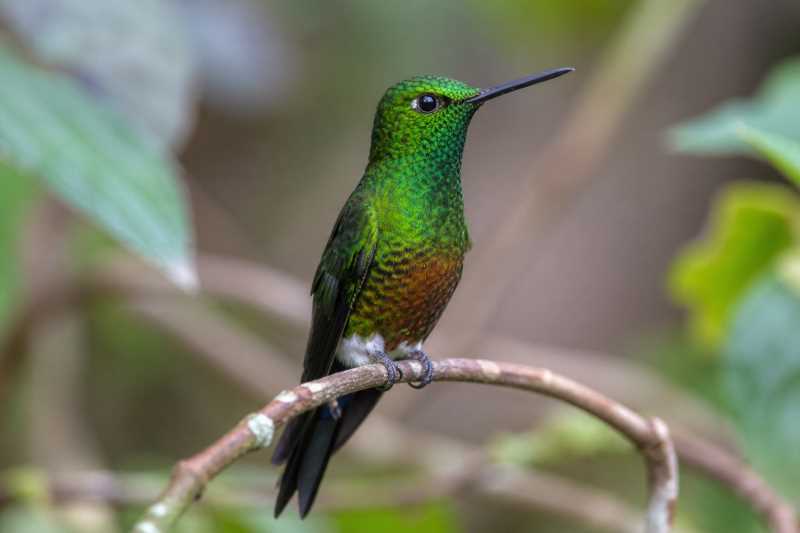
The Coppery-bellied Puffleg is named for its distinctive coppery-bronze belly, a feature that sets it apart from other hummingbird species. The bird measures approximately 9 to 10 centimeters in length, with a slender build typical of hummingbirds. It sports a dazzling combination of emerald green and copper hues on its upper parts, which shimmer brilliantly in the sunlight. The puffleg’s tail is short and slightly forked, while its legs are adorned with tufts of white feathers, a characteristic trait from which the bird derives its name.
Habitat and Distribution
This hummingbird species is primarily found in the montane forests of the Eastern Andes, ranging from Colombia to northern Ecuador. It thrives at altitudes between 1,800 and 3,400 meters, where it inhabits the elfin forests and páramo ecosystems. The dense, misty cloud forests provide an ideal environment rich in nectar-producing flowers, which are the primary food source for the Coppery-bellied Puffleg.
The bird is particularly adapted to the fluctuating temperatures and oxygen levels found at high altitudes. Its rapid wing beats, characteristic of hummingbirds, allow it to hover efficiently while feeding, and its specialized metabolism supports its energy-intensive lifestyle.
Feeding and Behavior
The Coppery-bellied Puffleg exhibits typical hummingbird behavior with its high-energy, territorial nature. It feeds primarily on nectar from a variety of flowering plants, including those from the Ericaceae and Melastomataceae families. Its long, specialized bill and extendable tongue allow it to access deep floral tubes, while the bird’s iridescent plumage often attracts mates during courtship displays.
In addition to nectar, the puffleg supplements its diet with small insects and arachnids, which provide essential proteins. This omnivorous feeding habit is crucial for the bird’s survival, particularly during periods when flowering plants are scarce.
Reproduction and Life Cycle
Breeding season for the Coppery-bellied Puffleg typically occurs during the wet season when food resources are abundant. The female is solely responsible for nest building, incubation, and rearing of the chicks. Nests are intricately constructed using mosses, lichens, and plant fibers, often positioned on thin branches to deter predators.
The female usually lays two white eggs, which she incubates for approximately 16 to 19 days. Upon hatching, the chicks are altricial, meaning they are born blind and featherless, relying entirely on their mother for nourishment and warmth. The fledging period lasts about three weeks, after which the young birds gradually become independent.
Conservation Status and Threats
The Coppery-bellied Puffleg is currently classified as "Near Threatened" by the International Union for Conservation of Nature (IUCN). Habitat destruction due to agricultural expansion, logging, and human encroachment poses significant threats to its survival. Additionally, climate change impacts the delicate balance of the cloud forest ecosystems, altering the availability of food resources and suitable nesting sites.
Conservation efforts are crucial to protect this species and its habitat. Initiatives aimed at preserving cloud forests, establishing protected areas, and promoting sustainable land-use practices are essential. Moreover, raising awareness about the ecological importance of hummingbirds, including the Coppery-bellied Puffleg, can foster community involvement in conservation activities.
Conclusion
The Coppery-bellied Puffleg is a remarkable example of nature’s beauty and resilience. Its vibrant colors and unique adaptations to high-altitude life make it a jewel of the Andes. However, the challenges it faces underscore the broader environmental issues affecting biodiversity worldwide. Protecting this species and its habitat is not only vital for its survival but also for the health of the ecosystems it inhabits. Through concerted conservation efforts and increased awareness, we can ensure that future generations will continue to marvel at the splendor of the Coppery-bellied Puffleg.
Related posts