Introduction
The Johnston’s Forest Shrew, scientifically known as Sylvisorex johnstoni, is a fascinating yet often overlooked small mammal that inhabits the dense forests of Central Africa. This elusive creature is part of the Soricidae family, which includes other shrews known for their insectivorous diets and high metabolic rates. Understanding the ecology, behavior, and conservation status of the Johnston’s Forest Shrew is crucial for biodiversity conservation efforts in its natural habitat.
As an integral part of the forest ecosystem, this shrew plays a significant role in controlling insect populations. Despite its importance, little is known about its habits and lifestyle, primarily due to its secretive nature and the challenges of studying small mammals in dense forest environments. This article aims to shed light on the various aspects of the Johnston’s Forest Shrew, from its physical characteristics to its habitat preferences and conservation needs.
Physical Description
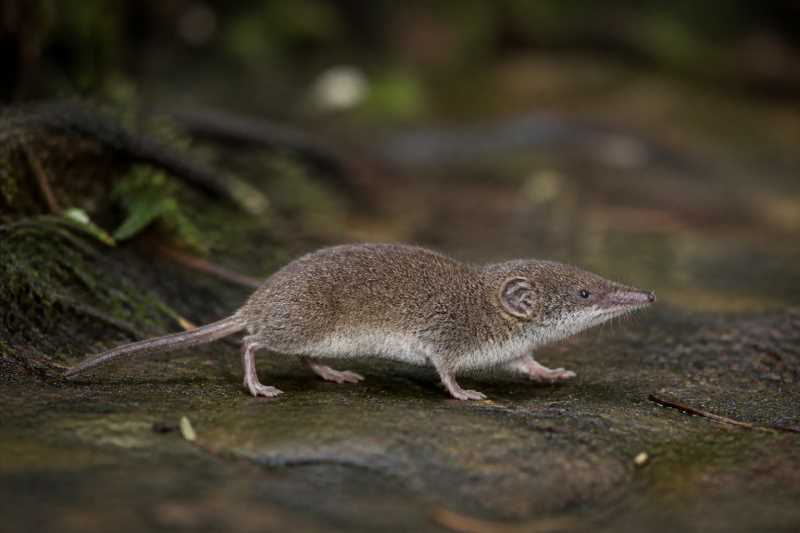
The Johnston’s Forest Shrew is a small mammal, typically measuring between 6 to 9 centimeters in body length, with a tail length of approximately 4 to 7 centimeters. Weighing in at a mere 10 to 15 grams, this shrew is designed for a life of agility and stealth within the forest undergrowth.
Its fur is predominantly dark brown to black, providing excellent camouflage against the forest floor’s fallen leaves and debris. The coat is dense and soft, offering protection against the elements and insulating the shrew in its cool, moist habitat.
One of the most distinguishing features of Sylvisorex johnstoni is its elongated snout, housing sharp, tiny teeth that are adapted for an insectivorous diet. The eyes are small, reflecting its reliance on other senses such as smell and touch to navigate and hunt in the forest. Its ears are also small and usually hidden within its fur, further emphasizing its adaptation to a life of burrowing and foraging under cover.
Range and Habitat
Johnston’s Forest Shrew is primarily found in the tropical rainforest regions of Central Africa. Its range extends through countries such as Cameroon, Gabon, the Democratic Republic of the Congo, and parts of Uganda. These regions are characterized by dense, humid forests that offer plenty of cover and abundant food resources.
Preferring the understory and forest floor, the shrew thrives in environments with ample leaf litter and fallen logs. These areas provide both shelter and hunting grounds, as the shrew forages for insects and other small invertebrates. The dense forest canopy also offers protection from predators and maintains the humid conditions essential for the shrew’s survival.
Due to its specific habitat requirements, the Johnston’s Forest Shrew is particularly vulnerable to deforestation and habitat fragmentation, which significantly impact its ability to find food and shelter.
Behavior and Diet
Johnston’s Forest Shrew is primarily nocturnal, spending its nights foraging for food and its days resting in burrows or concealed nests. Its diet consists mainly of insects, spiders, and other small invertebrates, which it hunts using its acute sense of smell and hearing.
The shrew’s high metabolic rate necessitates frequent feeding, requiring it to consume nearly its body weight in food each day. This constant need for food keeps the shrew active and on the move, often leading it to cover considerable ground in search of sustenance.
Socially, the Johnston’s Forest Shrew is a solitary creature, interacting with others primarily during the breeding season. Little is known about its reproductive habits, though it is believed to have multiple litters per year, with each litter consisting of several young.
Identification Tips (Field Recognition Cues)
Identifying the Johnston’s Forest Shrew in the field can be challenging due to its small size and elusive nature. However, there are several key characteristics to look for:
- Size and Shape: Look for a small, slender mammal with a long, pointed snout and a relatively long tail.
- Fur Color: The shrew’s dark brown to black fur is a good indicator, providing excellent camouflage against the forest floor.
- Behavior: Active primarily at night, you may spot it scurrying through leaf litter or around fallen logs.
- Habitat: Concentrate your search efforts in dense, humid forest areas with ample leaf litter and undergrowth.
Conservation Status (with Threats and Protections)
The Johnston’s Forest Shrew is currently listed as Least Concern on the IUCN Red List. However, it faces several threats that could impact its population in the future. The primary threat is habitat loss due to deforestation, driven by logging, agriculture, and human settlement expansion.
Conservation efforts are essential to mitigate these threats. Protecting large areas of rainforest and enforcing sustainable land-use practices are crucial steps in preserving the natural habitat of the Johnston’s Forest Shrew. Additionally, further research into its ecology and behavior can help inform conservation strategies and ensure the species’ long-term survival.
Frequently Asked Questions
1. What does the Johnston’s Forest Shrew eat?
The Johnston’s Forest Shrew primarily feeds on insects and other small invertebrates, which it hunts using its keen sense of smell and hearing. Its diet is crucial for maintaining its high metabolic rate.
2. Where is the Johnston’s Forest Shrew found?
This shrew is found in the tropical rainforests of Central Africa, including countries like Cameroon, Gabon, and the Democratic Republic of the Congo. It prefers dense, humid forests where it can find ample food and shelter.
3. How does deforestation affect Johnston’s Forest Shrew?
Deforestation leads to habitat loss and fragmentation, which significantly impact the Johnston’s Forest Shrew by reducing its available habitat and food sources. Protecting forest areas is vital for its conservation.
4. Is the Johnston’s Forest Shrew endangered?
Currently, the Johnston’s Forest Shrew is listed as Least Concern by the IUCN, but ongoing habitat destruction poses a significant threat that could affect its status in the future.
5. How can I identify a Johnston’s Forest Shrew in the wild?
Look for a small, dark-furred mammal with a long snout and tail, often active at night and found in dense forest environments. Observing its behavior and habitat can aid in identification.
Related posts